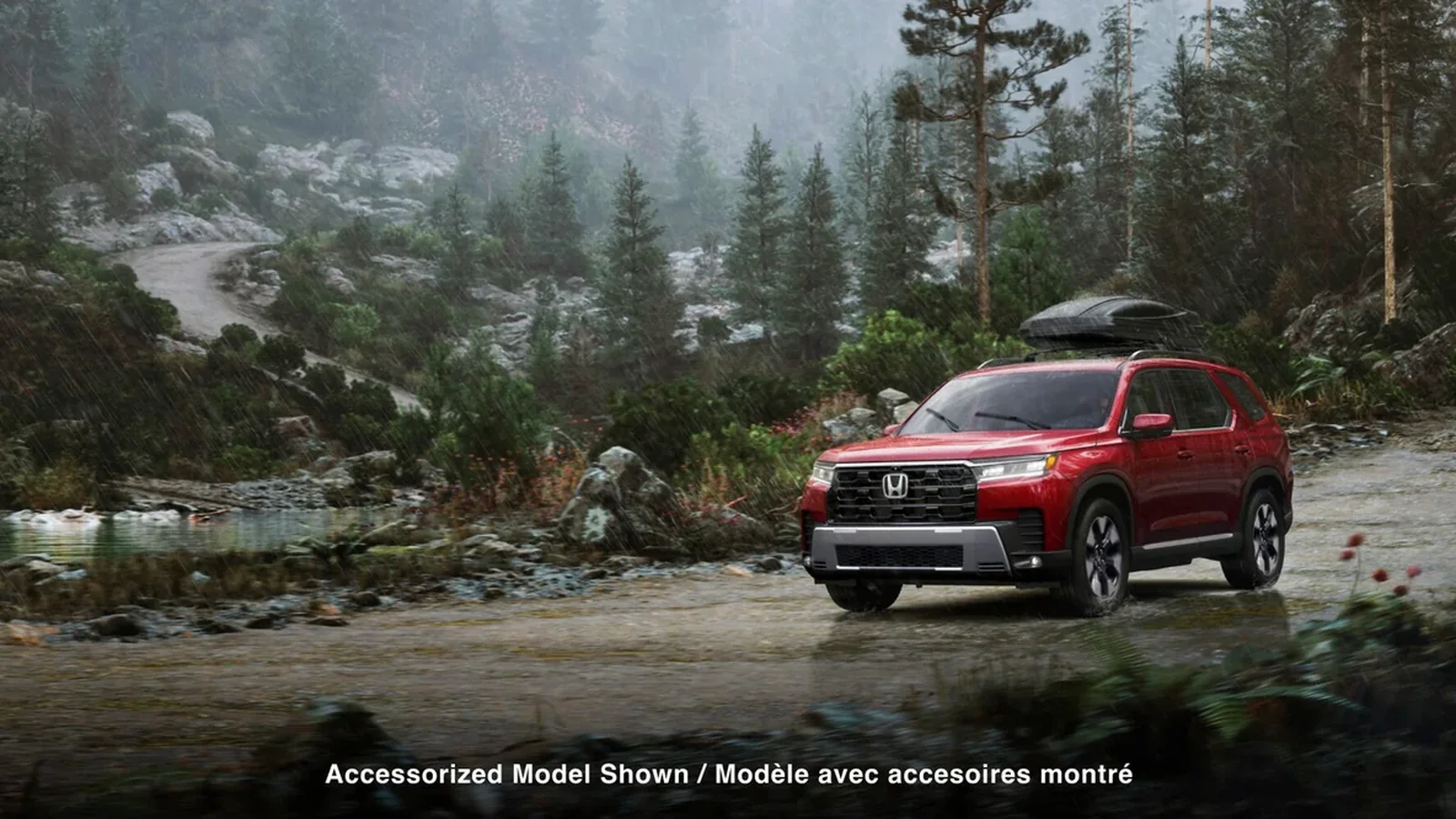
Photo: Honda Canada. 2026 Honda Pilot. Part of the Car Buyer Protection Series by Henry Chen, Maple Honda, Vaughan.
I understand why it happens. By the time the paperwork comes out you're tired, the kids are bored, and there are twelve pages of small print between you and the keys. So you look at one number — the monthly payment — and you sign.
Here's what I've learned doing this for years: almost every unhappy customer I meet isn't unhappy about the payment. They're unhappy about something in month 46 that nobody explained to them in month one. A kilometre charge. A buyout bigger than they expected. Negative equity on a trade that nobody named out loud.
None of it is complicated. It's just never explained. So let me explain it.
First: what a lease actually is
When you lease, you don't own the car. The finance company does. What you're buying is the right to use it for a set number of months and a set number of kilometres.
And here's the part that makes everything else make sense: you're only paying for the part of the car you use up.
Say a vehicle is worth $38,000 today, and the finance company predicts it will be worth $17,100 in four years. That $17,100 is the residual. You aren't paying for it. You're paying for the roughly $21,000 of value that disappears while you're driving — plus a finance charge on the whole amount, the way interest works on any loan.
That's the entire idea. Everything else in the contract exists because someone else owns your car: the insurance requirements, the maintenance rules, the kilometre cap, the condition standards at return. They're protecting an asset.
The six numbers that build your payment
Understand this chain and you can check any lease quote in the country.
- Vehicle price — the all-in price before tax: vehicle, options, freight, pre-delivery inspection, dealer fee, levies.
- Minus your down payment, rebate and trade equity — this gives the amount actually being leased.
- Minus the residual — what's left is the depreciation you're responsible for.
- Plus the lease charges — the finance cost, in dollars, not just a percentage.
- Divided by the number of payments.
- Plus tax. That's your payment.
Using the numbers above over 48 months: about $526 before tax, roughly $595 after. Illustration only — your actual figures will differ.
A low payment doesn't prove a low cost. Stretch the term, cut the kilometre allowance, put more money down, and the payment drops while the total may not. Ask for the total lease charges in dollars. Percentages start arguments; dollars end them.
Watch for two different rates. There's a lease rate and there's an APR, and the APR can read higher because it accounts for charges a cash buyer wouldn't pay. Neither one is a trick. Ask which is which — you'll get a straight answer from anyone worth dealing with.
The most important part: how it ends
Every lease ends one of three ways. If you take nothing else from this article, take this section.
1. You buy it at the end
You pay the purchase option price — the residual — plus a transfer fee, plus tax on both, plus licensing and a safety inspection if one is required. On a $17,100 residual, that realistically lands just under $20,000, not at $17,100.
Here's what almost nobody knows: if you buy it, kilometres and wear cost you nothing. No inspection, no overage charge. You could be 100,000 km over and it wouldn't matter.
I've had people call me in a panic at month 46 because they're far over their allowance. If buying makes sense for them, that panic ends in one sentence.
2. You return it at the end
Now there's an inspection, and now kilometres and condition matter. You pay for kilometres over your allowance at the per-kilometre rate written into your contract, plus any excess wear, plus any required maintenance.
Also worth knowing: if you keep the vehicle past the maturity date without arranging something, you can be charged a full payment for each additional period — and paying it doesn't entitle you to keep the car. If you need extra time, call before the date, not after.
3. You get out early
You can buy it out early or return it early. Early buyout is fine and carries no penalty: you pay the remaining payments plus the purchase option, less the unearned lease charges, plus fees and tax.
Early return is the expensive one, and it's the most misunderstood clause in the document. You don't just hand back the keys. You remain responsible for the remaining payments and other amounts, and the vehicle is sold wholesale — where only the proceeds above the residual reduce what you owe. If there's a shortfall, it's yours.
If you ever need an early exit number, ask for the official written quote from the finance company. Anyone who gives you a rough figure off the top of their head is doing you a disservice — including me.
The parts that surprise people
Your co-signer isn't a co-signer. On most lease forms a co-lessee signs as a principal, jointly and severally. Each person can be pursued for 100% of the obligation — not half each — and one of you can agree to changes that bind the other. If you're adding a spouse or an adult child, both of you should know exactly what that means.
Payments are unconditional. A recall, a repair that drags on, a dispute with the service department — none of it lets you withhold a payment. That surprises people, and it's better to hear it from me now than from a collections letter later. If something's wrong with the vehicle, we fix the vehicle.
GAP has holes. If your vehicle is written off or stolen, GAP coverage typically bridges the difference between what you owe and what insurance pays. It usually does not cover your insurance deductible, missed payments, kilometre charges, fines, or negative equity rolled in from a previous vehicle. Those last two are the ones that surface at the worst possible moment.
Negative equity is not a down payment. If you owe more on your trade than it's worth, that shortfall doesn't vanish. It moves onto the new agreement, you pay it in every payment, and GAP won't cover it. If anyone describes it as something other than debt moving from one vehicle to the next, ask again.
Commercial use is usually prohibited. Rideshare, food delivery, courier work — many lease agreements prohibit it outright, even where the form has a "business use" checkbox elsewhere. If you're planning any of that, get the answer in writing from the finance company before you sign. I won't guess on that one, and neither should anyone else.
Tires are the most common return bill I see. Contracts specify a minimum tread depth and a maximum wear percentage. If you're returning at maturity, look at your tires a few months out — not the week before.
Before you sign, confirm these
- The VIN and trim — hybrid and gas versions of the same model read almost identically on paper
- The total lease charges in dollars, not just the rate
- Your payment with tax, the frequency, and the exact number of payments
- Your kilometre allowance and the per-kilometre overage rate, written in
- Your buyout, stated as residual + fees + tax
- What's due at delivery, split three ways: cash today, covered by trade, covered by rebate
- Whether every product on the sheet is optional, and what each one costs on its own
- That every promise made to you appears somewhere in the signed paperwork
And a quiet one that matters here: in Ontario there is generally no cooling-off period on a vehicle purchase or lease. Once you sign, you've signed. That's not a reason to be nervous — it's a reason to take the extra ten minutes. Anyone rushing you through those ten minutes is telling you something about themselves.
The point of all this
A lease is a good tool. For many people it's the smartest way to drive: a lower payment, warranty coverage across the whole term, a fixed price to buy it later if they love it, and a clean exit if they don't.
It stops being a good tool the moment it isn't understood. So if you're sitting across from anyone — at my store or anywhere else — and something on that page isn't clear, stop and ask. A good salesperson will slow down. That's the whole job.
Frequently asked
Do I own the car at the end of a lease?
No — you own the choice. At maturity you can buy it for a price written into the contract on the day you sign, hand it back, or start something new. Because the buyout price is set in advance, it cannot move on you.
What happens if I go over my kilometre allowance on a lease?
You only pay for excess kilometres if you return the vehicle. The rate per kilometre is written into your agreement, plus tax. If you buy the vehicle at maturity, kilometres cost you nothing and no return inspection is required.
Is the lease buyout just the residual value?
No. The buyout is the purchase option price (the residual) plus a transfer fee, plus tax on both, plus licensing and a safety inspection if one is required. On a $17,100 residual, the real number typically lands just under $20,000.
Can I get out of a car lease early?
Yes, two ways: buy it out early, or return it early. Early buyout carries no penalty. Early return is the expensive option — you remain responsible for remaining payments and other amounts, the vehicle is sold wholesale, and only proceeds above the residual reduce what you owe. Always request the official written payout figure from the finance company.
Is there a cooling-off period after signing a car lease in Ontario?
Generally no. Ontario does not provide a cooling-off period for a motor vehicle purchase or lease. Limited cancellation rights may arise from qualifying disclosure failures or unmet contractual conditions. See OMVIC for current guidance.
Is a co-signer on a lease responsible for half the payments?
No. On most lease forms a co-lessee signs as a principal, jointly and severally. Each person can be pursued for 100% of the obligation, not half each, and one signer can agree to changes that bind the other.
Want someone to read your lease with you?
Bring it in — even one you signed somewhere else, even if you're not buying anything. I'll go through it with you and tell you exactly where you stand: your buyout, your kilometre position, and what your options actually are. No pressure.
This article is general education, not legal or financial advice. Lease terms vary by lender, province and program — your signed agreement and applicable law always control. All figures are illustrative only, and fees such as transfer and assumption fees can change. For Ontario consumer guidance on vehicle agreements, see OMVIC.