
Photo: Honda Canada. 2026 Honda Pilot. Part of the Car Buyer Protection Series by Henry Chen, Maple Honda, Vaughan.
OMVIC's negative equity example is one of the most useful pieces of consumer education on its site. A buyer named Farah finances a $30,000 vehicle over eight years at 3.99%, drives 140,000 km over four years, and wants to trade in. Her trade is worth $7,000 wholesale. She still owes $16,192. The gap — $9,192 — is negative equity. To buy a $35,000 vehicle, she has to borrow $44,192.
That's not a typo. Negative equity doesn't disappear when you trade the car in. It rolls forward into the new loan, gets added to the new principal, and starts depreciating again. The longer the original loan term, the more likely this is to happen.
How negative equity actually happens
A car starts depreciating the moment it leaves the lot. A long loan term keeps the monthly payment low, but the loan balance doesn't shrink fast enough to keep up with depreciation. Two or three years in, you can easily owe more than the vehicle is worth — particularly if you've put a small down payment, driven more than average, or taken the 96-month option the dealer offered to make the payment fit.
More than half of trade-in customers, OMVIC says, are walking in with negative equity. That's the rule, not the exception. It's also why a clean discussion about loan term length and down payment matters more than a $20/month difference on the monthly payment.
The questions OMVIC wants you to ask before you sign a long loan
- How much do I actually drive per year? Higher mileage accelerates depreciation.
- How long do I realistically keep this vehicle? If you're going to trade in within 3-4 years, an 84- or 96-month loan is structurally dangerous.
- How fast does this vehicle depreciate? A 3-year-old Civic holds its value better than most — but a 3-year-old domestic SUV in the same price band may not.
- If I'm trading in my current car, how much do I still owe, and is the trade-in going to cover it?
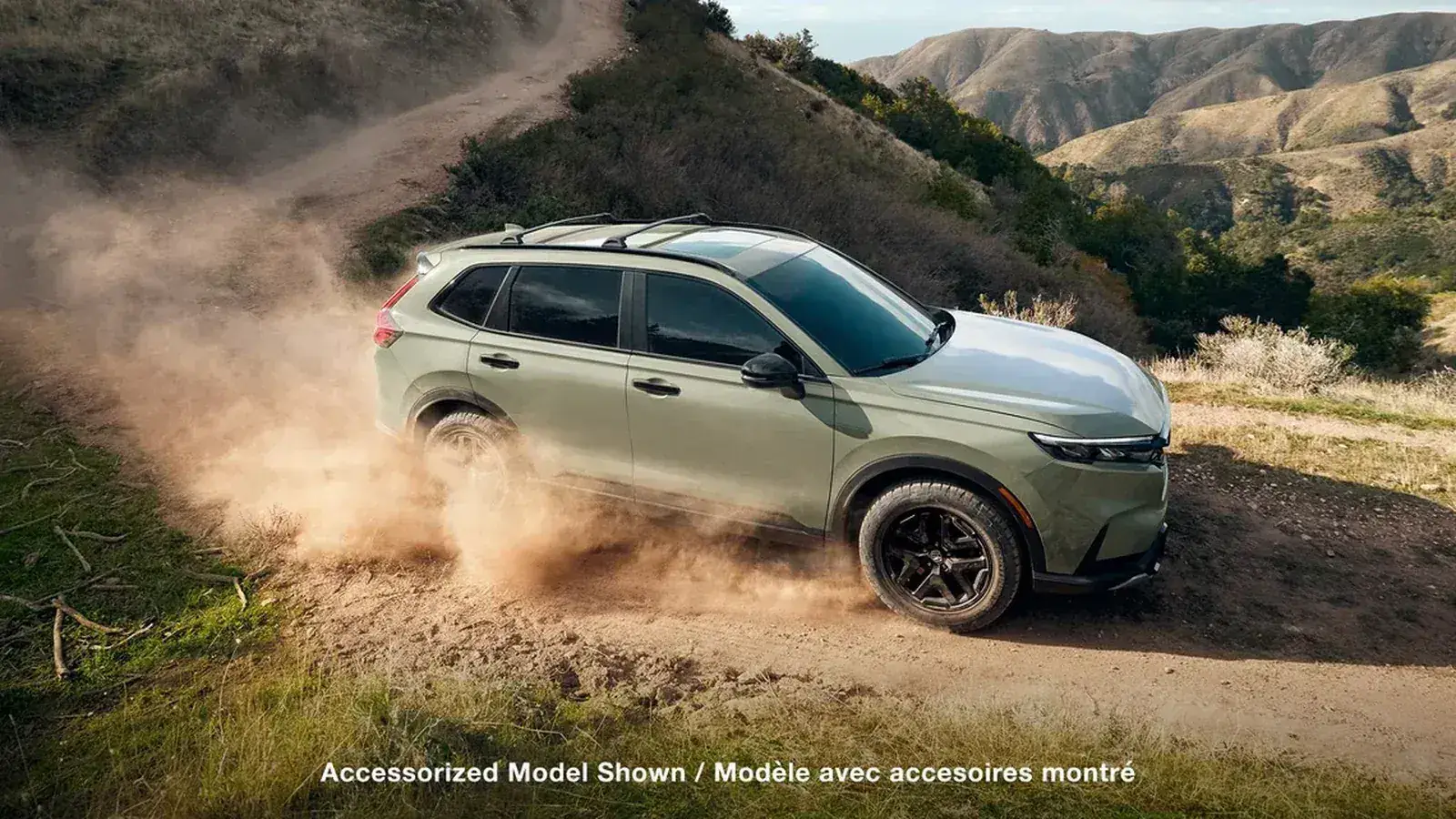
Photo: Honda Canada. 2026 Honda CR-V.
How to keep negative equity out of your next car
- Choose a shorter loan term. 60 months is a common Honda finance structure; 48 is even better if the payment fits.
- Put real money down. 20% is a strong baseline; 10% is workable; 0% is risky on a long loan.
- Trade in your old car before you owe more than it's worth. The earlier you exit a long loan, the smaller the negative-equity hit.
- Buy a vehicle that holds value. Honda's resale strength is one of the structural reasons negative equity is less common on a Civic or CR-V than on a less desirable brand.
- If you're already in negative equity, consider paying it down before you trade. Even $2,000-$3,000 toward the old loan reduces the amount that rolls forward.
GAP coverage, insurance, and the negative equity trap
GAP (Guaranteed Auto Protection) coverage pays the difference between what you owe and what the insurance company pays out if the vehicle is written off. It's a useful product when the loan balance exceeds the vehicle's value. But it's not a substitute for choosing a healthy loan term.
OMVIC's guidance is clear: GAP coverage is an additional cost, and it protects the lender as much as it protects you. Use it to backstop a structure that's already sensible, not as a way to make a bad structure look safe.
Frequently asked, Vaughan edition
How much negative equity is too much?
There's no fixed rule, but if your trade-in is worth $7,000 and you owe $16,000, you're rolling $9,000 into a new loan at the same time the new vehicle starts depreciating. A negative-equity position larger than 20-25% of the new vehicle's price is a warning sign.
Can I refinance my way out of negative equity?
Sometimes, if rates have dropped or your credit has improved. Refinancing replaces the loan with a new one at a lower balance, but it doesn't erase the underlying problem — the vehicle is still worth less than you owe. The cleaner fix is paying the difference down before you trade.
Does Honda offer longer-term financing than 60 months?
Yes, Honda Financial Services offers 84-month terms on some models and on approved credit. Whether it's right for you depends on how long you keep the car and how much you put down. Talk to us about the structure before you commit to the term.
How does negative equity actually work on a trade-in?
Negative equity is when you owe more on your current car loan than the vehicle is worth. Example: you owe $25,000 on a car now worth $20,000 — that is $5,000 of negative equity. The dealer does not pay off your old loan in full unless you pay the difference in cash, so the $5,000 gets added to your new loan. You now owe $5,000 more than the new car is worth, plus interest on the rolled-in amount.
Is rolling negative equity into a new loan legal in Ontario?
Yes, but OMVIC requires the dealer to disclose it clearly on the paperwork. You should see the negative-equity amount as a separate line item, not buried in 'amount financed.' If you cannot find it on the contract, ask the F&I manager to show you. Walking away is always an option.
How do I avoid negative equity on my next car?
Three habits help: (1) put at least 10 to 20% down so you are not financing the entire depreciation, (2) keep the loan term to 60 months or less so you do not outrun the depreciation curve, and (3) choose a vehicle with strong resale value — Honda products historically hold value better than most segments. Henry can run the equity-position math on your next deal.
Should I pay off negative equity with cash instead of rolling it in?
Yes, if you can. Rolling negative equity means you pay interest on the shortfall — on a $5,000 shortfall over 6 years at 7%, that is roughly $1,100 in extra interest. Paying cash upfront avoids both the interest and the deeper underwater position. If you cannot pay it all, paying down even $2,000 reduces the compounding.
Can I refinance just to get out from under negative equity?
Refinancing at a lower rate reduces the interest you pay on the negative equity but does not reduce the principal owed. To actually reduce negative equity, you need to pay down principal — extra payments, larger monthly payment, or a lump-sum payment. If your current loan has prepayment penalties, ask before refinancing.
Want me to walk through the OMVIC piece of your next deal?
If you have a quote from another store, a private sale you're considering, or just a question about how OMVIC's rules apply to your situation, send me the details. I will help you pressure-test the structure.
Ask Henry a question
Not ready to book anything? Just ask. Henry Chen answers every message himself — usually within a couple of hours during business hours. No call list, no pressure, and no obligation to buy anything.