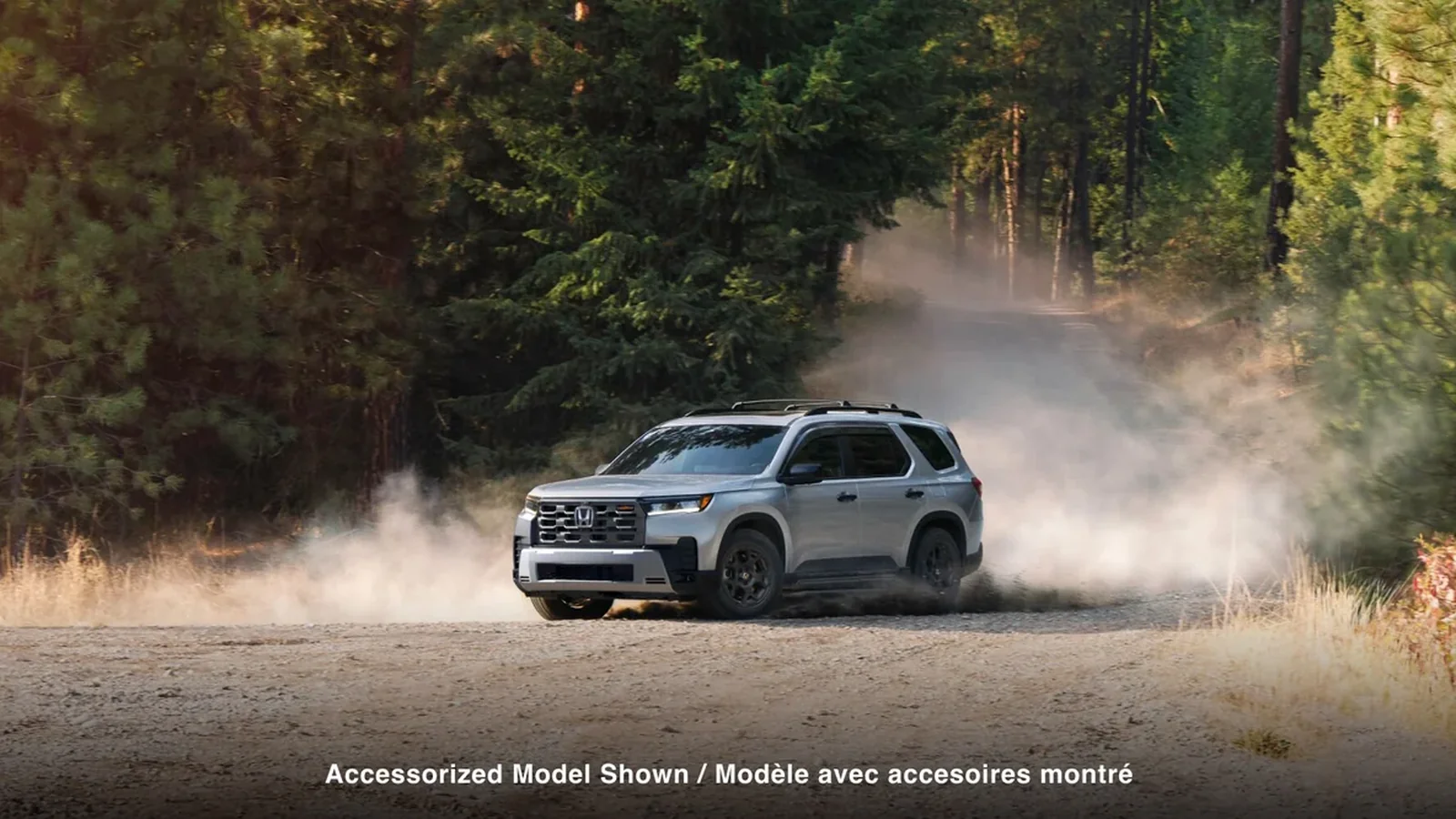
Photo: Honda Canada. 2026 Honda Pilot. Part of the Car Buyer Protection Series by Henry Chen, Maple Honda, Vaughan.
A lease is a long-term rental. You're paying for the depreciation that happens during the term, plus a finance charge, and at the end of the term you give the vehicle back, buy it out at a pre-arranged price, or sign a new lease. Most manufacturer leases in Canada are closed-end, which means the buyout price and the residual value are set when you sign.
OMVIC's leasing guidance is explicit: there's no cooling-off period. Once you've signed a lease, you're committed to the full term unless the dealer violated the MVDA. Read the lease, understand the mileage, understand the residual, and don't sign anything you haven't fully walked through.
Want the trim-by-trim numbers for a specific Honda? See the real 2026 MSRPs and lease variables for the CR-V and Civic.
Closed-end vs open-end leases
A closed-end (option) lease lets you return the vehicle at the end of the term, walk away, or buy it out at a pre-arranged price. As long as you haven't exceeded the mileage and the car isn't excessively damaged, no further payment is required. Almost every Honda lease you'll see is closed-end.
An open-end (residual obligation) lease is riskier for the lessee. At the end of the term, you're responsible for any shortfall between the residual value the leasing company estimated and the actual price the car sold for. If the car is worth less than projected, you owe the difference. Open-end leases are rare in the Honda world for consumer use, but they're common in commercial fleet situations.
What OMVIC wants you to know about a Honda lease
- The dealer who arranged the lease is usually not the company you make payments to — the lessor (often Honda Financial Services or a partner bank) handles monthly billing.
- The advertised payment is usually based on a specific term, mileage allowance, and down payment. Change any one of those and the payment changes.
- Excess kilometres are charged at a per-km rate set in the contract. 20,000 km/year is common. If you drive more, ask for a higher allowance upfront — it's cheaper than waiting until the end.
- Excess wear and tear can also be charged back at lease end. Scratches, dents, curb rash, stained upholstery, worn tires, cracked windshield — they all add up.
- You're still responsible for maintenance, licensing, insurance, and repairs outside the warranty, even though you don't own the vehicle.
Photo: Honda Canada. 2026 Honda Civic.
How OMVIC suggests you handle lease-end
- Review the manufacturer's online lease-end inspection checklist before your return date
- Take dated photos of the vehicle's interior and exterior
- Have an independent dealer (not the lessor) estimate any repair costs
- Insist on being present for the vehicle inspection
- Keep all maintenance records and repair invoices — Honda dealers log service history, which helps at lease-end
- Clean the vehicle before returning it
Lease vs finance: a quick Henry-side comparison
A lease works best when you want a newer vehicle every three or four years, drive within the mileage allowance, don't want to take on long-term depreciation risk, and don't mind not owning the car at the end. Payment is usually lower than finance because you're paying for the vehicle's depreciation only, not the full value.
Finance works best when you want to own the car eventually, drive more than the typical lease mileage, plan to keep the vehicle for 7+ years, or want the freedom to modify or sell the car without lease-end charges. Payment is higher, but at the end of the term you own the vehicle outright.
Frequently asked, Vaughan edition
Is there a cooling-off period on a Honda lease?
No. OMVIC is explicit: like any contract, once you sign a lease there is no cooling-off period. You can only cancel if the dealer breached the MVDA or if a written condition in the contract isn't met.
What happens if I exceed my lease mileage?
You'll be charged a per-km rate for every kilometre over the contracted allowance. OMVIC recommends negotiating a higher allowance upfront rather than paying the overage at the end of the lease.
Can I buy the Honda at the end of the lease?
Yes. A closed-end lease sets a residual value (buyout price) at signing. At lease end, you can pay that amount, return the vehicle, or sign a new lease. Most Honda lessees who like the car exercise the buyout.
What's the difference between money factor and interest rate on a lease?
The money factor is the lease equivalent of an interest rate. To convert: multiply by 2,400. So a money factor of 0.00125 equals roughly a 3.0% annual interest rate. Money factor is always shown on the lease contract as a small decimal — easy to miss. Ask the dealer to convert it to a percentage so you can compare to financing rates.
What is the residual value on a Honda lease?
The residual is what the leasing company (usually Honda Financial Services) predicts the vehicle will be worth at the end of the lease term. It is set at lease signing based on the term and annual kilometres. A higher residual means lower monthly payments because you are only paying for the depreciation. Honda residuals are typically strong because of the brand's reputation for resale value.
Can I buy my leased Honda at the end of the lease?
Yes — every Honda lease includes a buyout option at the residual value stated in the contract. You can pay it off in cash, refinance through Honda Financial Services, or arrange your own financing. If the market value at lease-end is higher than the residual (common on popular models), buying out is usually the right move. If the market value is lower, return the car and walk away.
What happens if I go over my lease kilometres?
Excess kilometre charges are spelled out in your lease contract, typically $0.10 to $0.20 per kilometre over the allowance on a Honda. On a 36-month lease with a 20,000 km/year allowance (60,000 km total), 5,000 km over would cost $500 to $1,000 at lease end. Track your kilometres quarterly — and consider negotiating more km at signing if you have a long GTA commute.
Is leasing better than financing for a Vaughan commuter?
For most Vaughan commuters who drive 15,000 to 25,000 km/year and replace cars every 3 to 5 years, leasing usually wins on monthly payment and lets you drive a newer car under warranty. Financing wins if you drive low kilometres, want to own the car long-term, or put high km on a vehicle. Henry will run both numbers against your specific situation — bring your annual km estimate and how long you plan to keep the car.
Want me to walk through the OMVIC piece of your next deal?
If you have a quote from another store, a private sale you're considering, or just a question about how OMVIC's rules apply to your situation, send me the details. I will help you pressure-test the structure.
Ask Henry a question
Not ready to book anything? Just ask. Henry Chen answers every message himself — usually within a couple of hours during business hours. No call list, no pressure, and no obligation to buy anything.