Complete Honda Buyer's Guide 2026: 20 Steps from Research to Delivery
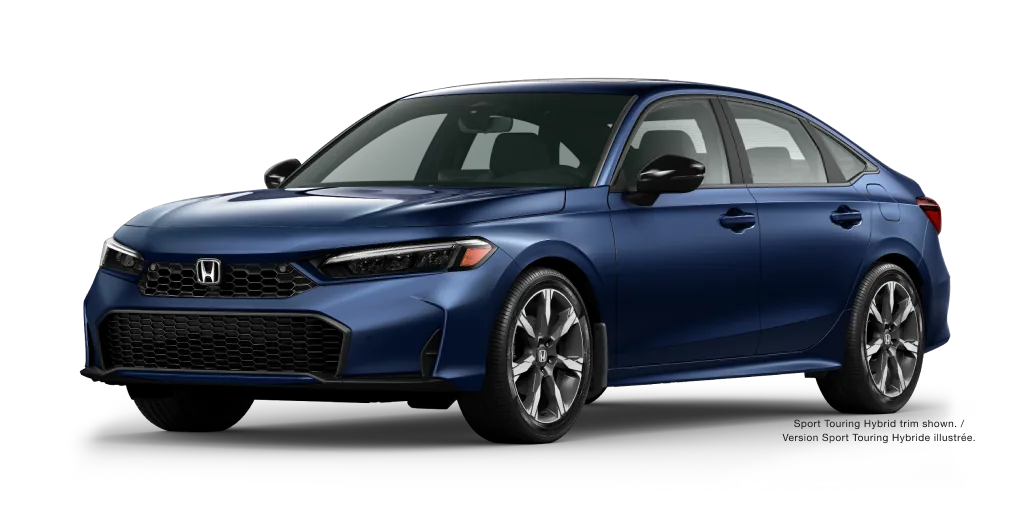
This is the complete 20-step guide to buying a Honda in Ontario in 2026, written from a dealer-side perspective. It covers everything from setting your budget to delivery day, and ties together every major topic on the site: lineup selection, lease vs finance, all-in pricing, test drive checklist, negotiation tactics, trade-in valuation, insurance, extended warranty, delivery day walkthrough, and first-90-day ownership. If you are shopping for a Honda, this is the only page you need to read.
Phase 1: Before you visit the dealer (Steps 1-6)
Step 1: Set your total budget
Most GTA buyers focus on the monthly payment, but the total out-the-door cost is what matters. For a 2026 Honda in Ontario, total cost includes:
- Vehicle price (MSRP or negotiated price)
- HST 13% on net price (after trade-in credit)
- Freight/PDI $1,950-$2,050
- Dealer doc fee (Henry at Maple Honda: $399, lowest in GTA)
- Tire stewardship fee (~$30)
- Air conditioner tax (if equipped, $100)
- OMVIC fee $10
- First insurance payment $1,500-$2,500
- Winter tires + installation $1,200-$1,800 (if not already owned)
- Accessories $200-$2,000 (floor mats, cargo liner, etc.)
For a $40,000 Civic Hybrid, all-in cash out the door = $49,000-$52,000. If financing over 5 years at 6%, add $6,000-$7,000 in interest = $56,000-$59,000 total. If leasing, the first 3-6 payments are typically due at signing.
Step 2: Pick the right model
The 2026 Honda Canada lineup has 14 models. Five questions to narrow it down:
- Primary use: Commute / family / road trips / off-road / towing?
- Seats: 5 / 7 / 8?
- Budget: Under $35K (Civic / HR-V) / $35-50K (Civic Hybrid / Accord / CR-V / Pilot) / $50K+ (Touring / Hybrid / Prologue / Ridgeline)?
- Fuel: Gas (Civic 1.5T / CR-V 1.5T / Pilot V6) / Hybrid (Civic Hybrid / Accord Hybrid / CR-V Hybrid / Prelude) / EV (Prologue)?
- Body style: Sedan (Civic / Accord) / SUV (HR-V / CR-V / Passport / Pilot / Prologue) / truck (Ridgeline) / minivan (Odyssey) / specialty (Civic Si / Civic Type R / Prelude)?
For a comprehensive look at every 2026 Honda model, see the complete lineup page. For hybrid options, see the hybrid lineup guide. For reliability + resale value rankings, see the reliability guide.
Step 3: Decide new vs used
New Honda: full 3-year / 60,000 km warranty, latest safety + tech (Honda Sensing standard), no previous owner history, you choose the trim and color. Cost: MSRP.
Used Honda: 30-50% lower price (the worst depreciation happens in the first 3 years), Honda CPO option adds warranty. Best used models: 2018+ Civic, 2018+ Accord, 2017+ CR-V, 2016+ Pilot, 2015+ Fit. See the reliability guide for which used Hondas to buy and which to avoid.
Buy new if: you want the latest features, plan to keep the car 7+ years, or buying a model with major recent updates (CR-V Hybrid, Civic Hybrid, Prologue). Buy used if: saving $10,000-$20,000 matters more than having the latest tech.
Step 4: Time your purchase
Three best windows for Honda deals in Ontario:
- Boxing Week (late November - mid December): Honda's best incentives of the year. Retail cash + HFS sub-vented lease rates + loyalty/conquest cash stack.
- End of each quarter (March 31, June 30, September 30, December 31): Dealers are pushing for quarterly sales bonuses, often more willing to negotiate.
- Model year changeover (September - October): The outgoing 2026 model gets clearance pricing as the 2027 models arrive. Save 5-10% off MSRP on a 2026 Civic or CR-V in October.
Worst months: April-May and August (low inventory, low incentives). For the BEST deal: combine a Boxing Week incentive with a year-end clearance, shop the outgoing model year, and time your purchase for end-of-quarter. See the current Honda deals & incentives.
Step 5: Get pre-approved for financing
Get pre-approved for financing BEFORE you visit the dealer. Two options:
- Bank or credit union pre-approval: RBC, TD, Scotiabank, BMO, CIBC, Tangerine, PC Financial, Meridian, Desjardins, etc. Get a rate quote + approval amount. Standard rate for new car finance is 4.99-6.99% (5-year), 5.49-7.49% (7-year), depending on credit score.
- Honda Financial Services (HFS) pre-approval: HFS often offers sub-vented rates below the bank rate (1.99-3.99% for Boxing Week / model year end programs, 4.49-5.49% for standard programs). HFS is convenient because the dealer handles the paperwork, but you have less negotiating power on the rate.
Why pre-approval matters: (1) you know exactly what you can afford, (2) you have a fallback if the dealer financing falls through, (3) you can use the pre-approval as a negotiating tool with the dealer (they may match or beat the bank rate).
Step 6: Get insurance quotes
Call your insurance broker or visit an online comparison site (Kanetix, Rates.ca) for quotes on the specific model you are shopping. Get 3 quotes. Ontario average insurance for a new Honda in 2026:
- Civic LX (G driver, Toronto, 35 years old, clean record): $1,500-$1,800/year
- CR-V LX (G driver, Toronto, 35 years old, clean record): $1,800-$2,200/year
- Pilot Touring (G driver, Toronto, 35 years old, clean record): $2,000-$2,400/year
- Civic Si (G driver, Toronto, 35 years old, clean record): $2,400-$2,800/year (sports car surcharge)
- Prologue EX (G driver, Toronto, 35 years old, clean record): $2,200-$2,600/year (EV surcharge in some markets)
Add the insurance quote to your budget. A $200/year difference in insurance over 5 years = $1,000 - that is real money.
Phase 2: Visit the dealer (Steps 7-12)
Step 7: Test drive 3-4 candidates
Book test drives at 3-4 dealers or 3-4 different models. The test drive should be 20-30 minutes minimum, including highway driving, parking manoeuvres, and a stop-and-go city drive.
Bring: valid Ontario driver's licence, a second adult for second opinion, your child car seat (if applicable), your phone with Apple CarPlay / Android Auto apps loaded, a USB-C cable, sunglasses, and a 5-10 point test drive checklist.
Test drive checklist (5-10 things to check):
- Seat comfort on a 20-minute drive (driver and passenger)
- Visibility - check all blind spots, mirror adjustment, rearward visibility
- Honda Sensing - ACC, LKAS, RDM, CMBS, TSR (do they activate cleanly?)
- Infotainment responsiveness - touchscreen lag, voice command accuracy, CarPlay/Android Auto integration
- Cabin noise at highway speed (60 km/h, 100 km/h, 120 km/h)
- Acceleration and braking feel (is the brake pedal confident? Is the throttle response natural?)
- Storage - glove box, centre console, door pockets, cargo area
- Climate control - does the A/C cool the cabin in under 5 minutes? Does the heated seat work?
- Rear seat space - sit in the back as a passenger for 5 minutes
- Trunk / cargo space - bring a large item (suitcase, stroller) to test fit
Step 8: Get 3-5 dealer quotes
Honda prices vary by $1,000-$3,000 between dealers on the same vehicle. Get quotes from 3-5 GTA Honda dealers. Email or call each dealer with the exact same request: "2026 Civic Sport, Lunar Silver, no accessories, all-in price including freight and doc fees." Compare the quotes apples-to-apples.
Why some dealers are cheaper: inventory turnover (a dealer with 90 days of inventory may discount more aggressively), proximity to the warehouse (lower transport costs), dealer-specific incentives (HFS volume bonuses), or the dealer's monthly sales target (a dealer 5 cars short of their quota will negotiate harder).
Step 9: Understand the OMVIC all-in price
Ontario regulations (OMVIC and the Consumer Protection Act) require advertised Honda prices to include all mandatory fees. The OMVIC all-in price (also called driveaway price or out-the-door price) includes:
- Vehicle price (MSRP or negotiated)
- Freight/PDI $1,950-$2,050
- Dealer doc fee (Henry at Maple Honda: $399, lowest in GTA)
- Tire stewardship fee ~$30
- Air tax $100 (A/C equipped vehicles)
- OMVIC fee $10
If a dealer advertises a price that does not include these fees, that is a Consumer Protection Act violation. The advertised price is not the final price. The all-in price is the final price. See the all-in price explainer.
Step 10: Negotiate the price
Seven tactics for negotiating the best Honda price:
- Get quotes from 3-5 GTA Honda dealers - prices vary by $1,000-$3,000 between dealers on the same vehicle.
- Time your purchase for Boxing Week, end of quarter, or model year changeover.
- Be ready to walk away - the dealer's best price often comes 5-10 minutes after you say "thanks for your time" and head for the door.
- Negotiate the out-the-door price, not the monthly payment. Dealers will stretch the term to 84 months to make a payment look affordable.
- Hold the trade-in negotiation separate from the new car negotiation. Dealers often make up the new car discount by undervaluing your trade-in.
- Ask for the dealer fee discount. $399 at Maple Honda is the lowest in the GTA. Some dealers charge $599-$899.
- Don't pay for paint protection, fabric protection, or nitrogen tires. These are pure profit add-ons that you can buy aftermarket for $50-$200 each.
Step 11: Decide lease vs finance
For a complete comparison, see the lease vs finance post. Quick framework:
Lease if: (1) you want a new car every 3-4 years, (2) you drive less than 24,000 km/year, (3) you want lower monthly payments (lease payments are typically 30-40% lower than finance payments on the same car), (4) you want to be protected from depreciation risk.
Finance if: (1) you drive more than 24,000 km/year, (2) you plan to keep the car more than 5 years, (3) you want to own an asset (the title) at the end, (4) you put a lot of wear and tear on cars (kids, pets, work gear - lease excess wear charges can be steep).
For most GTA buyers, lease is the better choice because traffic is heavy and depreciation is fast - lease lets you hand the car back at end of term. See the lease end guide for what happens when the lease ends.
Step 12: Decide on Honda Care extended warranty
Honda Care is Honda's factory-backed extended warranty, sold at the time of new vehicle purchase or anytime before the standard 3-year / 60,000 km warranty expires. Plans range from 5 years / 100,000 km to 8 years / 200,000 km, with options for $0, $100, or $200 deductible. Cost: $1,500-$3,500.
Honda Care covers mechanical breakdown (engine, transmission, drivetrain, electrical, A/C, suspension). Does NOT cover collision damage, regular maintenance, or wear items (brakes, tires, wiper blades). For the Prologue EV, Honda Care Plus is highly recommended (covers the high-voltage battery diagnostic and replacement cost outside the 8-year / 160,000 km factory warranty).
Henry's take: Honda Care is worth it if you plan to keep the car more than 5 years, if you are buying a model with known mechanical risks (e.g., the Prologue EV), or if you want the peace of mind of no surprise repair bills. Skip it if you are leasing (the lease term is shorter than the standard warranty).
Phase 3: Finalize the deal (Steps 13-16)
Step 13: Trade-in valuation (if applicable)
For a comprehensive guide, see the trade-in vs private sale guide. Quick framework:
Get a CarProof vehicle history report for free. Get trade-in quotes from 3-5 sources: Maple Honda + 2 other Honda dealers + 1 non-Honda dealer + Canadian Black Book private-party value. Have your service records ready. Address any warning lights before the appraisal. Clean the car inside and out.
The trade-in offer at a Honda dealer is typically 5-10% below private-party value, but the convenience of not having to sell privately (no OMVIC paperwork, no showing the car to strangers, no payment delays) makes the dealer trade-in worth it for most buyers.
Step 14: Insurance setup
Call your insurance broker or visit an online comparison site 1-2 days before the delivery date. Add the new vehicle to your policy. Choose your coverage levels:
- Third-party liability: $1,000,000 or $2,000,000 (recommended)
- DCPD (Direct Compensation for Property Damage): mandatory in Ontario
- Accident benefits: standard SABS coverage (see Cycle 96)
- Collision (optional, recommended for financed/leased): $500-$1,000 deductible
- Comprehensive (optional, recommended): $500 deductible
- OPCF 43 (waiver of depreciation): worth the $50-$100/year for first 2 years
- OPCF 27 (limited glass): $20-$50/year, covers windshield chips
- OPCF 20 (rental car): $50-$100/year, covers rental car during insurance claim repair
See the collision reporting guide for what to do after a collision.
Step 15: Final paperwork review
Before signing the bill of sale, verify:
- Vehicle make, model, year, trim, color, VIN matches what you ordered
- MSRP matches the dealer's published price
- All advertised incentives are applied (retail cash, loyalty, conquest, etc.)
- Freight/PDI is $1,950-$2,050 (not inflated)
- Dealer doc fee is shown separately (and is $399 at Maple Honda)
- Air tax $100 is shown
- HST 13% is calculated on the net price (after trade-in credit)
- Total all-in price matches the quoted out-the-door amount
- Financing terms: rate, term (in months), payment, total cost of finance
- Honda Care terms (if purchased): plan, deductible, term, price
- All accessories quoted match what you ordered
- Trade-in credit is itemized (and not double-counted in the new car price)
Step 16: Delivery day
12-point delivery day checklist (see the detailed FAQ at the end of this page for the full list):
- Verify the VIN on the dashboard matches the paperwork
- Check the odometer - should be under 100 km for a new car
- Walk around the car - look for paint chips, scratches, dents, wheel rash
- Test all features: lights, A/C, heated seats, infotainment, CarPlay, backup camera, Honda Sensing
- Get the HRA wallet card and save 1-800-465-7587 in your phone
- Take photos of the car for your insurance
- Within 7 days: call insurance, register at ServiceOntario, return temporary plates
- Within 30 days: first oil change at the dealer (covered by Honda Care if purchased)
- Save all paperwork: window sticker, bill of sale, financing, Honda Care, owner's manual
Phase 4: First 90 days of ownership (Steps 17-20)
Step 17: First-week setup
First-week ownership checklist:
- Pair your phone via Bluetooth for calls and audio
- Set up Apple CarPlay or Android Auto
- Calibrate Honda Sensing (the forward camera recalibrates on its own, but the driver attention monitor takes 100-200 km to learn your face)
- Adjust all mirrors, seat, steering wheel position
- Test the spare tire or tire sealant kit (most 2026 Hondas come with a sealant kit, not a spare)
- Find the OBD-II port (under the dashboard, usually driver's side)
- Download the HondaLink app (if equipped)
- Set a reminder for the first service (typically 8,000 km or 6 months)
- Save the HRA number 1-800-465-7587 in your phone
- Read the owner's manual - at least the safety, maintenance, and warranty sections
Step 18: First-month routine
First-month ownership tasks:
- Check tire pressure (cold psi on the door jamb sticker, typically 32-35 psi)
- Get the first wash - find a touchless or hand wash, not a brush wash (brushes scratch paint)
- Install phone mount if you use one (Honda's built-in mounts are in the centre console tray)
- Schedule the first dealer service for 8,000 km or 6 months
- Test the charging (Prologue) or fuel economy (gas Honda) over the first month to establish a baseline
- Take a long highway drive (cottage country, Toronto to Ottawa) to test the cruise control and Honda Sensing on the 400-series
Step 19: First-90-day tips
First 90 days:
- Common first-90-day "issues" that are actually normal: (1) a 'ding' sound when cold-starting in cold weather (CVT, normal), (2) Honda Sensing camera calibration takes ~50 km to fully calibrate, (3) infotainment quirks (CarPlay disconnects, fixes itself with software updates)
- Take any persistent issue to the dealer within the 90-day window for free warranty repair
- Complete the Honda Canada satisfaction survey that arrives by email at 90 days - your feedback affects the dealer's customer satisfaction score and your future negotiation leverage
- Consider the long-term plan: lease-end timing, lease buyout if you want to keep the car, or trade-in for the next vehicle
Step 20: Long-term ownership planning
Long-term Honda ownership strategies:
- Keep all service records. Honda dealers pay 10-15% more for used Hondas with full Honda service history. See the reliability guide for resale value tactics.
- Stay current on recalls. Honda occasionally issues recalls for safety issues. See the recall check guide for the process.
- Know your emergency resources. HRA 1-800-465-7587 (24/7) for breakdowns, Cycle 98 details. 911 for emergencies. Non-emergency police for incidents.
- Document everything. Save all receipts, service records, and modifications. The Honda CarProof vehicle history report makes selling or trading in much easier.
Frequently asked questions
How much should I budget for a new Honda in Ontario in 2026?
For a 2026 Honda in Ontario, total out-the-door budget for a typical buyer: vehicle price $30,000-$55,000 (Civic / CR-V), plus HST 13% on net price (after any trade-in credit), plus freight/PDI $1,950-$2,050, plus doc fee $399 at Maple Honda, plus first insurance payment $1,500-$2,500. For a $40,000 Civic Hybrid, all-in: $40,000 + $5,200 HST + $1,950 + $399 + $1,800 insurance = $49,349 cash out the door. If you are financing, add interest cost (5-7% on a 5-year loan = $5,000-$7,000 in interest). If leasing, the first 3-6 payments are typically due at signing. Budget 5-10% above the all-in price for accessories, winter tires, and unexpected fees.
Should I buy new or used Honda?
It depends on your priorities. New Honda: full 3-year / 60,000 km warranty, latest safety and tech (Honda Sensing standard), no previous owner history, you choose the trim and color. Used Honda: 30-50% lower price, slower depreciation (the worst depreciation happens in the first 3 years), Honda CPO option adds warranty. Buy new if you want the latest features, plan to keep the car 7+ years, or are buying a model with major recent updates (CR-V Hybrid, Civic Hybrid, Prologue). Buy used if you want to save $10,000-$20,000, are shopping a model that is well-established (Civic, Accord, CR-V, Pilot), and do not need the absolute latest tech. The math works out the same on a per-year basis for a 5-year ownership.
What is the best month to buy a Honda in Ontario?
Three best windows: (1) Late November - mid December (Boxing Week program) - Honda offers retail cash + HFS sub-vented lease rates + loyalty/conquest cash. Often the best incentives of the year. (2) End of each quarter (March 31, June 30, September 30, December 31) - dealers are pushing for quarterly sales bonuses, often more willing to negotiate. (3) Model year changeover (September-October) - the outgoing 2026 model gets clearance pricing as the 2027 models arrive. Worst months: April-May and August (low inventory, low incentives). For the BEST deal: combine a Boxing Week incentive with a year-end clearance, shop the outgoing model year, and time your purchase for end-of-quarter.
How do I choose the right Honda model?
Five questions to narrow it down: (1) What is your primary use? Commute, family, road trips, off-road, towing. (2) How many seats do you need? 5 / 7 / 8. (3) What is your budget? Under $35K (Civic / HR-V), $35-50K (Civic Hybrid / Accord / CR-V / Pilot), $50K+ (Touring / Hybrid / Prologue EV / Ridgeline). (4) What fuel economy do you want? Gas (Civic 1.5T), hybrid (Civic Hybrid / Accord Hybrid / CR-V Hybrid), or EV (Prologue). (5) What body style? Sedan (Civic / Accord), SUV (HR-V / CR-V / Passport / Pilot / Prologue), truck (Ridgeline), minivan (Odyssey), or specialty (Civic Si / Civic Type R / Prelude). Test-drive 3-4 candidates. The right Honda is the one that fits your daily life, not the one with the most features.
What should I bring to a Honda test drive?
Bring: (1) Your valid Ontario driver's licence (the dealer will photocopy it). (2) A second adult or older teen to give a second opinion on back-seat space, ride quality, and ergonomics. (3) Your child car seat if you have small children - install it in the back to check fit. (4) Your phone with Apple CarPlay / Android Auto apps loaded - to test the infotainment integration. (5) A USB-C cable to test wired connection. (6) Sunglasses for daytime glare on the windshield. (7) A list of 5-10 specific things to check (see our test drive checklist). (8) Your current vehicle's trade-in paperwork if applicable. The test drive should be 20-30 minutes minimum, including highway driving, parking manoeuvres, and a stop-and-go city drive if possible.
What is the OMVIC all-in price in Ontario?
The OMVIC all-in price is the total amount you will pay for the vehicle, including all fees. Under Ontario regulations (OMVIC and the Consumer Protection act), advertised Honda prices must include: (1) the vehicle price (MSRP or negotiated), (2) freight/PDI, (3) dealer fees (doc fee, admin fee), (4) tire stewardship fee, (5) air tax ($100 on A/C equipped vehicles), (6) OMVIC fee $10, (7) any other mandatory fees. HST 13% is added at the top. If a dealer advertises a price that does not include these fees, that is a Consumer Protection Act violation. Henry at Maple Honda advertises true all-in pricing on every vehicle. The 'all-in price' is also called 'driveaway price' or 'out-the-door price'.
How do I negotiate the best price on a Honda?
Seven tactics: (1) Get quotes from 3-5 GTA Honda dealers - prices vary by $1,000-$3,000 between dealers on the same vehicle. (2) Time your purchase for Boxing Week, end of quarter, or model year changeover. (3) Be ready to walk away - the dealer's best price often comes 5-10 minutes after you say 'thanks for your time' and head for the door. (4) Negotiate the out-the-door price, not the monthly payment - dealers will stretch the term to 84 months to make a payment look affordable. (5) Hold the trade-in negotiation separate from the new car negotiation - dealers often make up the new car discount by undervaluing your trade-in. (6) Ask for the dealer fee discount - $399 at Maple Honda is the lowest in the GTA. (7) Don't pay for paint protection, fabric protection, or nitrogen tires - these are pure profit add-ons that you can buy aftermarket for $50-$200 each.
Should I finance or lease my Honda?
Lease if: (1) you want a new car every 3-4 years, (2) you drive less than 24,000 km/year, (3) you want lower monthly payments (lease payments are typically 30-40% lower than finance payments on the same car), (4) you want to be protected from depreciation risk. Finance if: (1) you drive more than 24,000 km/year, (2) you plan to keep the car more than 5 years, (3) you want to own an asset (the title) at the end, (4) you put a lot of wear and tear on cars (kids, pets, work gear - lease excess wear charges can be steep). For most GTA buyers, lease is the better choice because traffic is heavy and depreciation is fast - lease lets you hand the car back at end of term.
What is Honda Care extended warranty?
Honda Care is Honda's factory-backed extended warranty, sold at the time of new vehicle purchase or anytime before the standard 3-year / 60,000 km warranty expires. Plans range from 5 years / 100,000 km to 8 years / 200,000 km, with options for $0, $100, or $200 deductible. Cost is $1,500-$3,500 depending on the term and the model. Honda Care covers mechanical breakdown beyond the standard warranty (engine, transmission, drivetrain, electrical, A/C, suspension). It does NOT cover collision damage, regular maintenance, or wear items (brakes, tires, wiper blades). Henry's take: Honda Care is worth it if you plan to keep the car more than 5 years, if you are buying a model with known mechanical risks (e.g., the Prologue EV), or if you want the peace of mind of no surprise repair bills. Skip it if you are leasing (the lease term is shorter than the standard warranty).
What is the best Honda for new drivers?
For new drivers (G1/G2/M1/M2 novice licence in Ontario), the best Honda is a used Honda Civic LX (2018+ gas 2.0L) or Honda Fit (2015-2020, now discontinued). The reasons: (1) Civic LX is the cheapest reliable Honda in the lineup, starting around $22,000 used. (2) Honda Sensing is standard on 2018+ Civic, giving the new driver adaptive cruise control, lane keeping assist, and automatic emergency braking. (3) 2.0L naturally-aspirated engine has predictable power (no turbo lag surprises). (4) Insurance costs are reasonable for Civic LX (Toronto average $1,800-$2,400/year for G2 driver, vs $3,500-$5,000 for a Civic Si or larger SUV). (5) The Fit is even cheaper and more fuel-efficient (6.5 L/100 km combined), but harder to find in GTA inventory.
What should I do on delivery day?
A 12-point delivery day checklist: (1) Verify the VIN on the dashboard matches the paperwork. (2) Check the odometer - should be under 100 km for a new car. (3) Walk around the car with the delivery specialist - look for paint chips, scratches, dents, wheel rash. (4) Test all the features: headlights, turn signals, A/C, heated seats (if equipped), power windows, sunroof, infotainment, Apple CarPlay / Android Auto, backup camera, Honda Sensing features. (5) Confirm HondaLink activation (if equipped). (6) Get the HRA wallet card and confirm 1-800-465-7587 is in your phone. (7) Take photos of the car for your insurance (front, back, sides, VIN plate). (8) Drive the car off the lot with the temporary dealer plate. (9) Within 7 days: call your insurance to add the new car, register the new car at ServiceOntario (Cycle 90 covers this), return the temporary plates. (10) Within 30 days: first oil change at the dealer (covered by Honda Care if purchased). (11) Within 90 days: the satisfaction survey from Honda Canada - take it seriously, your feedback affects the dealer's customer satisfaction score. (12) Save all paperwork: window sticker, bill of sale, financing agreement, Honda Care contract, owner's manual, key fob programming instructions.
How do I get a fair trade-in value for my current car?
Five steps: (1) Get a CarProof vehicle history report for free at carproof.com - any dealer will show you the report. (2) Get trade-in quotes from 3-5 sources: Maple Honda + 2 other Honda dealers + 1 non-Honda dealer + Canadian Black Book private-party value. (3) Have your service records ready - dealers pay 10-15% more for cars with documented Honda service history. (4) Address any warning lights (check engine, airbag, ABS) before the appraisal - the dealer will discount for these. (5) Clean the car inside and out, including a vacuum and exterior wash. The trade-in offer at a Honda dealer is typically 5-10% below the private-party value, but the convenience of not having to sell privately (no OMVIC paperwork, no showing the car to strangers, no payment delays) makes the dealer trade-in worth it for most buyers.
What is the first thing I should do after buying a Honda?
First-week ownership checklist: (1) Pair your phone via Bluetooth for calls and audio. (2) Set up Apple CarPlay or Android Auto. (3) Calibrate Honda Sensing (the forward camera recalibrates on its own but the driver attention monitor takes 100-200 km to learn your face). (4) Adjust all mirrors, seat, steering wheel position. (5) Test the spare tire and tire change equipment (most Hondas come with a tire sealant kit, not a spare). (6) Find the OBD-II port (under the dashboard, usually driver's side) - useful for diagnostic tools. (7) Download the HondaLink app (if equipped). (8) Set a reminder for the first service (typically 8,000 km or 6 months). (9) Save the HRA number 1-800-465-7587 in your phone. (10) Read the owner's manual - at least the safety, maintenance, and warranty sections. The owner's manual is also available at honda.ca/owners in PDF form.
What insurance coverage do I need for a new Honda in Ontario?
Ontario mandatory minimum coverage: third-party liability $200,000 (most GTA drivers carry $1,000,000 or $2,000,000 - the upgrade is $50-$100/year and worth it). Standard Ontario coverage also includes: accident benefits (Statutory Accident Benefits Schedule - medical, income replacement), DCPD for property damage (Cycle 96 covers this), uninsured motorist coverage. Optional coverage worth considering: collision ($500-$1,000 deductible, covers at-fault damage), comprehensive ($500 deductible, covers theft, vandalism, weather, animal strikes), OPCF 43 (waiver of depreciation - Honda depreciates ~15% in year 1, this endorsement waives the depreciation if you total the car in the first 2 years), OPCF 27 (limited glass coverage for windshield chips), OPCF 20 (coverage for rental car). For leased Hondas: collision and comprehensive are typically required by the lease contract. For financed Hondas: collision and comprehensive are optional but recommended.
What are the first 90 days of Honda ownership like?
First 90 days: weeks 1-2 are the honeymoon - get familiar with all the features, drive the car in different conditions (highway, parking, night). Month 1: check tire pressure (cold psi on the door jamb sticker, typically 32-35 psi), get the first wash, install phone mount if you use one. Month 2: first long highway drive (cottage country, Toronto to Ottawa, etc.) to test the cruise control and Honda Sensing on the 400-series. Month 3: first dealer service at 8,000 km or 6 months (oil change, tire rotation, multi-point inspection). Common first-90-day issues: (1) a 'ding' sound when cold-starting the engine in cold weather (CVT, normal), (2) Honda Sensing camera calibration (drives straight after ~50 km), (3) infotainment quirks (CarPlay disconnects, fixes itself with software updates). Take any persistent issue to the dealer within the 90-day window for free warranty repair.
Related from Henry
- 2026 Honda Canada lineup — every model, MSRP, and where it's built — the complete lineup reference for Step 2 (model selection).
- 2026 Honda Hybrid lineup — 6 models compared — the hybrid options for Step 2.
- Honda reliability and resale value 2026 — the reliability + resale guide for Step 3 (new vs used decision).
- Honda insurance in Ontario: what actually moves the price — read this before Step 14, not after: trim and theft risk move the premium more than the badge does.
- Honda collision in Ontario: what to do in the first 24 hours — the collision guide for Step 14 (insurance setup).
- Distracted driving in Ontario 2026: HTA s.78.1 fines & demerits — the HTA guide for safe driving.
- Honda Roadside Assistance in Ontario 2026 — the HRA guide for Step 17 (first-week setup).
- Honda winter tire sizing for Ontario — the winter tire guide for Step 1 (budget allocation).
Sources: honda.ca (2026 lineup, MSRP, Honda Sensing, Honda Care); honda.ca/en/honda-plus/roadside-assurance (HRA 3-year complimentary); ontario.ca (HTA, OMVIC all-in pricing regulations, ServiceOntario); CAA South Central Ontario (insurance averages); Canadian Black Book (residual value estimates); HONDA_CANADA_FACTS.json (canonical reference). Pricing and incentive data is illustrative; actual deals depend on vehicle, time of year, and dealer. Last verified: July 1, 2026.