Honda Reliability and Resale Value in 2026: What GTA Buyers and Owners Should Know
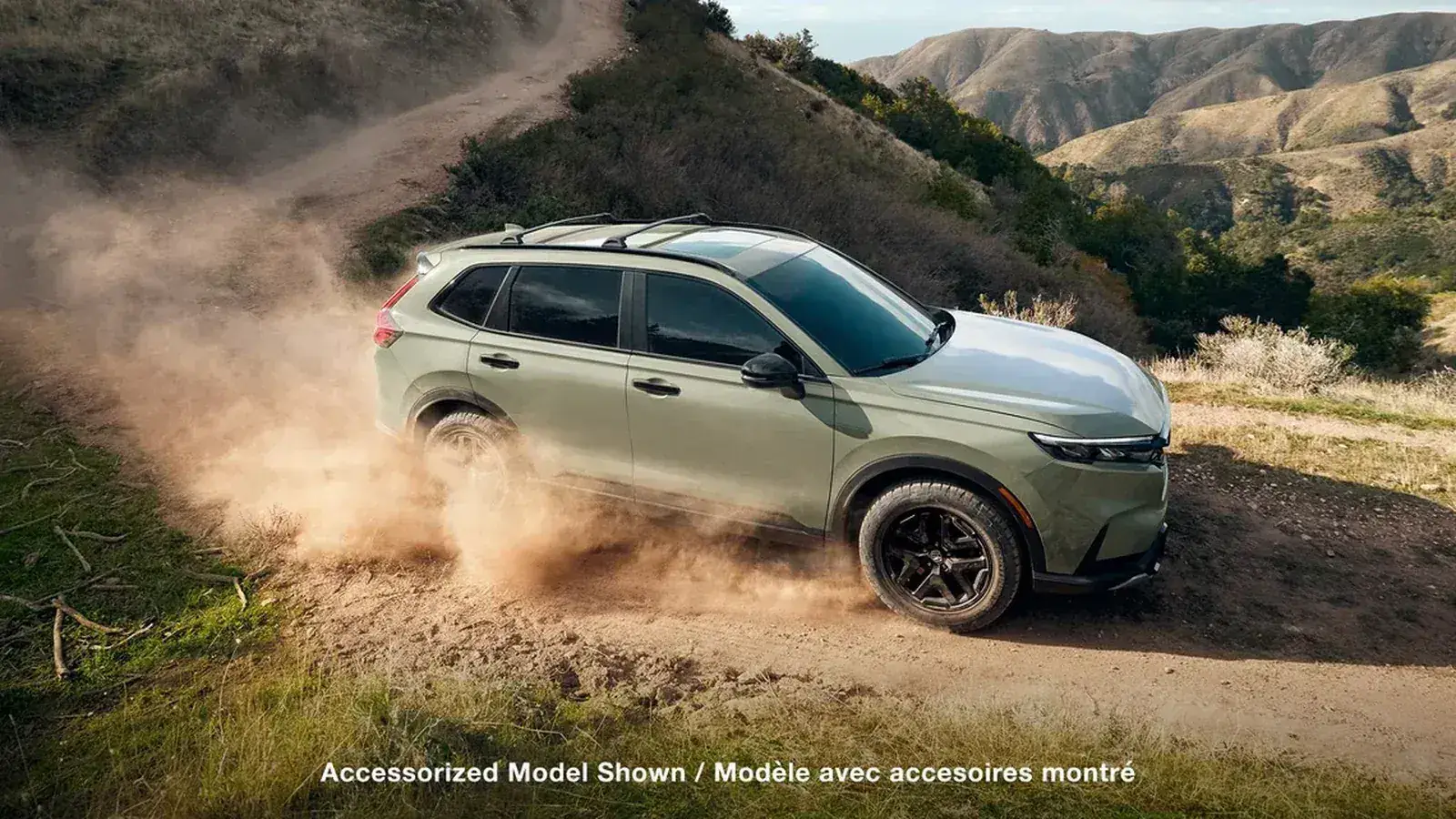
Honda is consistently one of the most reliable mass-market brands in 2026. Consumer Reports ranks it #2 mainstream brand (behind Toyota) and #4 overall. RepairPal rates Honda 4.0/5.0 — #1 of 32 brands — on repair cost. RepairPal publishes that figure in US dollars against US shop rates, so the ranking travels to Ontario and the amount does not. For resale value, Honda is the #2 brand after Toyota at 7-year retention. A 2021 Honda Civic LX retains roughly 54-58% of MSRP after 5 years; a 2021 CR-V LX retains 56-60%. Here is the honest 2026 picture — including the Honda Prologue EV's below-average reliability score and the 6 specific used Hondas to avoid — from a Maple Honda dealership perspective.
1. Honda's reliability ratings in 2026
Three independent organizations rank Honda's reliability consistently:
| Source | Honda ranking | Top brand | Industry comparison |
|---|---|---|---|
| Consumer Reports 2026 | #2 mainstream brand / #4 overall / #4 new car reliability / #4 used car reliability | Toyota | Honda scores above industry average in all CR categories |
| RepairPal 2026 | #1 of 32 car brands (4.0/5.0 reliability rating) | Honda | Honda repair costs rank below the industry average (RepairPal publishes US dollar figures, which do not translate to Ontario shop rates) |
| JD Power 2026 VDS | Top quartile | Lexus / Cadillac / Porsche | 2026 industry average 204 PP100; Honda consistently below average PP100 |
The Consumer Reports 2026 rankings are based on data from 2023-2025 model year owners surveyed on problems in the last 12 months. RepairPal uses actual repair orders from thousands of US and Canadian independent shops. JD Power surveys 33,000+ verified owners on problems experienced after 3 years of ownership. All three organizations independently rank Honda in the top tier of mass-market brands.
2. The most reliable Honda models in 2026
Honda's reliability is not uniform across the lineup. These are the models with the strongest reliability records based on Consumer Reports and RepairPal historical data:
| Model | Generation / years | CR / RepairPal rating | Best years for used |
|---|---|---|---|
| Civic (gas 2.0L) | 11th gen (2022+) | CR above average, RepairPal 4.5/5.0 | 2018+ (10th and 11th gen) |
| Civic Hybrid | 11th gen (2025+) | CR above average | 2025+ only |
| Accord (gas 1.5T) | 11th gen (2023+) | CR above average | 2018+ (10th and 11th gen) |
| Accord Hybrid | 11th gen (2023+) | CR above average | 2018+ |
| CR-V (gas 1.5T) | 6th gen (2023+) | CR above average, RepairPal 4.0/5.0 | 2017+ (5th and 6th gen) |
| CR-V Hybrid | 6th gen (2024+, Alliston-built) | CR above average | 2024+ |
| HR-V | 2nd gen (2023+) | CR above average | 2019+ |
| Pilot | 3rd-4th gen (2016+) | CR above average, RepairPal 4.0/5.0 | 2016+ |
| Fit (used) | 2nd gen (2007-2020) | CR above average, RepairPal 4.5/5.0 | 2015-2020 |
| Ridgeline | 1st gen (2006-2014) / 2nd gen (2017+) | CR average for pickup, good for unibody | 2017+ (2nd gen) |
The 11th-generation Civic (2022+, gas 2.0L) and the 6th-generation CR-V (2023+, gas and hybrid) are the gold standards for compact reliability. Both are expected to last 250,000+ km with reasonable maintenance. The Civic Hybrid (2025+) is too new to have long-term data but uses proven Honda hybrid technology from the Accord Hybrid.
3. The least reliable Honda models in 2026
For honest advice: a few Honda models have notable reliability or quality issues, and avoiding them is wise for used buyers.
| Model / years | Issue | Severity | Recommendation |
|---|---|---|---|
| 2024-2026 Honda Prologue EV | First-generation Ultium EV; charging system, infotainment, and software issues reported | Below average CR score | Wait for 2027+ model or buy a gas Honda |
| 2003-2007 Honda Accord V6 | Transmission failure around 150,000-200,000 km ($4,000-$6,000 replacement) | Major | Avoid unless transmission has been rebuilt |
| 2013-2015 Honda Accord 4-cyl + CVT | Transmission judder / shudder; covered by Honda TSB in 2015 | Moderate | Confirm TSB was done; or buy 2016+ |
| 2016-2018 Honda Civic 1.5L turbo | Oil dilution in very cold climates (Northern US / Prairie Canada) | Minor (Honda TSB fixed in 2018) | Avoid if you live in Winnipeg / Saskatchewan |
| 2017-2019 Honda CR-V 1.5L turbo | Same oil dilution issue, fixed by 2019 | Minor | 2019+ or 2017-2018 with Honda TSB done |
| 2007-2008 Honda Fit (manual) | Manual transmission bearing issues; Honda extended warranty covered | Moderate (mostly resolved) | Avoid 2007-2008 Fit manual |
The most important callout: the 2024-2026 Honda Prologue EV (the all-electric SUV built on GM's Ultium platform) has scored below average in early 2026 reliability surveys. This is consistent with first-generation EVs from any automaker (the Chevrolet Equinox EV, Blazer EV, Silverado EV - all on the same Ultium platform - have similar early issues). For GTA buyers who want a proven Honda, the Civic Hybrid, Accord Hybrid, or CR-V Hybrid are safer bets than the Prologue. The 2027 Prologue (expected fall 2026 release) is likely to have addressed early issues.
4. Honda's resale value story
Honda is one of the best value-retention mainstream brands in Canada. The reason is the reinforcing cycle of reliability, demand, and production discipline.
| Model | 3-year retention | 5-year retention | 7-year retention |
|---|---|---|---|
| Civic LX (gas 2.0L) | 68-72% | 54-58% | 42-46% |
| Accord (gas 1.5T Sport trim) | 60-64% | 47-51% | 36-40% |
| CR-V LX (gas 1.5T) | 68-72% | 56-60% | 45-49% |
| CR-V Hybrid Sport | 72-76% | 62-66% | 52-56% |
| HR-V LX | 62-66% | 48-52% | 38-42% |
| Pilot Touring | 55-60% | 42-46% | 32-36% |
| Odyssey Touring | 56-60% | 42-46% | 32-36% |
| Ridgeline Black Edition | 62-66% | 50-54% | 40-44% |
| Prologue EX AWD (EV) | 42-48% | 30-36% | 22-28% |
The CR-V Hybrid is the value-retention champion in the Honda lineup, retaining 72-76% of MSRP after 3 years and 62-66% after 5 years. The standard Civic and CR-V gas are close behind. The Prologue EV is the weakest Honda for resale value, holding 15-20% less value than the equivalent Honda gas SUV after 3 years — which is consistent with current EV depreciation industry-wide.
5. Honda vs Toyota vs Mazda vs Hyundai resale value
How does Honda stack up against the other top mass-market brands?
| Brand | 5-year retention | Reliability | GTA dealer network |
|---|---|---|---|
| Toyota | 58-62% | CR #1 mainstream | Excellent (multiple GTA Toyota dealers) |
| Honda | 54-58% | CR #2 mainstream | Excellent (multiple GTA Honda dealers) |
| Mazda | 46-50% | CR #3 mainstream | Good (fewer GTA dealers) |
| Subaru | 50-54% | CR average | Moderate (limited GTA dealers) |
| Hyundai / Kia | 42-46% | CR below average | Moderate |
| Ford / Chevrolet / GMC | 36-42% | CR below average | Excellent |
| Volkswagen | 38-42% | CR below average | Moderate |
Toyota and Honda are the top two brands for resale value retention. After Honda, the gap to Mazda and Subaru is significant. The domestic brands (Ford, Chevrolet, GMC) retain 15-20 percentage points less than Honda after 5 years. Japanese reliability and production discipline translate directly to higher used car prices.
6. Why Honda holds its value — the structural reasons
Honda's resale value is not an accident. It is driven by three reinforcing structural factors:
1. Long-term reliability
Honda models from 2010 onwards are engineered to last 200,000-300,000 km with reasonable maintenance. Real-world examples: many 2010-2015 Civics, Accords, and CR-Vs on Ontario roads today have 200,000+ km with the original engine and transmission. This long life creates demand in the used market - buyers know that a 5-year-old Honda with 100,000 km is just broken-in.
2. Production discipline
Honda deliberately under-produces the Canadian market for Civic and CR-V. Wait lists for the Civic Si and CR-V Hybrid are common. Tight supply keeps prices high in the used market. By contrast, GM and Stellantis often over-produce domestic platforms, which depresses used prices.
3. Brand demand
Honda is the #1 mainstream brand for first-time buyers and budget-conscious families in Canada. This is consistent across Consumer Reports, JD Power owner satisfaction surveys, and DesRosiers automotive industry data. The result is deep buyer demand in the used market — a 2017 Civic with 100,000 km has multiple interested buyers within days of being listed.
7. How to maximize your Honda's resale value
Practical tactics to get top dollar when you sell or trade in your Honda:
- Keep complete service records from a Honda dealer. Honda dealers pay a premium for used Hondas with full Honda-dealer service history. The records prove the car was maintained to Honda's recommendations.
- Keep the original window sticker and owner's manual in the glove box. Original documentation adds perceived value and shows the car was not flipped multiple times.
- Have all keys and fobs at trade-in. Replacement Honda keys require professional programming and can be expensive to replace. Having all original keys and fobs avoids deductions from your trade-in appraisal.
- Maintain the paint and interior. Touch up chips with Honda OEM touch-up paint (the color code is on the door jamb sticker). Detail the interior before trading in. Replace any worn floor mats with clean Honda OEM mats.
- Address dashboard warning lights before trading in. Check engine, airbag, ABS, VSA, TPMS — active warning lights will lower your trade-in offer. Have any issues diagnosed and resolved before bringing the car in for an appraisal.
- Trade in to a Honda dealer instead of selling privately. Honda dealers pay close to private-party value for clean Hondas because they can CPO them and resell at retail. You avoid private-sale expenses (safety inspections, advertising, tax paperwork) and the hassle and safety risk of meeting strangers.
8. Buying a used Honda — what to look for
For GTA buyers shopping the used Honda market, here is the inspection checklist our service department uses:
- CarProof vehicle history report. Look for: no accidents (minor parking lot dings are OK, structural accidents are not), no liens, single owner if possible, no salvage or rebuilt titles, consistent odometer readings.
- Honda dealer service records. Look for: oil changes every 8,000-10,000 km (synthetic) or 5,000-7,000 km (conventional), transmission fluid change at 80,000-100,000 km (CVT) or 60,000 km (auto), spark plug replacement at 100,000 km (iridium), brake fluid change at 60,000 km.
- Clean interior and exterior. Look for: no smoking odors, no pet stains, no tears in seats, no excessive wear on driver seat bolster, no curb rash on wheels, no major paint chips or dents.
- All-keys-and-fobs presence. Ask for both master keys and any valet keys. Missing keys cost $200-$400 each to replace.
- Tire condition. Look for: even tread wear across all four tires (uneven wear suggests alignment / suspension issues), minimum 4-5 mm tread depth, matching brand and model on all four (mixed brands is OK but suggests band-aid repairs).
- Test drive. Check: smooth acceleration (no hesitation, no judder), smooth shifting (auto or CVT should not jerk or slip), no warning lights on dashboard after start, no unusual noises from suspension, no pulling to one side under braking, A/C blows cold, all electronic features work (radio, navigation, Bluetooth, backup camera, Honda Sensing).
- Pre-purchase inspection. Pay $150-$250 for an independent Honda mechanic to inspect the car before purchase. This is the single best way to catch expensive issues before you commit.
9. Honda Certified Pre-Owned (CPO) — the safest used Honda
Honda Certified Pre-Owned is Honda's factory-backed used car program. It is the safest way to buy a used Honda.
What CPO includes
- 7-year / 160,000 km powertrain warranty from the original in-service date (Honda covers engine, transmission, drive axle)
- 3-year Honda Roadside Assistance (see Cycle 98 for details on HRA)
- 100-point mechanical inspection by Honda-certified technicians
- Clean CarProof vehicle history report required for CPO status
- Exchange privilege: 3 days / 300 km to exchange for another CPO Honda if you are not satisfied
- HondaLink subscription (where applicable)
CPO eligibility
- Less than 6 years old from original in-service date
- Less than 120,000 km on the odometer
- Clean CarProof (no accidents, no salvage titles)
- Passes the 100-point inspection
CPO vs non-CPO pricing
CPO Hondas cost $2,000-$5,000 more than equivalent non-CPO used Hondas. The premium reflects the warranty, inspection, and exchange privilege. For a 3-year-old Honda with 50,000 km that you plan to keep for 5+ years, the CPO premium is usually worth it. For a 6-year-old Honda with 110,000 km, the warranty is almost used up anyway - skip CPO and save the money.
Frequently asked questions
Is Honda a reliable car brand in 2026?
Yes. Honda is consistently one of the most reliable mass-market brands in 2026, ranked #4 overall and #2 mainstream brand by Consumer Reports (the highest-rated mainstream brand behind Toyota in most categories). RepairPal gives Honda a 4.0/5.0 reliability rating, ranking it #1 of 32 car brands. RepairPal ranks Honda first of 32 brands on repair cost. Its dollar figures are US-market and do not translate to Ontario labour rates, so treat the ranking as the signal, not the amount. JD Power consistently places Honda in the top quartile for vehicle dependability. The Civic, Accord, CR-V, HR-V, Pilot, Fit, and Ridgeline are all above-average for reliability. The Honda Prologue EV, however, has scored below average in early reliability surveys - it is a 2024+ model and reliability data is still maturing.
Does Honda hold its value in Canada?
Yes, Honda is one of the best value-retention mainstream brands in Canada. CarEdge analysis ranks Honda second (behind Toyota) at 7-year resale retention, with bronze at 3-year and 5-year intervals. A 2026 Honda Civic LX retains approximately 62-68% of its MSRP after 3 years, 50-55% after 5 years, and 40-45% after 7 years - significantly higher than mass-market averages (47% at 5 years per DesRosiers). The CR-V Hybrid retains even better thanks to strong demand for compact hybrids and limited supply. The Ridgeline holds value better than most midsize pickups. The Odyssey holds value better than most minivans. The Prologue EV is the weakest Honda for resale value - EV depreciation is currently 15-25% faster than gas-powered equivalents as the market matures to accept EVs.
What is the most reliable Honda model?
Based on Consumer Reports 2026 + RepairPal + JD Power historical data, the most reliable current Honda models are: (1) Honda Civic (11th generation, 2022+) - the gold standard for compact reliability, expected to last 250,000+ km with reasonable maintenance. (2) Honda Accord (11th generation, 2023+) - Consumer Reports names it one of the best midsize sedans for reliability. (3) Honda CR-V (6th generation, 2023+, both gas and hybrid) - 2026 CR-V is expected to be MORE reliable than the average new car. (4) Honda HR-V (2nd generation, 2023+) - subcompact SUV with above-average reliability. (5) Honda Pilot (3rd-4th generation, 2016+) - midsize 3-row SUV, very reliable. (6) Honda Fit (2nd generation, 2007-2020) - discontinued but legendary for reliability and resale.
What is the least reliable Honda model?
The least reliable current Honda model is the 2024-2026 Honda Prologue electric SUV. Consumer Reports' 2026 reliability score for the Prologue is below average, which is consistent with first-generation EVs from any automaker (the Ultium platform is still new and there have been charging system, infotainment, and software issues). Beyond the Prologue, Honda's 2013-2015 Accord 4-cylinder with the CVT had transmission judder issues that were addressed in a 2015 TSB. The 2016-2018 Civic 1.5L turbo had some early warranty claims related to oil dilution in very cold climates (mostly Northern US / Canada Prairies). The 2003-2007 Accord V6 had a transmission failure issue around 150,000-200,000 km. Avoid these specific used cars if you cannot verify the repair was done.
How long do Honda Civics and Accords last?
With reasonable maintenance, modern Honda Civics and Accords last 250,000-300,000+ km. The 10th and 11th generation Civic (2016+) and the 10th and 11th generation Accord (2018+) are engineering improvements on Honda's already-durable designs. Real-world examples: many 2010-2015 Civics on the road today have 200,000+ km with the original engine and transmission. The 2013+ Accord 4-cylinder has similar longevity when properly maintained. The key maintenance items that extend life: regular oil changes (every 8,000-10,000 km for synthetic, every 5,000-7,000 km for conventional), transmission fluid change (every 80,000-100,000 km for CVT, every 60,000 km for traditional automatic), spark plugs (every 100,000 km for iridium), and timing belt (every 160,000 km or 7 years for older models - most 2018+ Hondas use a timing chain that does not require replacement).
How does Honda compare to Toyota in resale value?
Toyota ranks #1 in resale value in Canada and the US, with Honda a close #2. For specific models: Toyota Corolla retains 5-7% more value than Honda Civic after 5 years. Toyota RAV4 retains 5-7% more than Honda CR-V. Toyota Camry retains 5-7% more than Honda Accord. Toyota Tundra and 4Runner retain 10-15% more than Honda Ridgeline (off-road demand). The gap between Toyota and Honda is smaller than the gap between Honda and the rest of the industry - both are exceptional value-retention brands compared to most non-luxury brands. After Honda, the next-best value retention is Mazda, then Subaru, then Hyundai/Kia. Ford, Chevrolet, GMC, and Stellantis brands typically retain 15-20% less than Honda after 5 years.
Is the Honda Prologue EV reliable?
The Honda Prologue EV is too new to have comprehensive long-term reliability data. Consumer Reports' 2026 reliability score for the Prologue is below average, which is consistent with first-generation EVs from any automaker. The Ultium battery platform (shared with Chevrolet Equinox EV, Blazer EV, Silverado EV) has had some early software and charging-system issues reported. Honda's EV service network is also still maturing - not all Honda dealers are Prologue-certified for high-voltage battery work. For GTA buyers: the Prologue is a fine vehicle for the daily commute, but if you want a proven long-term reliability record, a Honda Civic Hybrid or CR-V Hybrid is a safer bet. Honda expects the Prologue's reliability to improve with model year updates - the 2027 Prologue (expected fall 2026) is likely to have addressed early issues.
Is a used Honda a good buy?
Yes, a used Honda is generally an excellent buy. Hondas hold value because they are reliable - which means the used Honda market is dominated by well-maintained examples. Look for: (1) CarProof vehicle history report showing no accidents, no liens, single owner if possible. (2) Honda dealer service records showing regular oil changes at the recommended intervals. (3) Clean interior and exterior with no smoking odors, pet stains, or excessive wear. (4) All-keys-and-fobs presence. (5) Original window sticker and owner's manual. Best models for used Honda buyers: 2018+ Civic, 2018+ Accord, 2017+ CR-V, 2015+ Fit. Avoid the 2003-2007 Accord V6 (transmission issues) and 2013-2015 Accord 4-cylinder CVT (transmission judder). Avoid any Honda with a salvage or rebuilt title.
What is Honda Certified Pre-Owned (CPO)?
Honda Certified Pre-Owned (CPO) is a Honda factory-backed program for used Hondas that are under 6 years / 120,000 km from original in-service date. CPO Hondas must pass a 100-point mechanical inspection (engine, transmission, brakes, suspension, electrical, HVAC, body, paint, interior), have a clean CarProof vehicle history report (no accidents, no salvage titles), and come with a Honda-backed powertrain warranty extending to 7 years / 160,000 km from the original in-service date. The CPO warranty includes: 7-year / 160,000 km powertrain warranty (Honda covers engine, transmission, drive axle), exchange privilege (3 days / 300 km to exchange for another CPO Honda if you are not satisfied), complimentary 3-year Honda Roadside Assistance, and a free HondaLink subscription. CPO Hondas cost $2,000-$5,000 more than equivalent non-CPO used Hondas, but the warranty and inspection are usually worth it.
Why do Honda Civics and CR-Vs have such high resale value?
Honda Civic and CR-V retain their value because of three reinforcing factors: (1) Reliability: they are among the most reliable vehicles in their segments, with 15-20 year real-world service lives. (2) Demand: they are the highest-volume sellers in their segments, which creates a deep pool of buyers in the used market. (3) Production constraints: Honda does not overproduce Civic and CR-V for the Canadian market - inventory stays tight, which keeps prices high. A 2021 Honda Civic LX with 60,000 km is currently worth about 54-58% of its MSRP. A 2021 Honda CR-V LX with 60,000 km is currently worth about 56-60% of its MSRP. By comparison, a 2021 Toyota Corolla with 60,000 km is worth about 56-60% and a 2021 Mazda CX-5 is worth about 46-50%. The Civic and CR-V are among the best in their segments for value retention.
What Honda models should I avoid?
Honda models with notable reliability or quality issues: (1) 2003-2007 Honda Accord V6 - transmission failure common at 150,000-200,000 km, $4,000-$6,000 replacement. (2) 2013-2015 Honda Accord 4-cylinder with CVT - transmission judder, fixed in 2015 TSB. (3) 2016-2018 Honda Civic 1.5L turbo in very cold climates - oil dilution issue. (4) 2017-2019 Honda CR-V 1.5L turbo - oil dilution in cold climates, mostly resolved by 2019. (5) 2007-2008 Honda Fit - manual transmission issues. (6) First-generation Honda Prologue EV (2024-2026) - early reliability concerns. For a used Honda buy in 2026: stick to 2018+ Civic (gas, 2.0L), 2018+ Accord (gas or hybrid, avoid 1.5T in cold climate), 2017+ CR-V (gas or hybrid), 2015+ Fit, 2016+ HR-V, and 2016+ Pilot. These are the cleanest used Hondas.
How do I maximize my Honda's resale value when I sell or trade it in?
Key tactics to maximize Honda resale value: (1) Keep complete service records from a Honda dealer or qualified mechanic — dealers pay a premium for used Hondas with full service history. (2) Keep the original window sticker and owner's manual in the glove box. (3) Have all keys and fobs at trade-in, as missing keys require costly replacement and programming. (4) Maintain the paint and interior — touch up chips with Honda OEM touch-up paint, detail the interior before trading in. (5) Address any dashboard warning lights (check engine, airbag, ABS) before trading in — the dealer will discount for active warning lights. (6) Trade in to a Honda dealer rather than selling privately — dealers pay close to private-party value for clean Hondas because they can CPO them and resell at retail, while avoiding private-sale expenses, administrative hassles, and safety certification costs.
What is Honda's warranty coverage for used Hondas?
Every new Honda comes with a 3-year / 60,000 km comprehensive warranty and a 5-year / 100,000 km powertrain warranty. The powertrain warranty is TRANSFERABLE to subsequent owners at no cost - so if you buy a 2-year-old used Honda with 30,000 km, you still have 3 years / 70,000 km of powertrain coverage left. The comprehensive warranty is also transferable. The 8-year / 160,000 km high-voltage battery warranty on the Prologue EV is transferable to subsequent owners. If you buy a 3-year-old used Honda with 50,000 km, the 3-year comprehensive warranty has just reached its time limit, but you still have about 2 years / 50,000 km of powertrain warranty remaining. Honda Certified Pre-Owned (CPO) extends the powertrain warranty to 7 years / 160,000 km from the original in-service date.
Related from Henry
- Honda warranty + recall check — what's covered for 3+5+5 years — the related warranty explainer (3+5+5 year coverage details + recall process).
- 2026 Honda Hybrid lineup — 6 models compared — the hybrid models (Civic Hybrid / Accord Hybrid / CR-V Hybrid / Prelude) are the safest bets for reliability if you want a new Honda today.
- 2026 Honda Canada lineup — every model, MSRP, and where it's built — the full lineup with MSRP anchors.
- Trade-in value in Vaughan: how to get the most for your Honda — the related trade-in value post (cycle 21).
- Buying a used car in Ontario: the OMVIC checklist — the OMVIC buying checklist (CarProof + UVIP + safety standards).
- Honda Civic Si vs Toyota GR Corolla vs Volkswagen GTI — the related hot hatch comparison for buyers considering a fun-but-reliable vehicle.
Sources: consumerreports.org/cars/honda/ (Honda brand ratings page); consumerreports.org/cars/honda/cr-v/2026/reliability/ (2026 CR-V reliability prediction); consumerreports.org/cars/car-reliability-owner-satisfaction/who-makes-the-most-reliable-cars-a7824554938/ (CR brand reliability rankings); caredge.com (Honda depreciation analysis + Consumer Reports brand scores); jdpower.com/business/press-releases/2026-us-vehicle-dependability-study-vds (2026 VDS); jdpower.com/cars/ratings (industry-standard reliability rankings); jalopnik.com/2194740/used-hondas-with-superb-reliability/ (RepairPal citation in feature article); HONDA_CANADA_FACTS.json (canonical Honda Canada reference). 7-year retention figures are estimates based on DesRosiers and Canadian Black Book industry trends as of 2026. Honda Prologue EV reliability assessment based on Consumer Reports 2026 + early media reports. Last verified: July 2, 2026.