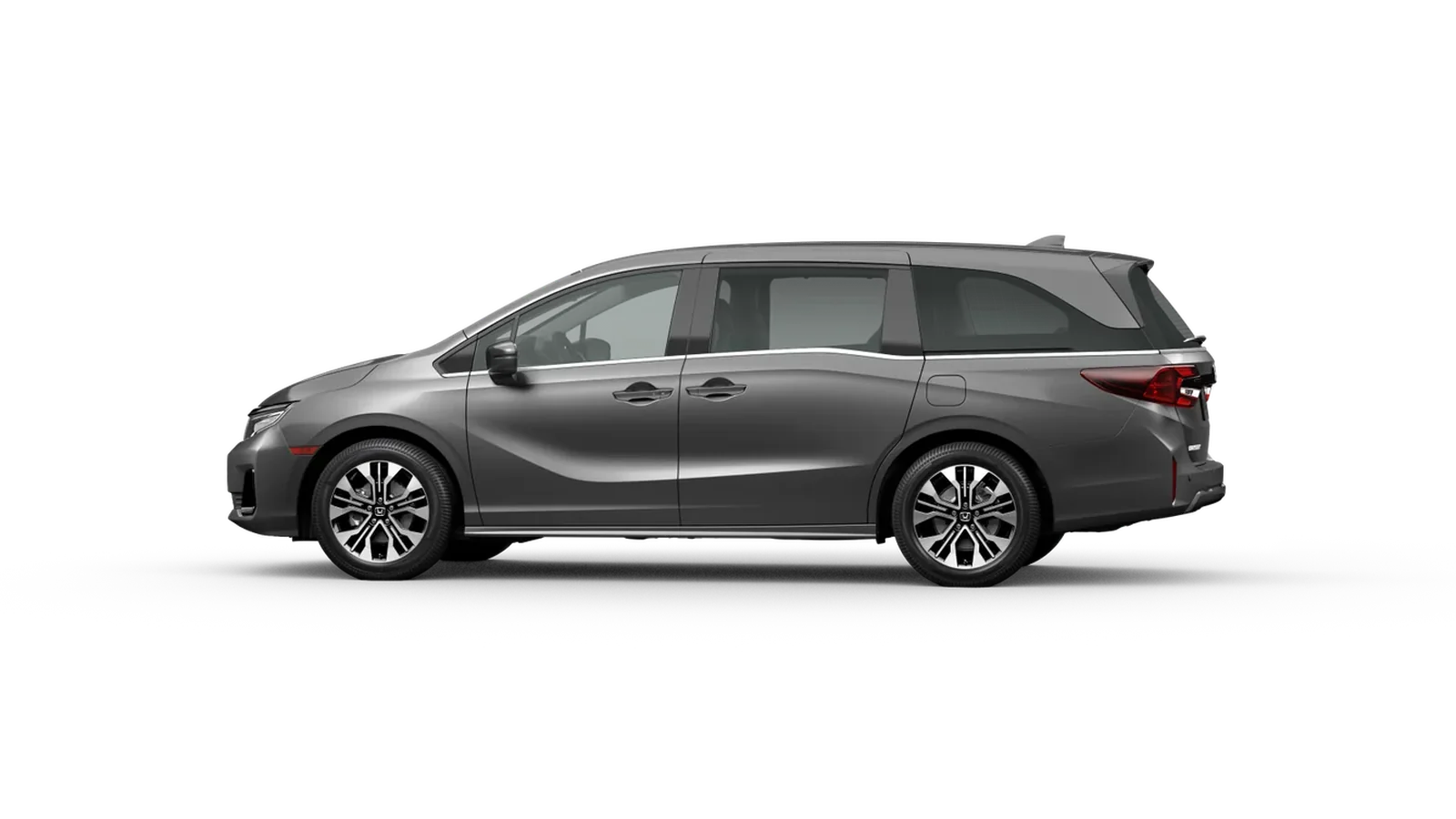
Photo: Honda Canada. 2026 Honda Odyssey. Part of the Car Buyer Protection Series by Henry Chen, Maple Honda, Vaughan.
OMVIC's Advertising Guideline is the rulebook for every ad an Ontario dealer publishes — print, online, social, broadcast, billboards, and the price sticker on the windshield. For buyers, the rulebook is the protection: if the ad doesn't comply, OMVIC can take action against the dealer, and you have specific knowledge about what to look for.
The rules are stricter than most buyers realize. Past use as a rental has to be disclosed on the ad itself. Finance offers have to include APR, term, and cost of borrowing. Lease offers have to include mileage limits. As-is vehicles have to use the exact disclosure language. Knowing these rules makes you a much sharper shopper.
What OMVIC considers an advertisement
- Print ads in newspapers, magazines, flyers, or mailers
- Online ads on the dealer's website, third-party marketplaces, or social media
- Radio or TV commercials
- Billboards and signs, including the price stickers on the vehicles themselves
- Any text, image, or combination that persuades or influences a buyer to purchase or lease
The all-in pricing rules for ads
The advertised price has to include every fee and charge the dealer intends to collect, except HST and licensing. The ad has to clearly indicate HST and licensing are not included.
Freight, PDI, admin fee, OMVIC transaction fee, government levies, pre-installed accessories — all of it has to be in the number. If the ad says '$X +HST/Lic' and the dealer tries to add any other fee at the desk, that's a violation.
There are two narrow exceptions OMVIC publishes beyond the base HST and licensing exclusion. Unfit vehicles can drop the safety-certification cost from the all-in price, but the ad must say the vehicle is not driveable and not certified and list the exact certification fee. As-is vehicles can drop the certification cost too, but the ad must carry the full OMVIC-prescribed as-is disclosure language verbatim. Two dealers co-advertising together can also exclude a varying admin fee, provided that fee is disclosed alongside a clear description. Every other fee the dealer intends to collect still has to be inside the advertised number.
Photo: Honda Canada. 2026 Honda Accord.
What has to be on the ad about the vehicle's past
- Previous daily rental use (unless subsequently owned by an individual)
- Previous police or emergency-services use
- Previous taxi or limousine use
- If the vehicle is a demonstrator (demo) — demos are used vehicles, not new, even if they qualify for new-vehicle incentives
- If the vehicle is being sold as-is — exact disclosure language required
- If the vehicle is unfit — exact disclosure language required
What has to be on finance and lease ads
Finance ads with an interest rate or payment amount have to disclose the APR, term, cash price, and cost of borrowing. The APR must be displayed as prominently as the advertised payment.
Lease ads have to disclose that it's a lease, the payment amount and frequency, the down payment or security deposit (or the amount of any other upfront payment), the APR, the term, and the excess-kilometre cost if the allowance is less than 20,000 km per year. The APR must be displayed as prominently as the advertised payment — same font size, same weight, not in fine print. If the ad runs in a medium with tight time or space limits, the APR / term / excess-km cost can be omitted only if the ad directs the buyer somewhere else (a website, a phone number) where those numbers are spelled out.
What the dealer's name requirement means
Every ad must include the dealer's registered name and contact information. The contact information has to be a way of reaching the dealer that OMVIC has on file (business address, phone, email, or website).
Salespeople can advertise on behalf of dealers, but they have to get the dealer's approval first and the dealer's registered name has to be on the ad. They can include their own contact information. They can't invite the public to a place other than the dealer's authorized premises.
What ads CAN'T do
- Use a stock photo of a higher trim level to advertise a base model price
- Use 'see dealer for details' instead of mandatory disclosures
- Use fine print to disclose material information
- Use pop-ups or additional windows to hide required disclosures on online ads
- Advertise a finance-only price without disclosing that limitation
- Advertise a price that's not available to every buyer (without disclosing the limitation)
Frequently asked, Vaughan edition
Can a dealer use a manufacturer's national ad?
OMVIC doesn't regulate manufacturers, so Honda Canada's national ads aren't subject to MVDA all-in pricing. But if a dealer shares or references a manufacturer ad, the dealer is responsible for ensuring the ad meets OMVIC's rules. In practice, dealer ads in Ontario have to comply even if they're based on manufacturer creative.
What if the dealer advertised a price that turned out to be wrong?
OMVIC's rule is that dealers have to promptly remove or update any ad once the vehicle is sold or the price changes — an outdated ad still showing the old price is itself the violation. If the ad is current and the dealer tries to charge more than what's advertised, that's an all-in pricing breach and you can file an OMVIC complaint. Walk away from the deal and report the dealer if the ad is misleading.
Can a dealer advertise a 'dealer price' that's lower than MSRP?
Yes. The all-in price can be below MSRP if Honda Canada incentives and the dealer discount together reduce the price below MSRP. The all-in price just has to include every fee and be available to every buyer (or the conditions have to be clearly disclosed).
Want me to walk through the OMVIC piece of your next deal?
If you have a quote from another store, a private sale you're considering, or just a question about how OMVIC's rules apply to your situation, send me the details. I will help you pressure-test the structure.
Ask Henry a question
Not ready to book anything? Just ask. Henry Chen answers every message himself — usually within a couple of hours during business hours. No call list, no pressure, and no obligation to buy anything.