Distracted Driving in Ontario 2026: Fines, Demerits, Insurance — and How Honda Sensing Helps
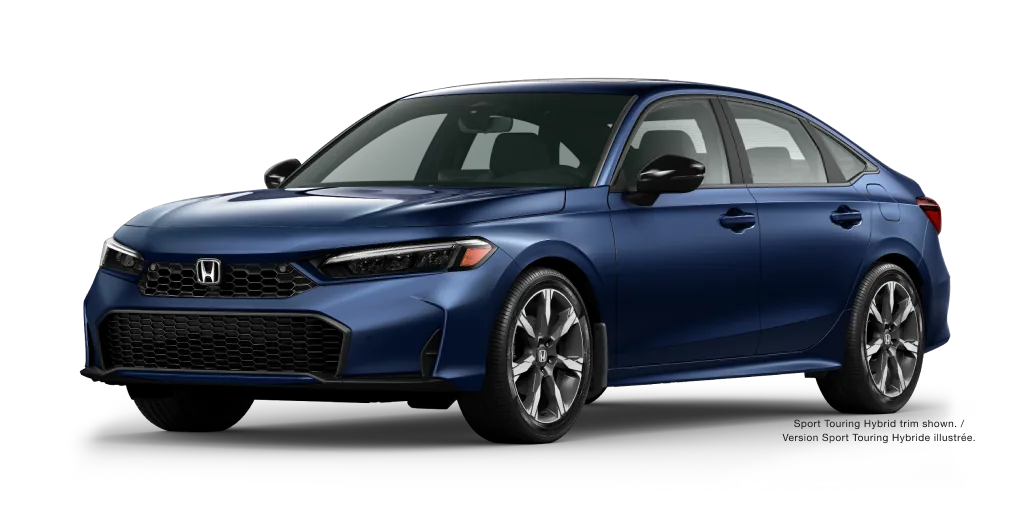
Ontario laid 55,086 distracted driving charges in 2025 — a 21% jump from 2023. The set fine is $615, plus 3 demerit points and a 3-day licence suspension for a first offence. But the fine is the smallest part of the cost. Insurance surcharges for a third distracted driving conviction can reach 100-150% of your annual premium for 6+ years, which is $9,000-$13,500 in extra premiums on a typical $1,500/year Ontario policy. Here is what every GTA Honda owner and buyer needs to know about HTA s.78.1, novice driver zero-tolerance rules, the careless driving escalation, and how Honda Sensing helps reduce the consequences of distraction.
1. What counts as distracted driving in Ontario
Ontario's distracted driving law is set out in section 78.1 of the Highway Traffic Act (HTA). It is illegal to drive a motor vehicle on a highway while holding or using a hand-held device or engaging in any activity that takes your attention away from driving.
Specifically, the HTA prohibits:
- Holding a phone or mobile device while driving (even at a red light)
- Texting, emailing, browsing, or using apps on a hand-held device
- Dialling a phone number (except by voice activation or one-touch on a mounted device)
- Entering a GPS destination manually while driving (voice commands are OK)
- Watching videos or scrolling on a mounted display (must be parked)
- Driving while distracted by personal grooming, eating, drinking, or pets on your lap
What is allowed:
- A device mounted on the dashboard or windshield (e.g., a phone in a cradle) used hands-free
- Voice-activated calling, navigation, and texting (e.g., Siri, Google Assistant, Honda's built-in voice commands)
- One-touch activation or deactivation of a hands-free function (single tap or one-finger swipe)
- Calling 911 in a genuine emergency (this is the only hand-held exception)
- Using the device when legally parked (engine off, off the roadway)
2. The 2026 Ontario penalty structure
Ontario's distracted driving penalties escalate with each conviction within a 5-year window. The set fine stays at $615 for any conviction level, but the maximum court fine and licence suspension both increase. The penalties also differ by licence type: fully licensed drivers get demerit points, novice drivers get longer suspensions.
Fully licensed drivers (A to G licence)
| Conviction | Set fine (out of court) | Court fine (if convicted) | Demerit points | Licence suspension |
|---|---|---|---|---|
| 1st | $615 | Up to $1,000 | 3 | 3 days |
| 2nd (within 5 years) | $615 | Up to $2,000 | 6 | 7 days |
| 3rd or subsequent (within 5 years) | $615 | Up to $3,000 | 6 | 30 days |
The $615 set fine includes the $125 victim fine surcharge and a $5 court cost. If you pay the set fine out of court, you do not get a court conviction on your record for demerit-point escalation purposes, but the offence still counts as a conviction for insurance purposes.
Novice drivers (G1, G2, M1, M2 licence)
| Conviction | Set fine (out of court) | Court fine (if convicted) | Demerit points | Licence suspension |
|---|---|---|---|---|
| 1st | $615 | Up to $1,000 | None (zero-tolerance) | 30 days |
| 2nd (within 5 years) | $615 | Up to $2,000 | None (zero-tolerance) | 90 days |
| 3rd (within 5 years) | $615 | Up to $2,000 | None (zero-tolerance) | Cancellation + removal from GLS |
The novice driver rules are stricter because G1, G2, M1, and M2 drivers face a zero-tolerance policy. They cannot use a hand-held device at all while driving — not at a red light, not in a parking lot, not in any situation short of being legally parked with the engine off. A third conviction cancels the licence and removes the driver from the Graduated Licensing System (GLS), which means you have to start over from G1.
3. The insurance cost — the real reason to care
The $615 ticket feels like the worst part — but it is not. The largest financial consequence of a distracted driving conviction is the insurance surcharge. Insurance companies in Ontario treat distracted driving as a major conviction (the same category as careless driving, stunt driving, and racing).
| Conviction | Premium increase | On a $1,500/year policy | Surcharge duration |
|---|---|---|---|
| 1st | 10-20% | $150-$300 per year | 3-6 years |
| 2nd (within 5 years) | 25-40% | $375-$600 per year | 6 years |
| 3rd or subsequent (within 5 years) | 100-150% | $1,500-$2,250 per year | 6+ years |
Quick math on a third conviction: $1,500/year premium × 1.5x surcharge = $2,250/year extra for 6 years = $13,500 in extra insurance. Compared to the $3,000 maximum court fine, the insurance surcharge is 4-5x more expensive.
On top of the premium increase, you may also be dropped by your insurer entirely. Most Ontario insurers have a "3 major convictions in 5 years" rule that triggers non-renewal. If you cannot find a standard market insurer, you end up in Facility Association (the high-risk pool of last resort), where premiums can be 3-4x the standard market rate.
4. Honda Sensing — what it does and what it does not do
Honda Sensing is the suite of active safety features that comes standard on most 2026 Honda Canada models — Civic (LX and up), Civic Hybrid, Accord, CR-V, HR-V, Pilot, Passport, Ridgeline, Odyssey, and Prologue. It is one of the most comprehensive active-safety packages in the industry. But it is important to understand what it does and what it does not do.
What Honda Sensing does:
- Adaptive Cruise Control (ACC): Maintains a set following distance from the car ahead, automatically adjusting speed in traffic. Reduces the need to manually adjust cruise control on the 400/401.
- Lane Keeping Assist System (LKAS): Gently steers the car to keep it centred in the lane. Especially helpful on long highway drives.
- Road Departure Mitigation (RDM): If you drift toward the edge of the road, RDM steers you back and can apply brakes to keep you on the pavement.
- Forward Collision Warning (FCW): Detects imminent collision with a car or pedestrian ahead and warns you with audio + visual alerts.
- Collision Mitigation Braking System (CMBS): If you do not react to FCW, CMBS auto-applies the brakes to reduce or avoid the collision.
- Lane Departure Warning (LDW): Alerts you if you drift out of your lane without a turn signal.
- Traffic Sign Recognition (TSR): Reads speed limit signs and displays them on the driver information interface. Helpful for staying current with the 110 km/h zones on Highway 400.
What Honda Sensing does NOT do:
- It does not exempt you from HTA s.78.1. You can still be ticketed for holding your phone even with ACC + LKAS engaged.
- It does not replace attentive driving. Honda's manual explicitly states: "The driver is responsible for safely operating the vehicle and avoiding collisions."
- It does not work in all weather. LKAS may disengage in heavy rain, snow, or fog. CMBS is less effective in low-visibility conditions.
- It does not detect every obstacle. CMBS may not detect a motorcycle, a pedestrian in dark clothing, or a stationary object at highway speed.
Honda Sensing is best understood as a safety net, not a self-driving system. It buys you a few extra seconds of reaction time if you are distracted — which can be the difference between a close call and a collision.
5. Apple CarPlay, Android Auto, and the mounted-device exception
Honda's Display Audio infotainment system (standard on 2026 Civic LX and up) supports wireless Apple CarPlay and Android Auto. The integration means your phone's apps display on the 7-inch or 9-inch centre touchscreen, and you can control them with:
- Voice commands (Siri for iPhone, Google Assistant for Android)
- Short dashboard taps (one finger, while the vehicle is in motion)
- Steering wheel buttons (volume, track skip, voice activation)
This is fully legal under HTA s.78.1 because you are not holding the phone. The Ontario law specifically allows "the use of a hand-held device that is mounted in a manner that does not obstruct the driver's view, used in a hands-free manner, and activated or deactivated by the driver using a single touch or voice command."
What is NOT legal:
- Holding the phone to read a text message (even briefly at a red light)
- Typing on the phone screen while the car is in motion
- Watching a video on the phone screen while the car is in motion (must be parked)
- Holding the phone for a phone call (use Bluetooth or CarPlay audio instead)
Practical tip: pair your phone to the Honda infotainment system before you start driving. Set up your navigation destination, podcast playlist, and phone calls while the car is parked. Once you start moving, use voice commands exclusively.
6. Voice command alternatives on Honda infotainment
The 2026 Honda Civic and Accord (and most other 2026 models) come with a built-in voice command system that handles navigation, phone calls, climate control, and audio without taking your hands off the wheel. Here are the most common voice commands:
- "Navigation: find nearest gas station" (uses the built-in Garmin-based navigation on Touring trims)
- "Call [contact name]" (uses Bluetooth-paired phone)
- "Send text to [contact name]" (uses Siri or Google Assistant through CarPlay/Android Auto)
- "Play [song/artist/playlist]" (uses Honda's audio system or CarPlay/Android Auto)
- "Set temperature to [X] degrees" (climate control)
- "What is the speed limit?" (uses Traffic Sign Recognition)
Press the voice command button on the steering wheel (it has a microphone icon) to activate. The system beeps to confirm it is listening. If you do not speak within 5-7 seconds, it times out and you have to press the button again.
7. What to do if you get a distracted driving ticket
If a police officer pulls you over and issues a distracted driving ticket, here is the practical playbook:
- Stay calm and cooperate. Hand over your licence, insurance, and registration. Do not argue at the roadside.
- Read the ticket carefully before signing. The ticket will list the set fine amount ($615), the court date if you choose to dispute, and the option to pay out of court.
- Decide within 15 days: pay the set fine out of court (closes the case, no trial) or request a trial (you tell your side in court).
- If you pay the set fine: you are deemed convicted. The offence counts for demerit-point escalation and insurance surcharge purposes. Licence suspension is automatic (3 days for fully licensed 1st offence, 30 days for novice 1st offence).
- If you request a trial: you can challenge the ticket in court. If convicted, the court fine can be up to $1,000 (1st) / $2,000 (2nd) / $3,000 (3rd). The licence suspension still applies. If you win, no conviction and no surcharge.
- Consider hiring a traffic lawyer. For a 1st-time ticket with no collision, many drivers pay the set fine. For a 2nd or 3rd ticket, the insurance surcharge is significant enough that a traffic lawyer may save you money in the long run by getting the charge reduced or withdrawn.
- Notify your insurance broker when you renew. The conviction will show on your driving record (accessible to insurers through the FSRA Driver Abstract). Concealing it can be grounds for policy cancellation.
8. Escalation to careless driving
If your distracted driving causes a collision, endangers others, or occurs in a school zone or construction zone, the officer can escalate the charge from HTA s.78.1 (distracted driving) to HTA s.130 (careless driving). Careless driving is a much more serious offence:
- 6 demerit points (vs 3 for distracted driving 1st)
- Fine up to $2,000 (vs $1,000 for distracted driving 1st)
- Possible 6-month jail term
- Licence suspension up to 2 years
- Insurance surcharge 100-150% for 6+ years
If a collision results in bodily harm or death, the charge can escalate further to dangerous driving under Criminal Code section 249, which carries up to 10 years imprisonment for bodily harm and up to 14 years for death. This is rare, but it happens in cases of extreme distraction (texting while crossing into oncoming traffic, for example).
9. Henry's take — what I see at the dealer
In my experience at Maple Honda, distracted driving is the most common HTA ticket I see mentioned by trade-in customers who come in with a fresh conviction on their record. A few observations from the dealer side:
- Insurance surcharge is the real deterrent. Most customers who mention a distracted driving ticket say they had no idea how much their insurance went up until renewal. The $615 fine is annoying but manageable; the $1,500/year surcharge is what stings.
- Honda Sensing is selling. The number of buyers who specifically ask about Honda Sensing, LKAS, and ACC has grown every year. First-time Civic buyers in particular want the safety suite because they are buying for a teen driver in the family.
- Wireless CarPlay is a big upgrade. The 2026 Civic and Accord have wireless Apple CarPlay on most trims. Customers love it because they do not have to plug in their phone — the phone stays in their pocket or bag, the CarPlay display comes up on the touchscreen automatically, and everything is voice-controlled. This is the simplest legal way to use your phone in the car.
- The 3-day suspension is the unexpected pain. For rideshare drivers, delivery drivers, and people with long commutes, the 3-day licence suspension can mean lost income. If you drive for work, the cost of a distracted driving ticket is not just the fine — it is the lost shifts.
10. Practical tips for staying ticket-free in your Honda
- Pair your phone before you start driving. Bluetooth pairing only takes 30 seconds when the car is parked. Once paired, the phone stays in your pocket.
- Set up navigation while parked. Type the address into Google Maps or Apple Maps before you shift into Drive. Voice navigation will then guide you turn-by-turn without you touching the phone.
- Use Do Not Disturb mode. iPhone's Do Not Disturb While Driving mode and Android Auto's auto-reply feature silence notifications while the car is moving. You can also set up an auto-reply text that says "I'm driving, will reply when I stop."
- Mount your phone. A $20 dashboard mount keeps your phone visible for glanceable directions (with CarPlay display already on the touchscreen, this is rarely needed, but it is a legal backup).
- Use steering wheel buttons. Honda's steering wheel has volume, track skip, voice command, and phone buttons. You never need to take your hands off the wheel.
- Pull over for urgent calls. If you need to make a call or send a complex text, pull into a parking lot. The 30 seconds it takes to find a parking spot is far cheaper than the $615 fine + 3 demerits + 3-day suspension.
- Eat before you leave or at your destination. Coffee, burgers, and drive-thru food are classic distraction sources. If you must eat on the road, pull into a parking lot to finish.
Frequently asked questions
How much is a distracted driving ticket in Ontario in 2026?
The set fine for distracted driving in Ontario is $615 if you settle out of court (this includes the $125 victim fine surcharge and a $5 court cost). If you fight the ticket in court and lose, the fine can be up to $1,000 for a first offence, $2,000 for a second, and $3,000 for a third. The $615 set fine stays the same regardless of which conviction it is; only the court-conviction maximum increases.
How many demerit points do I get for distracted driving in Ontario?
3 demerit points for a first conviction, 6 demerit points for a second conviction within 5 years, and 6 demerit points for any third or subsequent conviction within 5 years. If you reach 15 demerit points your licence is suspended for 3 months. Novice drivers (G1, G2, M1, M2) do not receive demerit points — instead, they face a 30-day suspension for a first offence, 90-day for a second, and licence cancellation (removal from the Graduated Licensing System) for a third.
Does my insurance go up after a distracted driving ticket?
Yes — and the increase is usually far larger than the fine itself. Insurance companies treat distracted driving as a major conviction. Expect a 10-20% premium increase for a first offence, 25-40% for a second, and 100-150% for a third or subsequent conviction within 5 years. The surcharge typically stays on your record for 6+ years. On a $1,500 annual premium, a third distracted driving conviction can add $1,500-$2,250 per year for 6 years = $9,000-$13,500 in extra insurance. Far more than the $3,000 court fine.
Can I use Apple CarPlay or Android Auto while driving in Ontario?
Yes, if it is properly mounted and used hands-free. Ontario's HTA s.78.1 allows you to use a mounted device (dashboard or windshield) with one finger to activate or deactivate a hands-free function. Apple CarPlay and Android Auto on Honda models (Civic, Accord, CR-V, HR-V, Pilot, etc.) display on the centre touchscreen and are controlled by voice commands (Siri, Google Assistant) or short dashboard taps. The driver cannot hold the phone while driving. Pair your phone before you start driving and use voice commands for navigation, calls, and texts.
Can I hold my phone at a red light in Ontario?
No. The Ontario distracted driving law applies whenever you are driving on a highway, including when stopped at a red light or stuck in traffic. The exception is if you are legally parked (engine off, off the roadway). Police have issued tickets to drivers holding their phones at red lights. Pull over to a parking lot if you need to use your phone — even a 30-second text is not worth the $615 fine + 3 demerits + 3-day suspension.
Does Honda Sensing prevent distracted driving tickets?
Honda Sensing does not exempt you from the HTA s.78.1 law — you can still get a ticket for holding your phone even if Adaptive Cruise Control and Lane Keeping Assist are engaged. However, Honda Sensing reduces the consequences of distraction by handling the routine driving tasks: Adaptive Cruise Control (ACC) maintains distance from the car ahead, Lane Keeping Assist (LKAS) keeps you centred in your lane, Road Departure Mitigation (RDM) steers you back if you drift, and Forward Collision Warning (FCW) with Collision Mitigation Braking (CMBS) auto-brakes if you fail to react. These features do not replace attentive driving but they make a distracted moment much less likely to cause a collision or ticket.
What is the fine for using a phone in a school zone in Ontario?
The fine is the same as a regular distracted driving ticket ($615 set fine, 3 demerit points, 3-day suspension for a first offence). However, school zones have additional rules: reduced speed limits (30-40 km/h during school hours, 7-9 AM and 3-4 PM on school days), and officers frequently patrol them. If your distracted driving causes a collision in a school zone, the court is more likely to escalate the charge to careless driving (HTA s.130), which adds 6 demerit points, up to $2,000 fine, and possible jail time.
Is eating while driving illegal in Ontario?
Not specifically illegal under HTA s.78.1 (which targets hand-held devices), but it is considered a form of careless driving under HTA s.130 if it causes you to drive without due care and attention. Common examples that have led to careless driving charges: drinking coffee (lid off, both hands occupied), eating a burger (one hand off the wheel), reaching into the back seat to grab food. If you are observed driving erratically while eating, you can be charged with careless driving. The safer choice is to eat before you leave or pull over to a rest stop.
Can G1 or G2 drivers use a phone at all in Ontario?
No — G1, G2, M1, and M2 drivers face a zero-tolerance rule under HTA s.78.1. They cannot use any hand-held device while driving, even when stopped at a red light. The penalties are the same fines as fully licensed drivers ($615 set fine, up to $1,000 court fine) but no demerit points — instead, longer suspensions: 30 days for a first offence, 90 days for a second, and cancellation of the licence plus removal from the Graduated Licensing System (GLS) for a third. To get the licence back after GLS removal, you must redo the entire graduated licensing program from G1.
What happens if I refuse to give my phone to police in Ontario?
Refusing to hand over your phone when a police officer demands it during a traffic stop is a separate offence under HTA s.78.1, on top of the original distracted driving charge. The additional penalty is a fine of up to $500 and possible licence suspension. Police can also seize your phone for evidence if they have reasonable grounds to believe you were using it while driving. The practical advice: comply with the officer's request, provide your phone, and contest the ticket later in court if you believe it was issued in error.
How long does a distracted driving conviction stay on my record?
A distracted driving conviction stays on your driving record for 5 years from the date of the offence for demerit-point accumulation purposes. However, for insurance purposes, most insurers treat a distracted driving conviction as a major conviction that affects your premium for 6+ years. The 5-year window for demerit-point escalation (3 / 6 / 6 / third-offence surcharges) is measured from the date of the prior conviction, not the date of the current offence.
What is the difference between distracted driving and careless driving in Ontario?
Distracted driving is a specific offence under HTA s.78.1 targeting hand-held device use and similar distractions. Careless driving is a broader offence under HTA s.130 covering any operation of a vehicle without due care and attention. The penalty for careless driving is significantly higher: 6 demerit points, fines up to $2,000, possible 6-month jail term, and licence suspension up to 2 years. If your distracted driving causes a collision, endangers others, or occurs in a school zone, the officer can escalate the charge to careless driving. Insurance surcharges for careless driving are 100-150% — the same as a third distracted driving conviction.
Related from Henry
- First car at 17 in the GTA — G2 roadmap + insurance reality — the related guide for new drivers and parents of teen drivers (mentions G1/G2 zero-tolerance rules).
- Honda Sensing explained — ACC, LKAS, RDM, CMBS, TSR — the deep-dive on Honda Sensing features that reduce the consequences of distraction.
- 2026 Honda Canada lineup — every model, MSRP, and where it’s built — which trims come standard with Honda Sensing.
- 2026 Honda Pilot Touring AWD — the family 3-row SUV — Honda Sensing standard on every 2026 Pilot trim.
- Honda winter tire sizing for Ontario — the related winter driving guide (HTA also covers winter tire rules in Northern Ontario).
- Drive Clean cancelled in Ontario — what GTA Honda buyers actually need in 2026 — the related Drive Clean / DriveON guide.
Sources: ontario.ca/page/distracted-driving (official HTA s.78.1 penalties); ontario.ca/laws/statute/90h08 (Highway Traffic Act full text); thinkinsure.ca/insurance-help-centre/distracted-driving-in-ontario.html (penalty table); mcdougallinsurance.com/2025/04/20/distracted-driving-ontario (2025 update); nextlaw.ca/2025/01/15/ontario-distracted-driving-penalties-2 (2025 legal update); themightymount.com/blogs/blog/distracted-driving-in-canada-2025-laws-fines-penalties (cross-province comparison); humberviewgroup.com (Ontario auto group penalty summary). Insurance surcharge estimates based on 2025-2026 Ontario broker averages. Last verified: July 1, 2026.