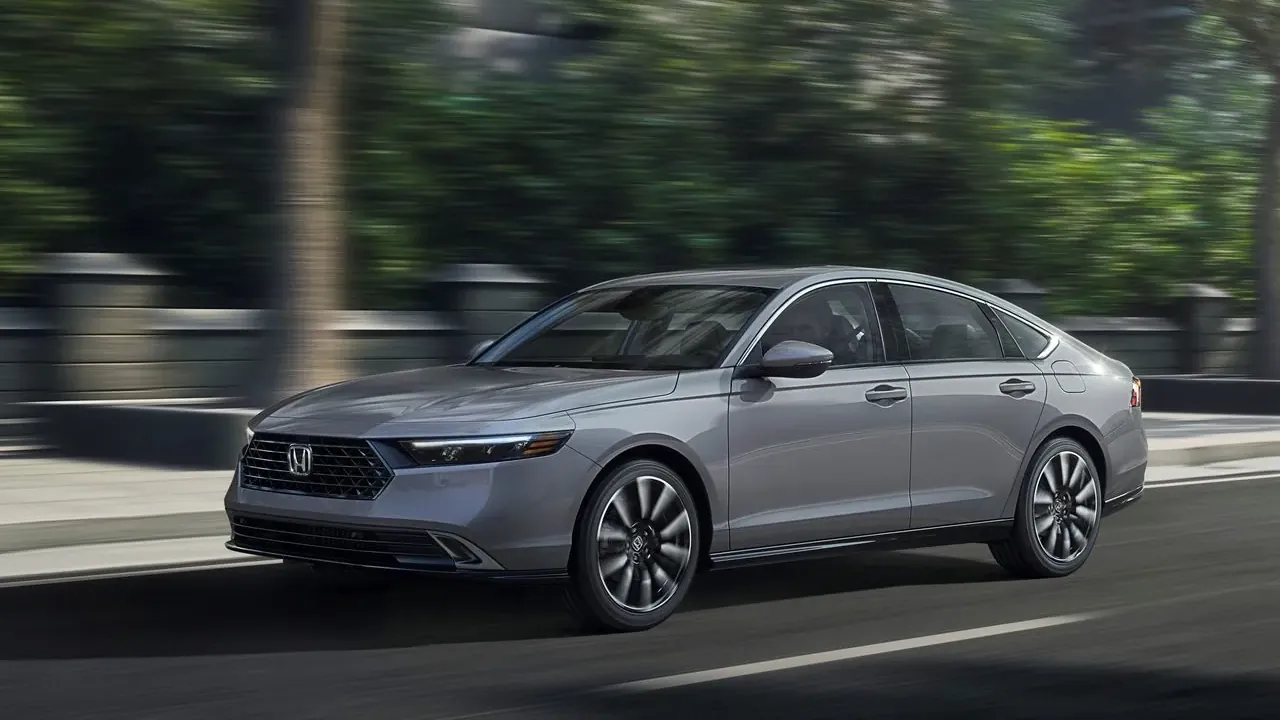
Photo: Honda. Accord Touring — one of the Canadian models carrying Honda Sensing.
There's a dealership habit I don't love: turning safety into a premium upgrade story. A buyer starts on a reasonable trim, asks about driver-assist technology, and slowly gets walked upward as if the safest Honda is automatically the priciest Honda.
That isn't the right way to think about Honda Sensing. The better question is whether the exact Honda you're shopping already gives you the tools that matter most for Vaughan driving: collision mitigation, lane support, adaptive cruise, and extra confidence in stop-and-go traffic.
Honda Canada's official Honda Sensing feature pages describe the suite as standard on all current CR-V trims and all current HR-V trims. Honda Canada's Civic Sensing page says every Civic comes equipped with Honda Sensing technologies. That's the important takeaway: the safety conversation often starts much lower in the trim walk than buyers expect.
Why this matters in Vaughan
Vaughan isn't a place where you only drive in clean highway conditions. It is Rutherford stop-and-go, Highway 7 merge decisions, school-zone distractions, condo parking ramps, and long commutes that can turn into low-speed traffic jams fast.
Honda Sensing vs. BSI and CTM. Core Honda Sensing features (collision mitigation braking, lane keeping assist, road departure mitigation, adaptive cruise control with low-speed follow and the related systems) are widely standard across the Honda lineup. Blind Spot Information (BSI) and Rear Cross Traffic Monitor (CTM) are separate availability items. They can vary by model year and trim, and Honda Canada’s spec page separates them from Honda Sensing on most current model pages. Confirm the exact vehicle’s build sheet before treating BSI or CTM as included.
That's exactly the kind of daily environment where a driver notices useful safety support. Not because the car is driving itself, but because the right alerts and steering or braking support can reduce fatigue and help catch the mistake you didn't mean to make.
- Collision mitigation matters when traffic compresses quickly in front of you.
- Lane support matters on longer highway slogs where drift happens more from tiredness than recklessness.
- Adaptive cruise matters because Vaughan and GTA highway traffic rarely stays truly open for long.
- Road-departure support matters on bad-weather mornings or unfamiliar routes.
The buyer mistake I see most often
The mistake isn't caring about safety. The mistake is assuming safety and luxury are the same shopping decision.
They aren't. A lot of buyers really want two separate things:
- the core Honda Sensing features that make daily driving calmer
- extra comfort features such as leather, larger wheels, upgraded audio, a panoramic roof or a bigger screen
Those are different budgets. If you combine them too early, you can talk yourself into a payment that's heavier than it needs to be.
My rule of thumb: shop the safety suite first, then decide how much comfort you still want to pay for after that. Don't let someone flip that order on you.
Which Honda models make this question easiest
For most Vaughan buyers, the cleanest comparison set is Civic, HR-V, CR-V, and Accord. Those are the models where people are usually balancing budget, size, and technology instead of chasing something highly specialized.
If you're cross-shopping those four, the real conversation becomes practical:
- Civic if you want efficiency, easy parking and a sedan or hatchback footprint.
- HR-V if you want SUV ride height without committing to more vehicle than your life needs.
- CR-V if your family or cargo reality is already bigger every week.
- Accord if you still prefer a more refined sedan shape and don’t want to default to an SUV.
The useful point is that you can keep the Honda Sensing conversation alive across all of them. You don't have to jump straight to the most expensive trim in the most expensive body style just to feel protected.
The same logic works on used. Honda Sensing® has been standard across the Canadian lineup for years, so a Certified used Honda carries the full suite without new-car, top-trim money. What’s on the lot changes weekly, so today’s best pre-owned Honda is refreshed every morning, and the full used lineup is here. Text me and I’ll confirm the exact driver-assist features on any specific unit before you drive out.
Where top trims still make sense
This isn't an argument against higher trims. Sometimes a higher trim is the right answer. If you know you care deeply about the camera package, the audio system, the seat materials, the wheel design, or other convenience upgrades, then pay for the trim because you genuinely want those things.
Just do it honestly. Buy the upper trim because you value the full package, not because someone implied the lower trim is somehow the unsafe one.
The exact feature mix can still vary by model year and trim, so I always tell buyers to verify the current Honda Canada spec or feature page before signing. But the broad pattern matters: Honda has been good at keeping core safety technology from becoming a top-trim-only privilege.
The practical way to shop this in one visit
If you're coming into Maple Honda, arrive with two questions already separated:
- Which Honda model actually fits my life?
- Which trim adds comfort I want, not comfort I was talked into?
When you separate those questions, the conversation gets simpler. It also gets cheaper more often than people expect.
Common questions
Do I need the top Honda trim to get Honda Sensing?
Usually, no. On several current Honda Canada model pages, Honda Sensing is presented as standard or widely available on core trims rather than being reserved only for the most expensive version. You still have to verify the exact model year and trim before signing.
Why does Honda Sensing matter in Vaughan traffic?
Because Vaughan driving is full of stop-and-go traffic, short merges, school-zone distractions, and busy arterial roads. Features such as collision mitigation, lane keeping assistance, adaptive cruise control, and road departure support are the kinds of tools drivers actually use in that environment.
Which Honda models should Vaughan buyers compare first for Honda Sensing value?
For most buyers, the sensible starting group is Civic, HR-V, CR-V, and Accord. Those are the Honda models where many Vaughan shoppers are deciding how much car they need versus how much technology they want.
What's the smartest way to shop Honda Sensing?
Start with the safety features you care about most, then compare trims based on comfort and budget instead of assuming the top trim is the only safe one. The exact feature mix can vary by model year and trim, so always check the official Honda Canada spec or feature page before you commit.
Trying to compare Honda trims without overspending?
Tell me which safety features matter most to you first. Then we will figure out whether the right answer is a lower trim, a better-equipped trim, or a different Honda altogether.
Ask Henry a question
Not ready to book anything? Just ask. Henry Chen answers every message himself — usually within a couple of hours during business hours. No call list, no pressure, and no obligation to buy anything.