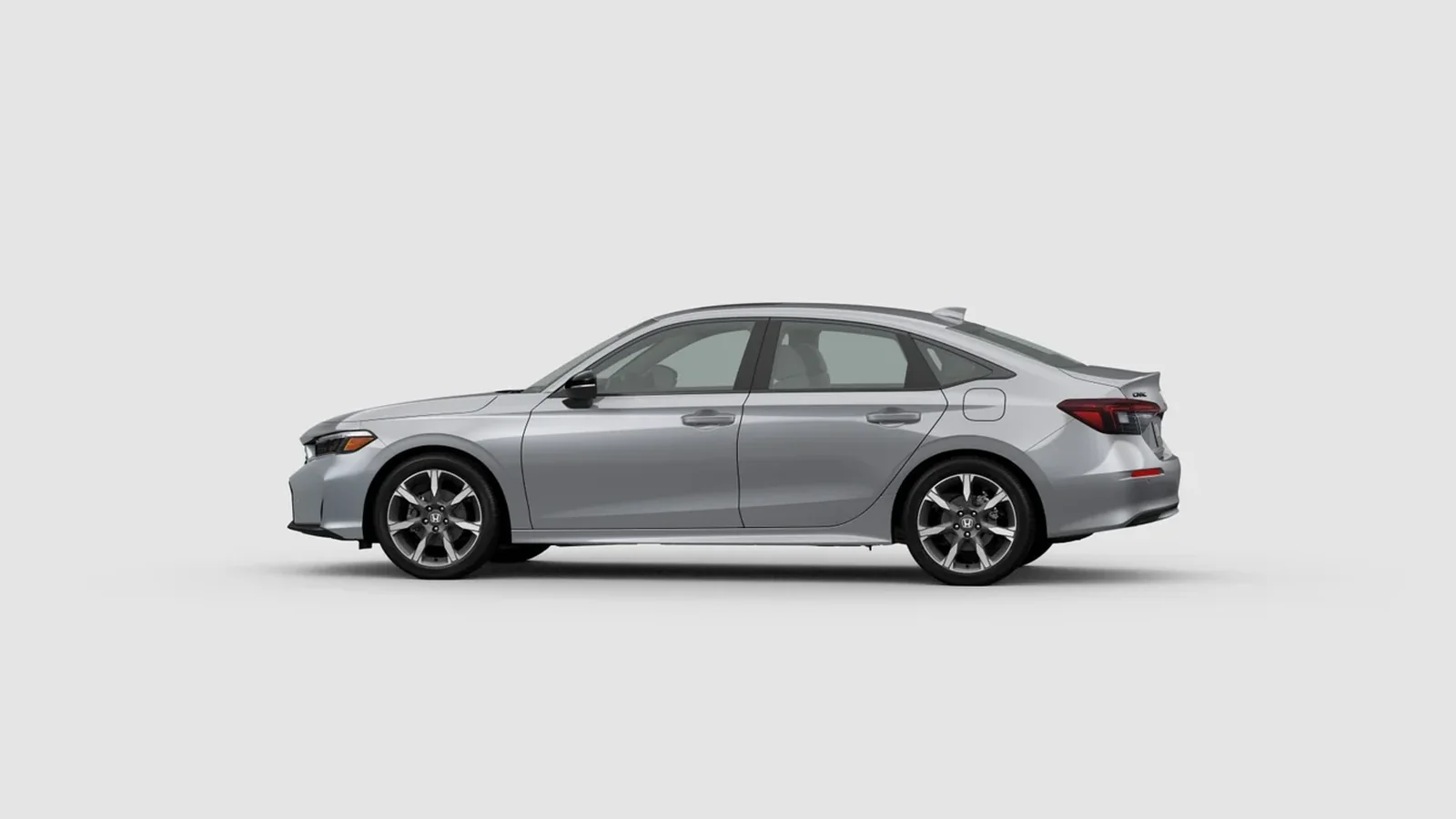
Photo: Honda Canada Newsroom. 2026 Honda Civic. Part of the Car Buyer Protection Series by Henry Chen, Maple Honda, Vaughan.
A market adjustment fee is an amount the dealer adds above the manufacturer's suggested retail price. It's the same money under different names — market addendum, dealer markup, price protection fee, supply adjustment — and it's the single most common reason a buyer's deal drifts up by several thousand dollars between the advertised price and the signed bill of sale.
In Ontario, the fee itself is legal. OMVIC's rule is that if the dealer is going to charge it, the fee has to be inside the advertised all-in price. A market adjustment added at the desk — or as a separate line item in the bill of sale that wasn't in the ad — is a violation of the all-in price rule, and the buyer can walk away and file an OMVIC complaint.
What OMVIC's all-in price rule actually says
OMVIC's Advertising Guideline requires the advertised price to include every fee and charge the dealer intends to collect, except HST and licensing. The ad has to clearly indicate HST and licensing are not included. There is no third category. A market adjustment that the dealer intends to collect has to be in the advertised number, alongside freight, PDI, admin fee, OMVIC transaction fee, government levies, and any pre-installed accessories.
If the dealer's online ad says "$45,990" and the bill of sale the buyer signs says "$45,990 + $3,500 market adjustment", the dealer is out of compliance. The $3,500 has to be inside the $45,990, or the advertised price has to be $49,490 — and the ad has to say so.
What a market adjustment fee actually pays for
Nothing the buyer receives. Unlike a pre-installed accessory (paint protection, wheel locks, all-weather floor mats) that has a tangible product attached, a market adjustment is pure dealer margin. The dealer keeps the money. The fee is justified by the dealer's view of supply and demand: if the model is in short supply and there's a waitlist, the dealer captures some of that excess demand as additional profit.
The fee is most common on the most popular Honda models in tight supply: the Civic Si, the Civic Type R, the CR-V Hybrid, the Prologue, and the Pilot when supply is short. On these models, a market adjustment of $2,000 to $10,000 above MSRP is not unusual in the GTA in tight-supply months. On a Civic or CR-V Hybrid in normal supply, the fee is rare and unusual.
When the fee is legal vs illegal in Ontario
Legal: the dealer advertises a price that already includes the market adjustment. The advertised number on the website, the print ad, the social post, the window sticker — they all show the same number, and that number is what the dealer will charge.
Illegal: the dealer advertises a price that doesn't include the market adjustment and then adds the fee at the desk. The buyer has a clear OMVIC complaint path. The buyer does not have to sign the deal. The dealer can't make the fee a condition of the deal — the rule applies to the ad, and the ad has to be the deal.
There is one narrow exception OMVIC publishes for co-advertising: two dealers can advertise together and exclude a varying admin fee, provided that fee is disclosed alongside a clear description. A market adjustment is not the same thing as a co-advertised admin fee. A market adjustment is the dealer's price. It belongs in the advertised number.

Photo: Honda Canada Newsroom. 2026 Honda CR-V Hybrid.
How to recognize a market adjustment that violates the rule
- The ad shows a price below MSRP (e.g., "from $36,500") and the bill of sale shows a number above MSRP (e.g., $39,500). The buyer is paying a markup despite the headline price.
- The dealer says the markup is for "market conditions" or "supply and demand" and the ad didn't disclose that.
- The fee is described as a separate line item in the bill of sale: "Market adjustment: $3,500" or "Dealer addendum: $2,000".
- The dealer refuses to remove the markup or the related accessory (paint protection, wheel locks, nitrogen) that the markup is supposedly funding.
- The dealer's website shows one price, the dealer's phone quote is a different number, and the bill of sale is a third number.
What to do if you're at the desk and the dealer adds a markup
Step 1: ask the dealer to put the all-in price the ad showed on the bill of sale, with the markup removed. The dealer has to honour the advertised price, including the fee being inside that price, or removing the fee and adjusting the price accordingly.
Step 2: if the dealer refuses, ask why. A dealer who has a defensible reason (the price on the ad was a mistake, the unit was sold, the unit is now subject to a new ad) can show you. A dealer who can't explain the markup is in violation.
Step 3: walk away. The buyer does not have to sign a deal that violates OMVIC's all-in price rule. Walking away is the strongest pressure a buyer has, because the dealer's complaint record with OMVIC is the consequence of pushing the deal through anyway.
Step 4: keep a copy of the ad. Screenshot the website, print the flyer, save the social post. The ad is the buyer's evidence. Without the ad, the buyer's complaint has only the dealer's word against theirs.
Step 5: file the OMVIC complaint. The complaint process is documented in the companion article on filing a complaint. OMVIC's enforcement tools include administrative penalties, suspensions, and conditions on the dealer's registration. For buyers, the outcome is usually a corrected deal or rescission — and for the dealer, the outcome is a complaint on the public record.
Why some GTA stores use the fee anyway
Because the market allows it. In tight-supply months, the buyer who's willing to pay the markup will find another buyer who's willing. The dealer's calculation is that the OMVIC complaint risk is worth the additional margin. That's a calculation the buyer can disrupt by walking away and by filing the complaint — both of which are the buyer's right under OMVIC's rule.
Stores that don't use the fee, including Maple Honda, are betting on volume and repeat business instead of short-term markup. The trade-off is real: a store that holds the line on price leaves money on the table in tight months and earns loyalty in normal months. Henry's read is that most GTA buyers, given the choice, prefer the no-markup store. The market is slowly moving that direction.
Frequently asked, Vaughan edition
What is a market adjustment fee?
A market adjustment fee (sometimes called a market addendum, a dealer markup, or a price protection fee) is an amount the dealer adds above the manufacturer's suggested retail price (MSRP). It's usually framed as a response to high demand or low supply on a specific model, and the dealer keeps the money. The fee is legal in Ontario only if it's disclosed inside the all-in advertised price.
Is a market adjustment fee legal in Ontario?
The fee itself is legal. OMVIC's rule is that if the dealer is going to charge it, it has to be inside the advertised all-in price. A market adjustment added at the desk after the buyer has agreed to the advertised price is a violation of the all-in price rule. The buyer can walk away and file an OMVIC complaint.
Can the dealer say the markup is for paint protection, wheel locks, or nitrogen in the tires?
A pre-installed accessory has to be disclosed on the vehicle and inside the all-in advertised price. The dealer can't add a $1,500 paint-protection package at the desk if the ad didn't show it. If the dealer is willing to remove the accessory and the markup, the buyer can sometimes save the fee — but the choice belongs to the buyer, not the dealer.
What should I do if a dealer adds a market adjustment to my deal?
First, ask for the all-in price the dealer advertised. If the markup is not inside that number, tell the dealer you want it removed and you want the deal at the advertised price. If the dealer refuses, walk away. Keep a copy of the ad (screenshot, printout, or the URL). You can file an OMVIC complaint online or by phone within the time limit allowed by OMVIC. OMVIC's enforcement process is documented in the companion article on filing a complaint.
Want me to walk through the OMVIC piece of your next deal?
If you have a quote from another store, a private sale you're considering, or just a question about how OMVIC's rules apply to your situation, send me the details. I will help you pressure-test the structure.
Ask Henry a question
Not ready to book anything? Just ask. Henry Chen answers every message himself — usually within a couple of hours during business hours. No call list, no pressure, and no obligation to buy anything.