The news: Canada is not heading into a new-car boom or a collapse. DesRosiers Automotive Consultants estimated August sales at about 168,000 units, up 5.4% year over year, with a seasonally adjusted annual rate of 1.86 million. Through August, Canadians had bought about 1.29 million new light vehicles — still 1.2% behind 2025. That is a mature market. The decade fight is mix, plants, and trade, not unit growth. Canadian Auto Dealer / DesRosiers
Canada already recovered from the pandemic slump. A few strong months in 2026 do not change the box: dealers will fight for share inside roughly 1.8–2.0 million annual sales through the mid-2030s unless affordability improves a lot. Prices reset higher after COVID and have not come back. Households stretch payments instead of buying more units. Population growth helps a little. Housing costs take it back.
| Piece | 2026 | Around 2030 | Around 2035 |
|---|---|---|---|
| New-vehicle sales | SAAR near 1.86 million. YTD still slightly behind 2025. | Still near 1.9 million unless payments get easier. | Still a 1.8–2.0 million market. |
| Battery EVs + PHEVs | Low teens after the rebate restart. | Ottawa wants a jump. Independent paths are closer to ~25%. | Official goal: 75% EV equivalent. Models of the 74 g standard say more like 50–68%. |
| Hybrids (non-plug-in) | Already the growth engine. | Peak importance. | Still a large slice if the 75% EV target slips. |
| Ontario assembly | Brampton idle and in a sale process. Honda EV complex paused. Alliston still building hybrids. | Survival depends on USMCA and the next product mandate. | RBC best case: ~2 million units built. Worst case: plants keep leaving. |
1. The showroom stays stuck. The mix does not.
On the lot in Vaughan, three growth months in a row do not feel like a boom. They feel like buyers who stopped waiting for a cheaper payment. August was solid. Year-to-date is still behind. That is the useful distinction.
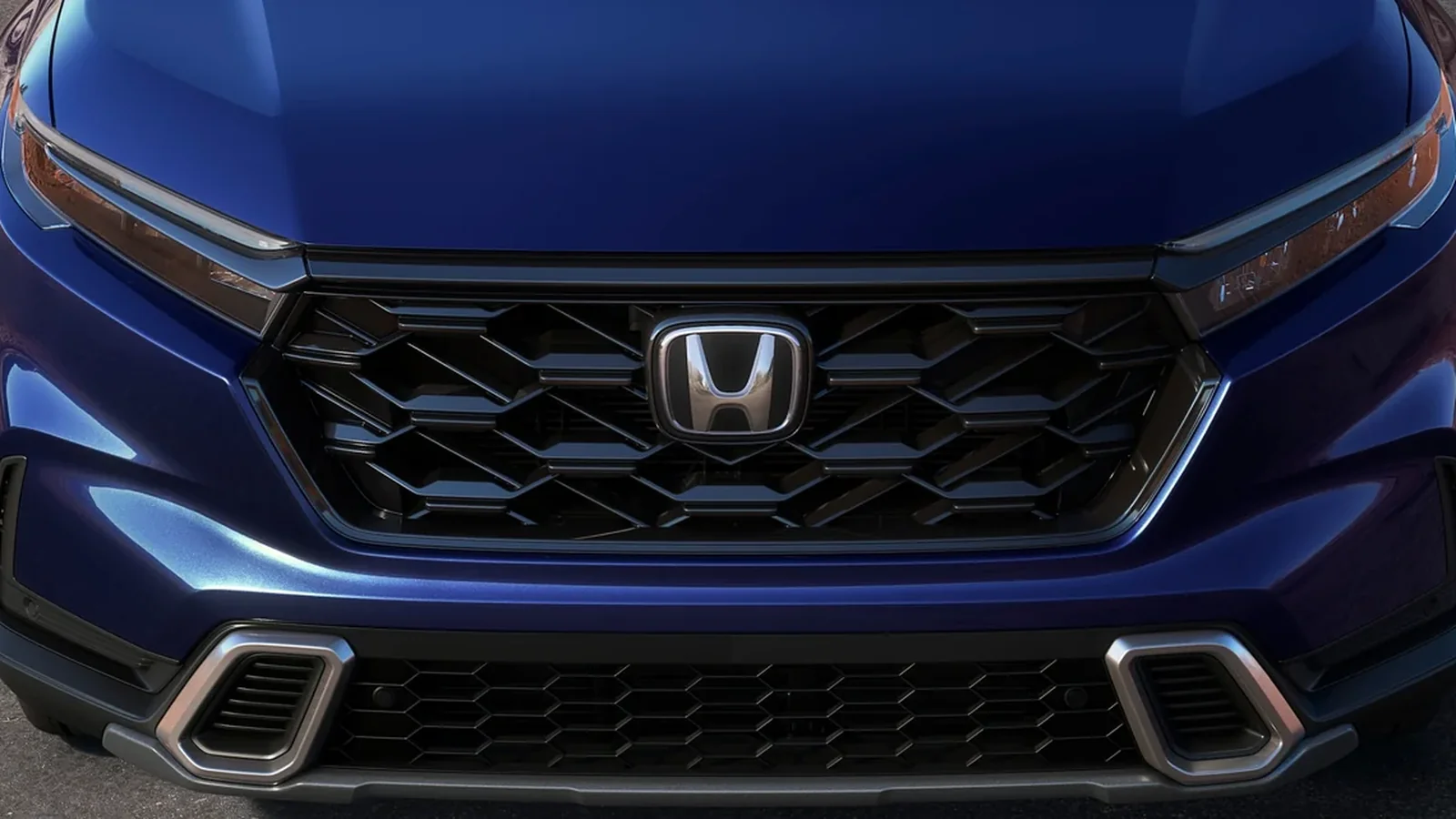
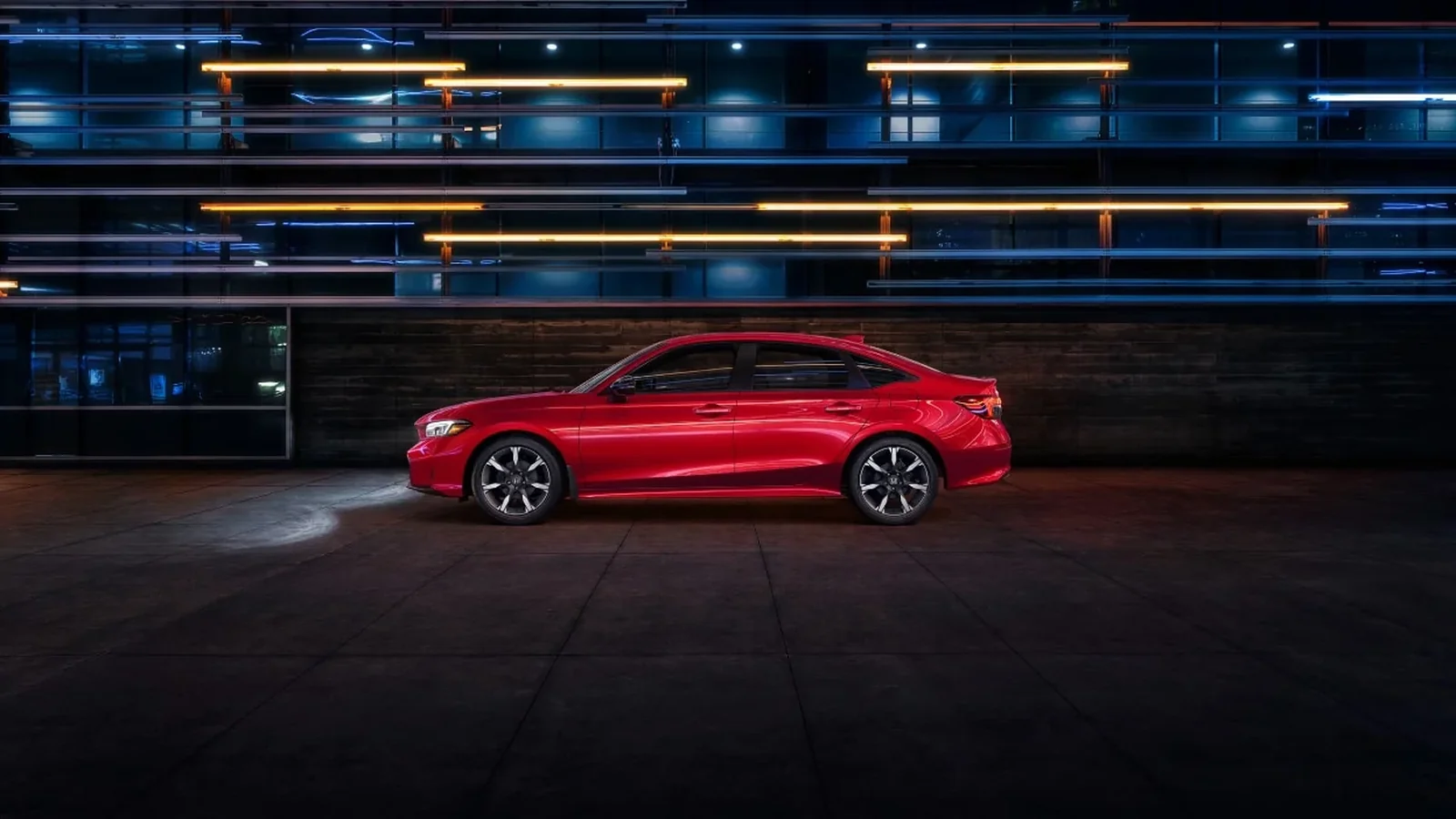
Who wins inside that box is a preview of 2030. Toyota keeps taking share with electrified volume — Toyota Canada’s August mix was already 64% electrified. Honda’s floor story is still Civic and CR-V, with hybrids doing more of the work each year. Detroit brands keep losing share. Asian brands keep taking it.
By 2030–2035 you should expect more hybrids, more compact crossovers, fewer pure gas cars, and BEVs that sell when the rebate, winter range, and payment all line up — not because Ottawa said 75%.
2. Powertrains: hybrids first, then a slower EV climb
The old plan was simple: 20% zero-emission sales in 2026, 60% in 2030, 100% in 2035. That mandate is gone. In February 2026 Ottawa replaced the Electric Vehicle Availability Standard with a greenhouse-gas standard and a political target of 75% EV sales by 2035 and 90% by 2040. Reuters
What that actually does:
- Automakers can comply with more efficient gas engines, regular hybrids, PHEVs, or BEVs.
- ICCT modeling of the announced 74 g CO2/mile 2035 standard gets at most about 68% EV share, and lower if leftover credits are used. Pembina says you would need something like 40 g/mile to really force 75%. ICCT
- The rebate is real and it fades: $5,000 on a BEV and $2,500 on a PHEV in 2026, stepping down toward 2030. After that, adoption has to be price-and-product, not cheque-and-mandate.
When federal and some provincial rebates died in 2025, BEVs fell hard and regular hybrids jumped. When the new EV Affordability Program started in February 2026, ZEVs bounced. That is rebate-sensitive demand, not a locked-in 2035 destination.
What 2035 probably looks like on Canadian roads: regular hybrids are the workhorse through the early 2030s, especially in Ontario and the Prairies. PHEVs keep a real job for winter, cottages, and houses with no Level 2. BEVs grow fastest in B.C. and Quebec. Pure ICE shrinks every year but does not vanish. Used ICE and hybrid inventory stays valuable because the average Canadian vehicle is kept a long time.
3. The factory map is the real risk
Sales in Canada can be flat and still be fine for retailers. Assembly is the existential question. RBC’s 2040 range is blunt: Canadian production either rises toward 2 million vehicles or assembly leaves the country. The swing factors are U.S. tariffs, the USMCA rewrite, and whether plants get the next product. RBC Thought Leadership
What already happened:
- Stellantis Brampton has been idle since late 2023. Jeep Compass moved to the U.S. Stellantis has signed a non-binding memorandum of understanding with Roshel for a possible sale into defence manufacturing. Unifor is fighting it. No final transaction is done. Stellantis
- Honda indefinitely suspended the $15-billion Ontario EV complex in May 2026 and is steering Alliston toward hybrids. Current Alliston jobs were not cut in that announcement. Civic and CR-V — including hybrids — still come out of that plant. CBC
- Canada also opened a quota for Chinese EVs: 49,000 units in year one at 6.1% duty. Those cars do not get the federal rebate. They still change the price floor and the political fight inside USMCA.
Ten-year factory picture, in one line: 2026–2028 is triage. 2028–2031 is the USMCA review. 2032–2036 is either software, batteries, and the next hybrid/EV mandate — or a sales market that imports more from Mexico, the U.S., Japan, Korea, and a capped slice of China.
4. What this looks like in Vaughan in 2035
On the road: CUVs still dominate. A typical family shop is hybrid CR-V / RAV4 / Tucson class, with a PHEV or BEV in the mix if they have a driveway charger. Full-size trucks stay ICE/hybrid longer than cars. City BEVs are normal in Montreal and Vancouver. They are still a winter conversation in much of Ontario.
At the dealer: fewer units, more gross from finance, protection, and service. Used and CPO matter more because new prices stay high. Service bays add high-voltage work but do not lose oil changes overnight. Salespeople sell payment and winter reality, not 2035 slogans.
Grow or decline? The retail market is neither. Flat units, rising value per vehicle, rising hybrid/EV mix. Dealers who can sell hybrids and keep used turning grow in profit even if volume does not. Canadian assembly is at risk of decline unless USMCA and product allocation go Canada’s way. Hybrids grow through the early 2030s. Pure ICE declines. BEVs grow off a small base. Official 75% by 2035 is the stretch case, not the base case.
My prediction: When calendar-year 2026 Canadian new light-vehicle sales are finalized in early 2027, the total will land between 1.80 and 1.95 million units. Three growth months do not rewrite a market that is still behind 2025 year to date and still paying 2022-reset prices. I will be wrong if the year closes above 1.95 million or below 1.80 million.
If you’re buying right now: do not wait for a 75% EV Canada before you shop. Shop the hybrid and gas numbers side by side on the vehicle you will actually park in Vaughan this winter. Confirm current programs on this month’s Honda deals — Ottawa’s 2035 target does not change September’s payment.
Quick answers
Is Canada’s new-car market growing through 2035?
Not in unit terms. DesRosiers estimated August 2026 sales at about 168,000 units, up 5.4% year over year, with a 1.86 million SAAR. Year-to-date through August was about 1.29 million units, still 1.2% behind 2025. The decade looks like a mature 1.8–2.0 million market.
Did Canada keep the 100% EV sales mandate for 2035?
No. In February 2026 Ottawa repealed the Electric Vehicle Availability Standard and replaced it with a greenhouse-gas standard and a political target of 75% EV sales by 2035 and 90% by 2040. ICCT modeling of the announced 74 g CO2/mile 2035 standard gets at most about 68% EV share.
What happened to Honda’s Ontario EV complex?
Honda indefinitely suspended the $15-billion Ontario EV value-chain project in May 2026 and is steering Alliston toward hybrids. Honda said current Alliston jobs and production were not cut in that announcement.
Should a Vaughan buyer wait for a 75% EV market before shopping?
No. On the floor in Ontario the practical next five years are still hybrid-heavy compact crossovers. A BEV only wins when rebate, winter range, driveway charging, and payment all line up — not because Ottawa named a 2035 percentage.
Shopping a hybrid because the decade is not an EV mandate?
Tell me Civic, CR-V, or Accord and I will put the gas and hybrid payments on one page — winter use included, 2035 slogans not included.
Henry Chen
Sales and Leasing Executive, Maple Honda
89 Auto Vaughan Dr, Maple, ON L6A 4A1
647-523-6878 · henry@maplehonda.com
DesRosiers via Canadian Auto Dealer, September 2026. Government of Canada / Reuters, February 5, 2026. ICCT, July 2026. RBC Thought Leadership, May 2026. Honda / CBC, May 14, 2026. Stellantis, September 17, 2026. Predictions are my personal read, not Honda Canada policy.
Ask Henry a question
Not ready to book anything? Just ask. Henry Chen answers every message himself — usually within a couple of hours during business hours. No call list, no pressure, and no obligation to buy anything.