Honda Prologue Home Charging in the GTA 2026: ESA Permit, Panel Upgrade, Charger Cost
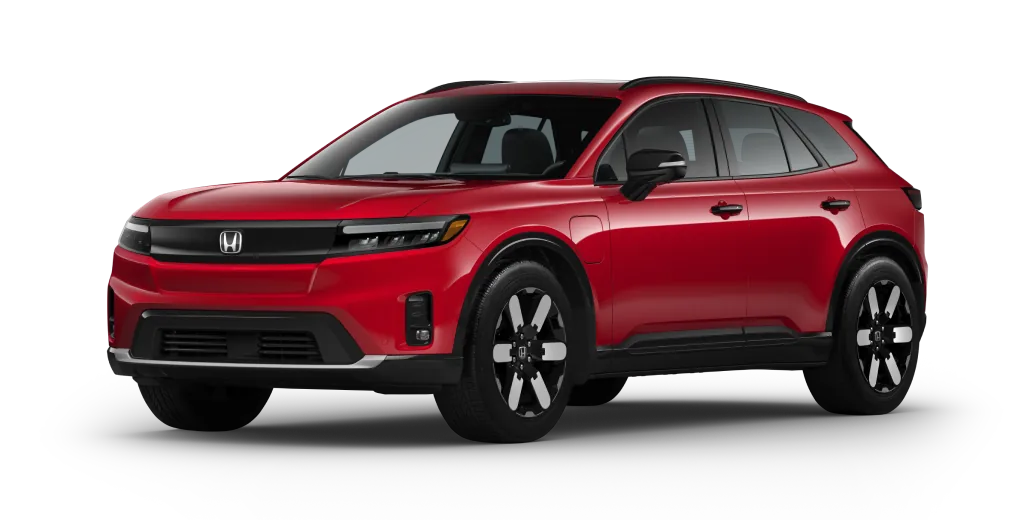
A typical Level 2 home charger install for the Honda Prologue in the GTA in 2026 costs $1,800-$4,500 all-in — including the charger hardware, dedicated 240V circuit, ESA permit, and final inspection. If your home has a 100A electrical panel and needs an upgrade, total cost rises to $4,500-$8,500. With the Ontario Ultra-Low Overnight (ULO) rate of ~2.8 cents/kWh, a full Prologue charge costs about $2 per night. Combined with the GTA utility rebates (Toronto Hydro $1,000 / Alectra $500 / federal EVAP $500), a typical GTA Prologue owner’s net out-of-pocket is $748-$1,500 for a complete home charging setup. Here is the full 2026 guide — ESA permit process, panel upgrade decision, charger selection, and the math on the GTA utility rebates.
1. The 2026 GTA home EV charging cost breakdown
What does it actually cost to install a Level 2 charger for a Honda Prologue in the GTA in 2026? Here is the line-by-line breakdown.
| Cost component | Typical range (CAD) | Notes |
|---|---|---|
| Level 2 charger hardware | $500-$1,500 | ChargePoint Home Flex, Grizzl-E Classic, Wallbox Pulsar Plus, FLO Home X5, JuiceBox 40, Honda Power Charger |
| Licensed electrician labour | $500-$1,200 | Depends on wire-run distance and panel accessibility |
| Materials (wire, breaker, conduit) | $150-$400 | Higher for outdoor or long runs requiring conduit |
| ESA notification + inspection | $80-$385 | Per 2026 ESA Fee Guide, included in most quotes |
| Typical all-in (standard install) | $1,800-$4,500 | 200A panel, short-to-medium wire run |
| 100A to 200A panel upgrade (if needed) | $1,500-$4,500 | Separate project; only if load calculation requires it |
| Total with panel upgrade | $4,500-$8,500 | Older GTA homes with 100A panels |
| EVEMS (load management) alternative | +$799-$1,200 | Smart device that avoids panel upgrade by throttling charger |
The 2026 GTA market has 3 distinct cost tiers for standard installs:
- Tier 1: Simple install (200A panel, charger near panel, indoor) — $1,200-$2,200. Most common for newer GTA subdivisions (built 2000+) with attached garages.
- Tier 2: Standard install (200A panel, longer wire run, exterior mount) — $2,200-$4,500. Common for older GTA homes with detached garages or basements.
- Tier 3: Complex install (100A to 200A panel upgrade required) — $4,500-$8,500. Older GTA homes (built pre-1990) with 100A panels and limited spare capacity.
2. The ESA permit process — what you need to know
The Electrical Safety Authority (ESA) is the Ontario regulator for electrical safety. Every hardwired Level 2 charger install in Ontario requires an ESA notification (often called the ESA permit) filed by a Licensed Electrical Contractor (LEC) before work begins, plus an ESA inspection after the work is complete.
Why the ESA permit is mandatory
Ontario's Electrical Safety Code (CSA C22.1) requires an ESA permit for any new 240V dedicated circuit installation. The permit exists to:
- Verify the install meets code (wire gauge, breaker size, conduit, GFCI protection)
- Maintain a record of electrical work in your home (for insurance + resale)
- Trigger an independent ESA inspector to verify the work
- Protect you from insurance claim denial if there is an electrical fire
What happens if you skip the ESA permit
- Insurance company can deny any EV-charger-related claim (fire, damage, injury)
- Buyer's lawyer will flag the unpermitted work at resale and demand a credit or remediation
- ESA can issue a retroactive permit (more expensive) or require removal of the work
- City of Toronto can require a separate building permit for unpermitted electrical work in a heritage-designated neighbourhood
How the ESA permit process works (GTA, 2026)
- You hire a Licensed Electrical Contractor (LEC). Verify the LEC has a Master Electrician on staff and an ECRA/ESA licence number (any LEC advertising in Ontario must display this).
- The LEC files the ESA notification online through the ESA portal before work starts. The notification describes the scope (new 240V circuit, charger make/model, panel upgrade if applicable).
- The LEC pays the ESA fee: $80-$385 depending on scope. For a standard Level 2 install, typical fee is $130-$200. The fee is included in most quotes.
- The LEC performs the install (typically 4-8 hours on site).
- After install, the LEC requests an ESA inspection through the portal. An ESA inspector schedules a visit within 5-10 business days.
- The ESA inspector visits, verifies the work meets code, and either passes the install (you get a Form 1 certificate) or orders corrections.
- You receive the ESA notification of completion and Form 1 certificate. Save these for insurance, warranty, and resale.
Who can pull the ESA permit
Only a Licensed Electrical Contractor (LEC) with a Master Electrician on staff can pull the ESA permit for EV charger work in Ontario. Homeowner self-permits for EV charger work are NOT allowed in Ontario as of 2026. The LEC is responsible for the code-compliant work, the permit, and the inspection.
3. Does your panel need an upgrade?
Whether you need a 100A to 200A panel upgrade depends on your current panel size and your home's total electrical load. Your electrician will perform a load calculation per Section 8 of the Ontario Electrical Safety Code (CSA C22.1) before quoting the work.
200A panel — usually no upgrade needed
Most modern GTA homes (built after 2000) have a 200A panel. A 200A panel can typically accommodate a 40A Level 2 charger circuit without an upgrade, as long as the existing total load is below 50%. Most 200A panels in GTA homes have 30-40% existing load (clothes dryer, electric stove, central A/C, hot water tank), leaving plenty of room for a 40A charger.
100A panel — usually needs an upgrade
Older GTA homes (built before 1990) often have 100A panels. A 100A panel typically cannot accommodate a 40A Level 2 charger circuit + the existing household load without exceeding the panel's rated capacity. The fix is a 100A to 200A panel upgrade, which costs $1,500-$4,500.
Signs you may have a 100A panel:
- Your home was built before 1990 (Toronto has many such homes in Etobicoke, Scarborough, East York, North York, old Mississauga)
- Your electrical panel says "100A" or "100 Amp" on the main breaker
- You have a fuse box instead of a breaker panel (fuse boxes are 60A or 100A, common in pre-1960 homes)
- You cannot run two major appliances at the same time without tripping the main breaker
EVEMS — the panel-upgrade alternative
EVEMS (Electric Vehicle Energy Management System) is a smart device that monitors your home's total electrical load and throttles the charger when other appliances are drawing peak power. This lets you install a 40A or 48A Level 2 charger on a 100A panel without upgrading the panel.
How it works: a current sensor is installed on the main panel feed. The EVEMS continuously measures total home load. When the load approaches the panel's 100A limit, the EVEMS reduces the charger's amperage to keep the total below 100A. When the load drops (e.g., the dryer turns off), the EVEMS ramps the charger back up to full speed.
Cost: $799-$1,200 for the EVEMS hardware + installation. Compare to $1,500-$4,500 for a panel upgrade. EVEMS is the better option for most older GTA homes with 100A panels.
4. Choosing the right Level 2 charger for your Prologue
The Prologue has an 11.5 kW max onboard AC charger, so any 40A or 48A Level 2 charger will deliver the Prologue's full AC charging speed. Top picks for GTA Prologue owners in 2026:
| Charger | Amperage | Connection | Smart features | Price | Best for |
|---|---|---|---|---|---|
| ChargePoint Home Flex | 50A (11.5 kW) | Hardwired or NEMA 14-50 | Wi-Fi, app, scheduled charging | $1,099 | Best overall - smart features + reliability |
| Grizzl-E Classic | 40A (10 kW) | Hardwired or NEMA 14-50 | None (basic) | $629 | Best budget - reliable, no frills |
| Wallbox Pulsar Plus | 48A (11.5 kW) | Hardwired or NEMA 14-50 | Bluetooth + Wi-Fi, app | $999 | Best mid-range - good looks + smart features |
| FLO Home X5 | 50A (12 kW) | Hardwired | Wi-Fi, app, demand response | $1,299 | Best Canadian-made, qualifies for Alectra rebate |
| JuiceBox 40 | 40A (10 kW) | NEMA 14-50 | Wi-Fi, app, scheduled charging | $799 | Best smart features on a budget |
| Honda Power Charger (Gen 3) | 40A (9.6 kW) | Hardwired | Wi-Fi, HondaLink integration | $1,200 | Honda brand loyalist, integrated with HondaLink |
My recommendation: ChargePoint Home Flex for most Prologue owners. Best balance of price, features, and reliability. The 50A model delivers the Prologue's full 11.5 kW AC charging speed. Wi-Fi + app lets you schedule charging for the Ontario ULO overnight rate. Backed by ChargePoint's strong network and warranty.
For budget-conscious buyers: Grizzl-E Classic. $629 for a basic reliable charger. No smart features (which is fine if you use the Prologue's built-in charging scheduler through the infotainment).
For Alectra rebate qualifying: FLO Home X5. Canadian-made, demand-response capable, $1,299. The $500 Alectra rebate is the difference between FLO and Grizzl-E in many cases.
5. The GTA utility rebates — the math
Three GTA utility rebates for home EV charger installation in 2026:
| Utility | Rebate | Coverage area | Requirements |
|---|---|---|---|
| Toronto Hydro PeakSaver | $1,000 | City of Toronto | Level 2 charger + ESA permit + inspection |
| Alectra Utilities | $500 | Markham, Vaughan, Richmond Hill, Mississauga, Oakville, Brampton | Smart EV charger (Wi-Fi, demand response capable) |
| Ottawa Hydro | $500 | Ottawa | Level 2 charger + ESA permit |
| Federal EVAP (vehicle purchase) | $500 | All of Canada | Applied at Honda dealer at Prologue purchase |
Combined rebate example for a Toronto Prologue owner
Typical Toronto semi-detached home with 100A panel, EVEMS + ChargePoint Home Flex + ESA permit:
- ChargePoint Home Flex charger: $1,099
- EVEMS (DCC-12) installation: $999
- 240V circuit run (15m, finished basement): $650
- ESA permit and inspection: $200 (included in quote)
- Total before rebates: $2,948
- Federal EVAP rebate (at Prologue purchase): -$500
- Toronto Hydro PeakSaver rebate: -$1,000
- Net out-of-pocket: $1,448
Combined rebate example for a Vaughan Prologue owner
Vaughan is served by Alectra Utilities. Typical installation with 200A panel (no upgrade needed) + Grizzl-E Classic + ESA permit:
- Grizzl-E Classic charger: $629
- 240V circuit run (5m, attached garage): $400
- ESA permit and inspection: $150 (included)
- Total before rebates: $1,179
- Federal EVAP rebate: -$500
- Alectra Utilities rebate (note: Grizzl-E is not a smart charger, may not qualify for the $500 — switch to FLO Home X5 for $1,299 to qualify): upgrade price if Alectra-qualified: +$670
- Alectra Utilities rebate: -$500
- Net out-of-pocket: $1,079-$1,179
6. The Ontario Ultra-Low Overnight (ULO) rate
Ontario's Ultra-Low Overnight (ULO) rate is a time-of-use electricity pricing tier designed to incentivize EV owners to charge at night. As of 2026, the ULO rate is approximately 2.8 cents/kWh from 11 PM to 7 AM on weekdays, and 24/7 on weekends and holidays.
| Period | Time | Rate (per kWh) | Daily hours |
|---|---|---|---|
| Off-peak (ULO) | 11 PM - 7 AM weekdays + 24/7 weekends | ~2.8 cents | ~64 hours/week |
| Mid-peak | 7 AM - 11 AM, 5 PM - 7 PM weekdays | ~10-12 cents | ~36 hours/week |
| On-peak | 11 AM - 5 PM weekdays | ~18-22 cents | ~30 hours/week |
For a Prologue with an 85 kWh battery (80 kWh usable), a full overnight charge on ULO costs about $2.24 - enough to drive 350-400 km. Compare to charging on-peak at 20 cents/kWh = $16 for the same charge. The ULO rate alone saves a typical Prologue owner $1,000-$1,500 per year in charging costs.
Most GTA EV owners who install a Level 2 charger also switch to a time-of-use plan with their utility. Talk to Toronto Hydro, Alectra, Enbridge Gas (electricity distribution for parts of the GTA), or your local utility about the best plan for your driving pattern.
7. The 10-step installation process
From the moment you decide to install a Level 2 charger to the moment you plug in your Prologue for the first time, the process is roughly 2-3 weeks for a simple install and 4-6 weeks for a panel upgrade.
- Day 0: Research — decide on charger model (ChargePoint / Grizzl-E / Wallbox / FLO / Honda Power Charger). Get 2-3 quotes from LECs.
- Day 1-3: Hire LEC — verify ECRA/ESA licence, ask for written quote, confirm ESA permit included. Sign contract.
- Day 3-5: LEC site visit — the LEC visits your home, performs the load calculation, confirms the panel has capacity, identifies the charger location, and finalizes the quote.
- Day 5-7: Permit filing — the LEC files the ESA notification through the ESA portal. Permit number issued immediately.
- Day 7-14: Equipment delivery — charger arrives from the manufacturer or is picked up from the LEC's supplier.
- Day 14-17: Install day — the LEC arrives, runs the 240V circuit, mounts the charger, installs the breaker, tests the circuit. Typically 4-8 hours. Charger is operational at end of day.
- Day 17-25: ESA inspection — the LEC requests the ESA inspection. An ESA inspector visits within 5-10 business days. Inspector verifies the work meets code, signs off the Form 1 certificate.
- Day 25-30: Rebate applications — file for Toronto Hydro PeakSaver / Alectra / federal EVAP rebates. Keep all receipts, ESA notification, Form 1 certificate.
- Day 30: First charge — plug in your Prologue. Set charging schedule to ULO hours (11 PM - 7 AM). Welcome to home charging.
- Ongoing: Monitor — check charging history in the ChargePoint / FLO / Honda app. Adjust schedule as needed. Save your annual charging costs to compare with public DC fast charging costs.
8. Henry's take — what I see at the dealer
In my experience at Maple Honda, the most common Prologue conversation after the sale is about home charging. About 60% of our Prologue customers are first-time EV owners, and the home charging question comes up in the delivery-day walkthrough. Here's my advice:
- For most GTA Prologue owners, a Level 2 charger is essential. The Level 1 portable charger that comes with the Prologue adds 5-8 km/hour - enough for emergency top-ups but not practical for daily 50-80 km GTA commutes. A Level 2 adds 30-50 km/hour, which means a 4-5 hour evening charge covers a full day of driving.
- Get 2-3 quotes from LECs. Prices in 2026 vary by 30-50% between GTA electricians for the same scope. Look for LECs with explicit EV charger experience and Master Electrician on staff.
- Apply for the utility rebate at the same time as the install, not after. Many rebates have annual funding caps and first-come-first-served. The Toronto Hydro $1,000 rebate is not guaranteed to be available next year.
- Switch to the ULO rate plan. The savings ($1,000-$1,500/year for a typical Prologue owner) pay for the charger install in 2-3 years.
- For new-build homes (or homes undergoing renovation), consider pre-wiring for EV charging even if you are not buying an EV now. The pre-wire cost is $200-$400 in new construction, but retrofit cost is $2,000+. Pre-wiring adds resale value.
- For renters, ask the landlord about EV charging. Many GTA landlords are installing chargers for tenant retention. Some buildings have shared chargers. Some renters use a Level 1 outlet in the parking garage.
- For condo dwellers, the EVEMS is a great solution if the building's electrical infrastructure cannot support a 40A circuit. Some GTA condos have shared Level 2 chargers managed by the condo corporation. The ZEVIP (federal multi-unit rebate) can fund a building-wide charger install.
Frequently asked questions
Do I need an ESA permit to install a Level 2 EV charger at home in Ontario?
Yes. Every hardwired Level 2 EV charger install in Ontario requires an ESA (Electrical Safety Authority) notification (commonly called a permit) filed by a Licensed Electrical Contractor (LEC) before work begins, plus an ESA inspection after install. Per the 2026 ESA Fee Guide, a residential EV circuit notification typically costs $80-$385 depending on scope ($130-$280 typical for a standard Level 2 install). The permit is included in most electrician quotes. The City of Toronto does not require a separate building permit for a basic install, but panel upgrades and exterior conduit penetrations may trigger additional approvals. Homeowners cannot legally pull their own permit for EV charger work in Ontario (residential homeowner permits exist for other electrical work but not for EV charger installs in 2026). Skipping the permit voids your home insurance for any EV-charger-related claim and creates resale liability.
How much does it cost to install a Level 2 charger at home in the GTA in 2026?
A typical Level 2 home charger install in the GTA runs $1,800 to $4,500 all-in, including the charger hardware, dedicated 240V circuit, ESA permit, and inspection. Breakdown: charger hardware $500-$1,500 (Grizzl-E, ChargePoint Home Flex, Wallbox Pulsar Plus, FLO Home X5, JuiceBox, Honda Power Charger), licensed electrician labour $500-$1,200, materials $150-$400, ESA permit $80-$385. If a 100A-to-200A panel upgrade is required, total project cost rises to $4,500-$8,500 all-in. The 2026 GTA pricing data shows simple installs (200A panel, charger near panel) at $1,800-$2,800, standard installs (longer cable run, exterior mount) at $2,800-$4,500, complex installs (panel upgrade required) at $4,500-$8,500. A typical Toronto semi-detached home with a 100A panel + EVEMS (load management) + ChargePoint Home Flex comes out to $2,948 before rebates. Net out-of-pocket after Toronto Hydro $1,000 + federal EVAP $500 = $1,448.
Does the Honda Prologue come with a Level 1 charger?
Yes. The 2026 Honda Prologue comes standard with a portable Level 1 (120V) charger that plugs into any standard household outlet. At Level 1, you add approximately 5-8 km of range per hour of charging. A full 0% to 100% charge takes 60-80 hours. This is enough for emergency top-ups or very low-mileage drivers, but not practical for daily driving. For regular use, most GTA Prologue owners install a Level 2 (240V) charger that adds 30-50 km of range per hour and fully charges overnight. Honda does not include a Level 2 charger standard - that is a separate purchase through your Honda dealer or a third-party supplier like ChargePoint, Grizzl-E, Wallbox, or FLO.
How long does it take to fully charge a Honda Prologue at home?
On a Level 2 (240V) charger at 11.5 kW (the Prologue's max AC charging rate), a full 0% to 100% charge takes approximately 7-8 hours from empty. In practice, GTA drivers typically charge from 20% to 80% overnight, which takes 4-5 hours. With the Ontario Ultra-Low Overnight (ULO) rate of ~2.8 cents/kWh from 11 PM to 7 AM, you can fully charge a Prologue for under $2 per night. A Level 1 (120V) charger takes 60-80 hours from empty - not practical for daily use but fine for occasional top-ups.
What is the best home Level 2 charger for a Honda Prologue?
The best Level 2 charger for a Prologue depends on your needs and budget. Top picks for GTA Prologue owners in 2026: (1) ChargePoint Home Flex - 50A hardwired, up to 11.5 kW, Wi-Fi enabled, $1,099, smart features. (2) Grizzl-E Classic - 40A hardwired or NEMA 14-50, 10 kW, $629, no smart features (just a basic reliable charger). (3) Wallbox Pulsar Plus - 48A hardwired or 40A NEMA 14-50, 11.5 kW, Bluetooth + Wi-Fi, $999. (4) FLO Home X5 - 50A hardwired, 12 kW, $1,299, Canadian-made. (5) JuiceBox 40 - 40A NEMA 14-50, 10 kW, $799, smart features. (6) Honda Power Charger (Gen 3) - 9.6 kW, Wi-Fi, $1,200 + installation. For most Prologue owners, the ChargePoint Home Flex is the best balance of price, features, and reliability. The Grizzl-E is the best budget option. The Honda Power Charger is the most integrated with HondaLink but at a higher price.
Does my electrical panel need to be upgraded for a Level 2 charger?
It depends on your current panel size and existing load. Most modern GTA homes (built after 2000) have a 200A panel which can typically accommodate a 40A Level 2 charger circuit without an upgrade. Older homes (built before 1990) often have 100A panels which are usually not large enough. Your electrician will perform a load calculation per Section 8 of the Ontario Electrical Safety Code (CSA C22.1) to determine if your panel can handle the additional load. If a panel upgrade is needed, the typical cost is $1,500-$4,500. Alternatively, you can install an EVEMS (Electric Vehicle Energy Management System) like the DCC-12 for $799-$1,200 - this smart device monitors your home's total load and throttles the charger when other appliances are drawing peak power, eliminating the need for a panel upgrade. EVEMS is a great option for older GTA homes with 100A panels that cannot afford or do not want a $3,000 panel upgrade.
Are there any rebates for EV charger installation in the GTA in 2026?
As of 2026, there is no active province-wide Ontario residential EV charger rebate. However, several GTA municipal utilities offer their own programs: (1) Toronto Hydro PeakSaver - $1,000 for Level 2 charger installation for Toronto residents. (2) Alectra Utilities - $500 for smart EV chargers that participate in demand response programs. Alectra serves Markham, Vaughan, Richmond Hill, Mississauga, Oakville, and Brampton. (3) Ottawa Hydro - $500 (Ottawa only). (4) Federal EVAP - $500 rebate at the time of vehicle purchase (applied at the Honda dealer). To qualify for most rebates, the charger must be CSA or UL certified, installed by a licensed electrician (LEC), and inspected by the local electrical authority. Some programs require Wi-Fi connectivity, energy monitoring, or demand-response capability. Keep all receipts, the ESA notification permit number, and the inspection certificate - rebate applications require these documents as proof of code-compliant installation. Combined with the Ontario Ultra-Low Overnight (ULO) rate (~2.8 cents/kWh overnight), a typical Prologue owner in Toronto can charge for under $2 per night after rebates and ULO.
Can I install the Level 2 charger myself?
Legally, no. Ontario's Electrical Safety Code requires hardwired EV charger work to be performed by a Licensed Electrical Contractor (LEC) with an ECRA/ESA licence. A DIY install will fail ESA inspection, will not be insurable, and creates significant resale liability. The ESA also requires that an LEC pull the permit (homeowner permits for EV charger work are not allowed in Ontario as of 2026). You CAN do some of the prep work yourself to save money: (1) choose the charger location, (2) clear the area of obstacles, (3) confirm the panel location and capacity, (4) decide on the NEMA 14-50 vs hardwired option. Your electrician handles the actual wiring, breaker installation, conduit, ESA permit, and final inspection. The LEC is responsible for the code-compliant work, so use a Master Electrician designation contractor for the cleanest pass.
What is the Ontario Ultra-Low Overnight (ULO) rate?
The Ontario Ultra-Low Overnight (ULO) rate is a time-of-use electricity pricing tier designed to incentivize EV owners to charge at night. As of 2026, the ULO rate is approximately 2.8 cents/kWh from 11 PM to 7 AM on weekdays and 24/7 on weekends and holidays. This is dramatically cheaper than peak rates (typically 18-22 cents/kWh in the GTA) and 50% cheaper than mid-peak rates (typically 10-12 cents/kWh). For a Prologue with an 85 kWh battery (80 kWh usable), a full overnight charge on ULO costs about $2.24 - enough to drive 350-400 km. Most GTA EV owners who install a Level 2 charger also switch to a time-of-use plan with their utility (Toronto Hydro, Alectra, Enbridge, etc.) to capture the ULO savings. Some utilities also offer a dedicated EV rate plan that locks in the ULO rate 24/7 for higher monthly fees. Talk to your utility about the best plan for your driving pattern.
How long does the Level 2 charger installation take?
A straightforward Level 2 home charger install takes 4-8 hours on site, typically completed in a single day. The ESA inspection is scheduled separately, typically 5-10 business days after install. Installs that include a 100A-to-200A panel upgrade run 1-2 days, plus a Toronto Hydro meter swap window (separate appointment, usually 1-2 weeks out). For a typical Prologue install: day 1 morning = your electrician arrives, runs the load calculation, mounts the charger, runs the 240V circuit from the panel to the charger location, installs the breaker, tests the circuit. Day 1 afternoon = charger is operational. ESA inspection happens later. Total elapsed time from booking to fully operational: 2-3 weeks for a simple install, 4-6 weeks for a panel upgrade install (due to Toronto Hydro coordination). Same-week installation is available from most GTA electricians in 2026 if the panel has capacity and you do not need a panel upgrade.
Hardwired or NEMA 14-50 plug-in for a Honda Prologue?
For 40A and 48A Level 2 chargers (the residential sweet spot for the Prologue's 11.5 kW max AC charging), hardwired is the safer, code-preferred, and longer-lasting option. Hardwired connections avoid the long-term degradation of plug contacts under continuous load (a NEMA 14-50 outlet carrying 40A continuously can develop resistance and heat over years). NEMA 14-50 plug-in is acceptable for 32A units and offers flexibility (you can unplug the charger and use the outlet for a welder or RV), but is not the right choice for higher-amperage 40A+ chargers. For a Prologue, the optimal setup is a 48A hardwired charger on a 60A breaker - this delivers 11.5 kW continuously and charges the Prologue from empty in about 7 hours. If you anticipate selling the home in the next 5 years, a hardwired charger with the ESA inspection certificate adds resale value. If you are a renter or anticipate moving, a NEMA 14-50 plug-in is more portable.
Will a Level 2 charger increase my home's resale value?
Yes - and increasingly so as EV adoption rises across the GTA. A professionally installed ESA-certified Level 2 charger is a sought-after feature in detached and semi-detached listings, especially in neighbourhoods with high EV ownership (downtown Toronto, Mississauga, Markham, Oakville, Burlington). The pass certificate from ESA is what buyers' lawyers want to see - a charger without ESA inspection is a liability, not an asset. The 2026 GTA housing market data shows homes with professionally installed EV chargers sell 3-7 days faster on average and at 1-2% premium over comparable homes without. A 2021 California study (Zillow) found homes with EV chargers sold for an average 1.5% premium; the GTA market is following a similar pattern. The resale premium typically recovers 50-70% of the install cost (so a $3,000 install may add $1,500-$2,100 to your home's resale value). The premium is highest in neighbourhoods with high EV adoption and lowest in suburban neighbourhoods without EV demand.
What is the difference between Level 1, Level 2, and Level 3 charging for the Prologue?
Three charging levels for the Honda Prologue: (1) Level 1 (120V household outlet) - adds 5-8 km of range per hour, takes 60-80 hours for a full charge from empty. Use case: emergency top-ups, very low mileage. Standard with the 2026 Prologue. (2) Level 2 (240V dedicated circuit) - adds 30-50 km of range per hour, takes 7-8 hours for a full charge. Use case: daily home charging, recommended for most Prologue owners. Requires a licensed electrician install + ESA permit. (3) Level 3 / DC fast charging (400V+ DC) - charges from 20% to 80% in 35 minutes. Use case: road trips, public charging. Requires 3-phase commercial power (not residential). For the Prologue, Level 2 is the practical home solution - Level 1 is too slow for daily use, Level 3 is not a residential product. See Cycle 95 for the public DC fast charging guide (Tesla Supercharger, ChargePoint, FLO, etc.).
Related from Henry
- Honda Prologue public EV charging in the GTA 2026 — the related public-charging guide (Cycle 95, covers Tesla Supercharger access + GTA networks + road trips).
- Home EV charging in Vaughan — Level 2 installation + Ontario ESA permits — the related narrow post (June 23, 2026).
- Honda Roadside Assistance in Ontario 2026 — the related HRA guide (Cycle 98, covers 24/7 emergency breakdown support including EV-specific).
- 2026 Honda Canada lineup — every model, MSRP, and where it’s built — the lineup page with the Prologue trim table (EX / EX-L / Touring).
- 2026 Honda Hybrid lineup — 6 models compared — for buyers considering the CR-V Hybrid or Accord Hybrid instead of the Prologue EV.
- Complete Honda Buyer’s Guide 2026: 20 Steps from Research to Delivery — the Cycle 100 capstone page (covers the full buying process from budget to delivery).
Sources: esasafe.com (ESA official EV charger installation rules); countryreno.com (2026 GTA cost guide $1,800-$8,500); evchargerinstallationtoronto.ca (Toronto-specific 2026 pricing including Alectra $500 and Toronto Hydro PeakSaver $1,000); getabetterquote.com (Ontario 2026 ESA Fee Guide $80-$385); kvbearelectrical.ca (2026 Ontario installation cost guide); renohouse.ca (Toronto 2026 cost tiers); Toronto Hydro PeakSaver program (2026); Alectra Utilities EV charger rebate (2026, $500 for Markham / Vaughan / Richmond Hill / Mississauga / Oakville / Brampton); Ottawa Hydro rebate ($500); Ontario Ultra-Low Overnight (ULO) rate ~2.8 cents/kWh per 2026 IESO/ATO; federal EVAP $500 rebate per Government of Canada; HONDA_CANADA_FACTS.json (canonical Honda Canada reference for Prologue specs). Curb weight, battery, range, and charging rates per honda.ca/en/prologue. Last verified: July 2, 2026.