Honda Prologue Public Charging in the GTA 2026: NACS Adapter + Tesla Supercharger Access
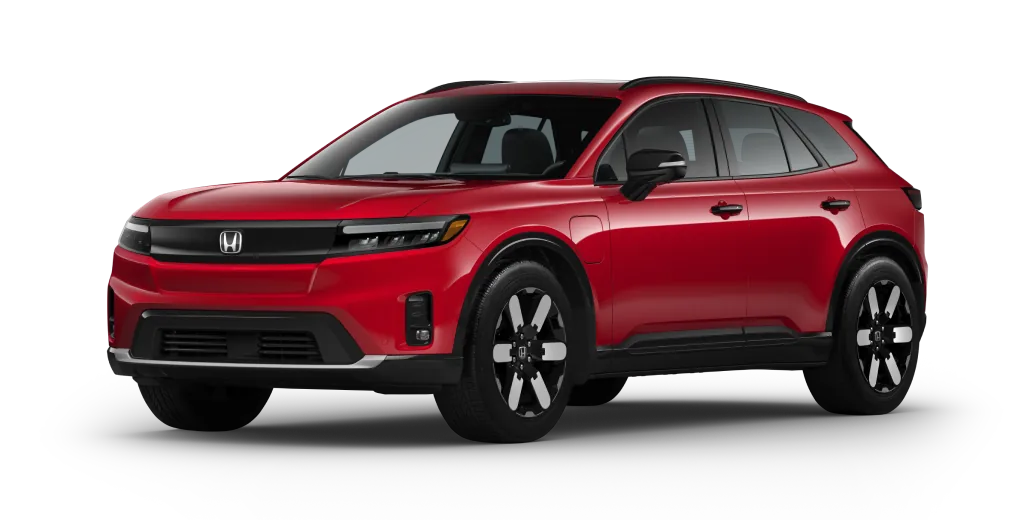
As of April 2026, Honda Prologue owners in the GTA can use Tesla's Supercharger network — over 25,000 stalls across North America — with the official Honda-approved NACS-CCS adapter (Part #86275140, $400 CAD at any authorized Honda dealer). That single adapter transforms the Prologue from a CCS-only EV into a vehicle that can charge at the largest, most reliable fast-charging network on the continent. Here is everything GTA Prologue owners and shoppers need to know about the adapter, real-world charging speeds, GTA charging networks, costs per kWh, and how to plan a road trip from Vaughan.
1. The 4 ways to charge a Honda Prologue
There are four ways to charge a 2026 Honda Prologue, and each has a different use case. Most GTA owners use a mix: home Level 2 for daily driving, public DC fast for road trips.
| Type | Voltage | Speed | Range added per hour | Best for |
|---|---|---|---|---|
| Level 1 (portable, included) | 120V | ~1.4 kW | 5-8 km/hour | Emergency top-up, daily short commute |
| Level 2 (home + public) | 240V | Up to 11.5 kW | Up to 55 km/hour | Home overnight charging, public L2 stations |
| DC fast (CCS) | DC | Up to 155 kW | ~650 km/hour peak | Road trips, fast top-ups |
| DC fast (NACS via adapter) | DC | Up to 155 kW | ~650 km/hour peak | Tesla Supercharger network access (V3/V4) |
Level 1 (120V portable charger) — included standard
The 2026 Honda Prologue comes standard with a portable Level 1 charger that plugs into any regular household outlet. It charges at about 1.4 kW, adding roughly 5-8 km of range per hour. A full charge from 0% to 100% takes 60-80 hours. Realistically, Level 1 is for emergency top-ups or daily short commutes — if you drive less than 40 km/day, you can charge overnight on Level 1 and not need a Level 2 home charger.
Level 2 (240V) — the home-charging standard
Level 2 is the sweet spot for GTA home charging. At 11.5 kW peak (the Prologue's onboard AC charger max), you add up to 34.1 miles (55 km) per hour. A typical 8-hour overnight charge adds 400-440 km — more than the Prologue's full range. You need a 240V outlet installed in your garage or driveway (NEMA 14-50 or hardwired).
Options for Level 2 home charging:
- Honda Power Charger (Gen 3) — Honda's official 9.6 kW Level 2 charger, ~$1,200 + $500-$1,000 installation. Wi-Fi enabled for scheduled charging.
- ChargePoint Home Flex — 50A Level 2 charger, up to 11.5 kW, ~$1,000 + installation. Smart features, voice control, app scheduling.
- Wallbox Pulsar Plus — compact 40A Level 2 charger, ~$1,000 + installation. Bluetooth + Wi-Fi.
- Enphase IQ — 32A Level 2 charger, ~$800 + installation. Integrates with Enphase solar.
Most GTA Prologue owners install a Level 2 charger within the first month. The cost is $1,500-$2,500 all-in (charger + installation by a licensed ESA-certified electrician). Ontario electrical permits and ESA inspection are required for new 240V outlet installation.
DC fast charging (CCS) — road-trip power
The Prologue's peak DC fast charging rate is 155 kW. That works out to:
- ~65 miles (105 km) of range added in 10 minutes (per honda.ca)
- 20% to 80% state-of-charge in approximately 35 minutes (under ideal conditions)
- 10% to 80% in approximately 45 minutes (typical real-world)
The 155 kW peak is on the lower end for 2026 EVs (Hyundai Ioniq 5 peaks at 350 kW, Kia EV6 at 350 kW) but it is sufficient for road-trip use. A 35-minute fast-charge stop is comparable to a gas-station stop with a snack and bathroom break.
DC fast charging (NACS via adapter) — the new option
The Honda NACS-CCS adapter opens up Tesla's Supercharger network. Same 155 kW peak speed, same Prologue battery, but the network jumps from ~12,000 CCS fast chargers in Canada to 25,000+ NACS/CCS combined. This is the biggest practical upgrade of 2026 for Prologue owners.
2. The Honda NACS-CCS adapter — what it is, where to buy
Honda released the official NACS-CCS adapter (Part #86275140) in April 2026, after GM (Honda's co-development partner on the Prologue) and other automakers adopted the NACS (North American Charging Standard) connector. The adapter is a compact, travel-friendly device that fits in the Prologue's cargo area.
Specs and price
| Specification | Detail |
|---|---|
| Part number | 86275140 |
| Manufacturer MSRP (Canada) | $400 CAD |
| Manufacturer MSRP (US) | $225 USD |
| Warranty | 1 year from date of purchase |
| Compatible vehicles | 2024-2026 Honda Prologue, 2024-2026 Acura ZDX |
| Compatible chargers | Tesla V3 Superchargers, V4 Superchargers, NACS DC fast chargers |
| Not approved for | Level 1 (120V) or Level 2 (240V) NACS home chargers (use only for DC fast) |
| Where to buy | Authorized Honda dealers (in stock at Maple Honda, Vaughan), Honda DreamShop online |
The price difference between Canada ($400 CAD) and the US ($225 USD) is not Honda nickel-and-diming Canadians — it reflects shipping, duties, GST/HST, and the smaller Canadian market. The $400 CAD adapter is still cheaper than the equivalent Ford, GM, or Rivian NACS adapters in Canada ($300-$500 CAD range).
What the adapter does NOT do
- It does NOT enable Level 1 (120V) or Level 2 (240V) charging from a NACS home charger. Use the Prologue's standard portable Level 1 charger or a Level 2 wallbox for home charging.
- It does NOT work on Tesla V1 or V2 Superchargers (older urban Superchargers with non-NACS connectors). It works on V3 and V4 stalls only.
- It does NOT include a Tesla app subscription. You need the Tesla app (free download) to initiate charging sessions at Superchargers.
3. How to charge a Prologue at a Tesla Supercharger
Step-by-step for a GTA Prologue owner using a Tesla Supercharger with the NACS adapter:
- Find a compatible Supercharger. Open the Prologue's built-in Google Maps and search 'EV charging' or 'Tesla Supercharger'. Compatible V3 and V4 stalls are shown. The Tesla app also shows compatible stalls and lets you filter out busy ones.
- Park at the stall. Back in if the charge port is on the rear driver side. Some GTA Supercharger locations have pull-through stalls for trailers.
- Plug the Honda NACS-CCS adapter into the Supercharger cable. The Tesla cable has a NACS plug (small, oblong connector). Push the adapter onto the NACS plug until it clicks.
- Plug the CCS end of the adapter into the Prologue. The CCS connector is the larger J1772-style plug. Push until the Prologue clicks and the charging port light turns green.
- Open the Tesla app on your phone. The app will detect the stall number you are plugged into. If it does not, enter the stall number manually.
- Tap 'Start Charging' in the app. The session begins. The Tesla app will show the charging rate, kWh delivered, and estimated time to target state-of-charge.
- Monitor and stop. When you reach your target state-of-charge (typically 80% for road-trip pace), tap 'Stop Charging' in the Tesla app.
- Unplug. Press the release button on the Prologue's charge port. Remove the CCS plug. Then remove the adapter from the Tesla cable (press the release tab). Return the adapter to your Prologue's cargo area.
Typical session: 20% to 80% in 30-40 minutes. Cost: $20-$40 depending on the Supercharger rate and your starting state-of-charge. Idle fees may apply if you stay parked after the charge completes (typically $1.00/minute at V3 Superchargers, $0.50-$1.00/minute at V4).
4. GTA public charging networks
The GTA has one of the densest public charging networks in Canada. Here is a breakdown of the major networks a Prologue owner will encounter:
Tesla Supercharger (now NACS-accessible)
~25,000+ stalls across North America, with major GTA clusters at:
- Vaughan Mills (Vaughan) — 12 V3 stalls, 250 kW peak
- Markham (Highway 7 and Warden) — 16 V3 stalls, 250 kW peak
- Mississauga (Heartland Town Centre) — 20 V3/V4 stalls, up to 350 kW peak
- Toronto (Liberty Village, Yonge-Eglinton, Scarborough Town Centre) — multiple locations
- Brampton (Queen Street) — 8 V3 stalls
- Burlington (QEW and Guelph Line) — 12 V3 stalls
- Richmond Hill (Highway 404 and Major Mackenzie) — 12 V4 stalls
Tesla Supercharger rate for non-Tesla vehicles in Canada: $0.43-$0.58 per kWh depending on the site and time of day. Peak rates can hit $0.85/kWh at busy urban sites. Idle fees: $0.50-$1.00/minute after the charge completes.
ChargePoint
ChargePoint is the largest non-Tesla public charging network in North America. Most GTA malls, hotels, and office buildings have ChargePoint Level 2 stations. Some locations have ChargePoint Express (DC fast, up to 400 kW) but those are rare. Cost: $0.40-$0.55/kWh for Level 2, $0.55-$0.70/kWh for DC fast. Use the ChargePoint app or RFID card.
FLO
Canadian-founded (Quebec City) FLO is the second-largest public charging network in Canada. Many GTA municipal lots, libraries, and arenas have FLO Level 2 stations. FLO also operates a small number of DC fast stations along Highway 401 (ONroute) and in major city centres. Cost: $0.40-$0.50/kWh for Level 2, $0.55-$0.65/kWh for DC fast. Use the FLO app or RFID card.
Ivy (formerly Circuit électrique)
Hydro-Quebec's public charging brand. Predominantly in Quebec, but expanding to Ontario. Ivy Level 2 stations are common in Ottawa, Kingston, and Cornwall along Highway 401. Cost: $0.40-$0.50/kWh. Use the Ivy app or Circuit électrique card.
Petro-Canada — Coast-to-coast DC fast
Petro-Canada has built a coast-to-coast DC fast charging network at select Petro-Canada stations, primarily along the Trans-Canada Highway. Many GTA-area stations include 100-200 kW DC fast chargers. Cost: $0.55-$0.70/kWh. Use the Petro-Canada app or tap-to-pay credit card.
Canadian Tire / ONroute (highway 400/401)
Canadian Tire has installed Level 2 and DC fast chargers at select GTA and Ontario locations. ONroute (the highway rest stop service along Highway 400 and 401) has multiple DC fast charging stations. Cost: $0.55-$0.70/kWh at ONroute. Use the ONroute app or RFID card.
5. Real-world charging speeds and times
The Prologue's 85 kWh Ultium battery (usable ~80 kWh) charges at different rates depending on the state-of-charge and the charger's output. Here is a typical charging curve on a 150 kW DC fast charger:
| State of charge | Charging rate | Time to next 10% | Cumulative time from 10% |
|---|---|---|---|
| 10% to 20% | ~150 kW | ~4 min | 0 min (start) |
| 20% to 30% | ~150 kW | ~4 min | ~4 min |
| 30% to 40% | ~140 kW | ~4 min | ~8 min |
| 40% to 50% | ~125 kW | ~5 min | ~13 min |
| 50% to 60% | ~110 kW | ~5 min | ~18 min |
| 60% to 70% | ~90 kW | ~6 min | ~24 min |
| 70% to 80% | ~70 kW | ~8 min | ~32 min |
| 80% to 90% | ~50 kW | ~11 min | ~43 min |
| 90% to 100% | ~25 kW | ~20 min | ~63 min |
The Prologue charges fastest between 10% and 50% state-of-charge, then tapers. For road trips, the optimal strategy is to charge from 10% to 80% (about 32 minutes) and then drive to the next charger. Charging from 80% to 100% takes 30+ minutes and is rarely worth it on a road trip.
6. Cost of charging a Prologue in the GTA
Here is what GTA Prologue owners actually pay to charge in 2026:
| Charging method | Rate (per kWh) | Cost per full charge (0-100%) | Cost per 20-80% session |
|---|---|---|---|
| Home Level 2 (off-peak, Alectra) | $0.087 | $7 | $4 |
| Home Level 2 (on-peak, Alectra) | $0.197 | $16 | $9 |
| Public Level 2 (ChargePoint / FLO) | $0.40-$0.55 | $32-$44 | $19-$26 |
| Tesla Supercharger (off-peak) | $0.43 | $34 | $20 |
| Tesla Supercharger (peak) | $0.58 | $46 | $28 |
| ONroute DC fast | $0.55-$0.70 | $44-$56 | $26-$33 |
| Petro-Canada DC fast | $0.55-$0.70 | $44-$56 | $26-$33 |
For context: a comparable gasoline SUV (Honda Pilot, 11.6 L/100 km combined, $1.65/L gas) costs about $110 to drive 600 km. The Prologue on home Level 2 off-peak costs about $9 to drive 600 km. The Prologue on Tesla Supercharger peak costs about $46 to drive 600 km. Either way, the Prologue is cheaper to fuel than a gas SUV, and significantly cheaper on home charging.
7. The IONNA network — what's coming by 2030
IONNA is a joint venture of seven major automakers (BMW, GM, Honda, Hyundai, Kia, Mercedes-Benz, Stellantis) building a new high-power DC fast-charging network across North America. The target: 100,000 DC fast-charging points by 2030, including 30,000 in Canada and the US by end of 2026.
Why IONNA matters for Prologue owners:
- Higher power: IONNA stations are designed for 350+ kW peak (vs Tesla V3's 250 kW and the Prologue's 155 kW max). The Prologue will charge at its full 155 kW at IONNA stations.
- No adapter needed: IONNA stations have both CCS and NACS connectors. Prologue owners plug in directly without the NACS adapter.
- Plug-and-charge: IONNA stations authenticate the vehicle automatically when you plug in — no app or card needed.
- Canopy / weather protection: IONNA stations have canopies to keep snow and rain off the charger and your car. Important for Canadian winters.
- Restrooms and amenities: IONNA sites are co-located with convenience stores, restaurants, or travel plazas.
The first IONNA stations opened in the US in late 2025. Canada rollout is expected to begin in 2026-2027. By 2030, IONNA + Tesla + ChargePoint + FLO should give Prologue owners access to ~150,000 DC fast-charging points across North America.
8. How to plan a road trip from the GTA in a Prologue
Sample GTA-anchored road trips a Prologue can comfortably do, with charging stops:
GTA to Montreal (542 km)
- Leave home with 100% charge (473 km range AWD)
- Charge at ONroute Odessa (km 190) — 20 minutes, 20% to 80%
- Charge at ONroute Bainsville (km 350) — 20 minutes, 20% to 80%
- Arrive Montreal with ~20% remaining
Total trip time: ~6 hours driving + 40 minutes charging. About the same as a gas car with one stop.
GTA to Quebec City (793 km)
- Leave home with 100%
- Charge at ONroute Odessa (km 190) — 20 min
- Charge at Ivy Trois-Rivières (km 550) — 25 min
- Arrive Quebec City with ~20%
Total trip time: ~8 hours + 45 min charging.
GTA to New York City (790 km)
- Leave home with 100%
- Charge at Tesla Supercharger Buffalo (km 180) — 25 min
- Charge at Tesla Supercharger Syracuse (km 400) — 25 min
- Arrive NYC with ~20%
Total trip time: ~8.5 hours + 50 min charging.
GTA to Toronto Pearson Airport (28 km)
Full charge at home, drive to airport, park at one of the Pearson EV charging lots, return. No charging stop needed. Round trip is 56 km, well within a 100% charge.
9. Prologue battery warranty and longevity
The Honda Prologue has the best high-voltage battery warranty in the industry (tied with Hyundai/Kia/Genesis): 8 years / 160,000 km. This is in addition to the standard 3-year / 60,000 km comprehensive warranty and 5-year / 100,000 km powertrain warranty.
What the battery warranty covers:
- Capacity loss below 70% of the original 85 kWh within 8 years / 160,000 km
- Defects in the battery cells, modules, or pack
- Thermal management system failures (the Prologue's liquid cooling system)
- Onboard charging system failures (Level 1, Level 2, DC fast)
What the battery warranty does NOT cover:
Honda expects the Prologue battery to retain 70-80% of its original capacity after 8 years / 160,000 km under normal use. Real-world data from the related Chevrolet Equinox EV (same battery) suggests ~90% capacity retention at 100,000 km in mild climates.
10. Henry's take — what I see at the dealer
In my experience at Maple Honda, Prologue buyers fall into three groups and each charges differently:
- Daily commuters (60%): Plug in at home on Level 2 every night. Drive 40-80 km/day. Never use public DC fast charging except on the occasional weekend trip. These owners see the lowest charging cost ($0.10-$0.15/kWh) and the most convenience.
- Condo / apartment dwellers (20%): No home charging. Rely on workplace Level 2 + public Level 2 (ChargePoint, FLO) + occasional Tesla Supercharger. These owners benefit the most from the NACS adapter because it gives them access to the largest fast-charging network.
- Road-trippers (20%): Drive long distances frequently. Plan trips around Tesla Superchargers and ONroute stations. Often buy the NACS adapter on day one.
The NACS adapter is the most common accessory for Prologue owners at Maple Honda in 2026. We typically have 5-10 in stock. The $400 price point is reasonable given the network access it unlocks. Most owners tell me they wish they had bought it sooner.
The one caveat: the Prologue's 155 kW peak charging speed is fine but not class-leading. If you do 90% highway driving at 110 km/h in winter, plan for slightly longer charging stops than the Ioniq 5 or EV6 owner next to you. The trade-off is a more comfortable ride, better cold-weather performance (heat pump standard), and a Honda dealer network for service.
Frequently asked questions
Can a Honda Prologue use Tesla Superchargers in 2026?
Yes. As of April 2026, Honda Prologue and Acura ZDX owners can charge at more than 25,000 Tesla Supercharger stalls across North America using the official Honda-approved NACS-CCS adapter (Part #86275140). The adapter retails for $400 CAD at authorized Honda dealers in Canada. The Prologue's built-in Google Maps can locate compatible Supercharger stations, and you initiate charging through the Tesla app. Plug-and-charge functionality (where the car authenticates automatically without opening an app) is expected to roll out in a future software update.
How much does the Honda NACS-CCS adapter cost in Canada?
The official Honda-approved NACS-CCS adapter (Part #86275140) retails for $400 CAD at authorized Honda dealers across Canada. The US price is $225 USD. The price difference reflects shipping, duties, and the smaller Canadian market. The adapter comes with a 1-year manufacturer warranty. Honda explicitly states this is the only NACS adapter it approves for the Prologue and ZDX. Damage caused by unapproved third-party adapters may not be covered under the vehicle's high-voltage battery warranty.
Where can I buy the Honda NACS-CCS adapter in Canada?
The Honda NACS-CCS adapter is available at any authorized Honda dealer in Canada. Maple Honda in Vaughan stocks them. You can also order online through the Honda DreamShop portal. As of July 2026, supply has caught up with demand and most Honda dealers in the GTA have adapters in stock. The adapter is a small device that fits in the Prologue's cargo area.
How do I charge a Honda Prologue at a Tesla Supercharger?
Five steps: (1) Plug the Honda NACS-CCS adapter into the Tesla Supercharger cable (the NACS end). (2) Plug the CCS end of the adapter into the Prologue's charge port (driver's side rear). (3) Open the Tesla app on your phone and select the stall number you are parked in. (4) Tap 'Start Charging' in the Tesla app. (5) The session begins and the Supercharger pumps DC power through the adapter. To stop, tap 'Stop Charging' in the Tesla app, then unplug. The Prologue's built-in Google Maps can find compatible V3 and V4 Superchargers along your route.
What is the charging speed for the Honda Prologue?
Up to 155 kW DC fast charging peak per honda.ca. That works out to: about 65 miles (105 km) of range added in 10 minutes, or a 20% to 80% state-of-charge in approximately 35 minutes under ideal conditions (warm battery, low state-of-charge at start, high-power V3 or V4 Supercharger). Real-world charging speed depends on battery temperature, current state-of-charge, and the charger's peak output. Level 2 (240V) home charging tops out at 11.5 kW, adding up to 34.1 miles (55 km) per hour. The 2026 Prologue also comes standard with a Level 1 (120V) portable charger for emergency top-ups from a regular household outlet - adds about 5-8 km of range per hour.
How much does it cost to charge a Honda Prologue in the GTA?
Public DC fast charging in the GTA in 2026 typically costs $0.40-$0.65 per kWh depending on the network. The Prologue has an 85 kWh battery (usable ~80 kWh). A full 0% to 100% DC fast charge costs $32-$52. A 20% to 80% fast charge (the typical road-trip range) costs $19-$31. Tesla Superchargers in Canada charge $0.43-$0.58 per kWh for non-Tesla vehicles (slightly higher than Tesla owners pay). ChargePoint public stations cost $0.40-$0.55 per kWh. Petro-Canada and ONroute highway chargers cost $0.50-$0.65 per kWh. For comparison, charging at home on Level 2 costs $0.10-$0.15 per kWh on Ontario's off-peak rate (8.7 cents/kWh midnight-7am per Alectra Utilities) = $8-$12 for a full charge.
Can I charge a Honda Prologue at home on a regular outlet?
Yes, but slowly. The 2026 Honda Prologue comes standard with a Level 1 (120V) portable charger that plugs into a regular household outlet. At Level 1, you add about 5-8 km of range per hour of charging. A full 0% to 100% charge takes 60-80 hours. Practical use: 8 hours overnight = ~40-60 km of range, which is enough for a GTA daily commute. For faster home charging, you need a Level 2 (240V) charger like a Honda Power Charger or a third-party ChargePoint Home Flex - this costs $800-$2,000 installed and adds up to 55 km of range per hour. Most GTA Prologue owners install a Level 2 charger.
What is the range of a 2026 Honda Prologue?
Up to 308 miles (496 km) EPA-rated range on the rear-wheel-drive single-motor configuration. The all-wheel-drive dual-motor configuration (EX, EX-L, Touring) is rated at 294 miles (473 km) per Canadian dealer spec sheets. In real-world GTA driving (with climate control, highway speeds, and winter cold), expect 350-400 km of range in summer and 250-330 km in winter. The Prologue has an 85 kWh Ultium battery (GM platform) - the same battery used in the Chevrolet Equinox EV, Blazer EV, and Silverado EV.
Is the Honda NACS-CCS adapter covered under the Prologue warranty?
The adapter itself has a 1-year manufacturer warranty from the date of purchase. If the adapter fails due to a manufacturing defect within 1 year, Honda replaces it. It is NOT covered under the Prologue's 8-year / 160,000 km high-voltage battery warranty. The vehicle warranty is also contingent on using the Honda-approved adapter. Honda explicitly states: damage caused by unapproved third-party NACS adapters may not be covered under the vehicle's high-voltage battery warranty. Use the official Honda NACS-CCS adapter (Part #86275140) to maintain warranty coverage.
Can I use a third-party NACS adapter with the Prologue?
Technically yes, but Honda does not recommend it. Third-party NACS adapters (e.g., A2Z Typhoon Pro, Lectron Vortex) are sold online for $200-$400 CAD. They work with Tesla V3 and V4 Superchargers. However, Honda explicitly states that damage caused by unapproved adapters may not be covered under the vehicle's high-voltage battery warranty. If an aftermarket adapter fails or causes an electrical issue, you could be on the hook for a $15,000-$25,000 battery replacement. The official Honda NACS-CCS adapter ($400 CAD) is the only one Honda has tested and validated for the Prologue.
How do I find charging stations in the GTA?
Three options: (1) The Prologue's built-in Google Maps shows nearby charging stations, including Tesla Superchargers, ChargePoint, FLO, and Ivy networks. Just tap the search icon and search 'EV charging' or set a destination and the route planner will suggest charging stops. (2) The Tesla app shows all Supercharger locations and lets you filter for V3/V4 stalls compatible with the Prologue adapter. (3) Third-party apps like PlugShare, ChargeHub, and Flo's app show every public charger regardless of network - including non-network chargers at hotels, restaurants, and parking garages. PlugShare is the most comprehensive for the GTA.
What is the IONNA charging network?
IONNA is a joint venture of seven major automakers (BMW, GM, Honda, Hyundai, Kia, Mercedes-Benz, Stellantis) building a high-power DC fast-charging network across North America. The target is approximately 100,000 DC fast-charging points by 2030, including 30,000 in Canada and the US by 2026. IONNA stations are designed for 350+ kW charging speeds (faster than most current Tesla V3 Superchargers at 250 kW) and use both CCS and NACS connectors - so Prologue owners do not need an adapter. The first IONNA stations opened in the US in 2025, with Canada rollout starting in 2026-2027.
Related from Henry
- Honda Prologue EV in Vaughan — the dealer's perspective — the related Prologue overview post covering trims, MSRP, and the 8-year battery warranty.
- Home EV charging in Vaughan — Level 2 installation + Ontario ESA permits — the home-charging guide with electrical permit and ESA inspection details.
- Honda Prologue pre-order in Vaughan — how to reserve your 2026 — the order process walkthrough.
- Honda Prologue vs Hyundai Ioniq 5 vs Ford Mustang Mach-E — the 3-way EV comparison with charging speed and range.
- 2026 Honda Canada lineup — every model, MSRP, and where it's built — the lineup page with the Prologue trim table (EX / EX-L / Touring).
- 2026 Honda Hybrid lineup — 6 models compared — for buyers considering the Accord Hybrid or CR-V Hybrid instead of the Prologue EV.
Sources: honda.ca/en/prologue (official Canada spec); honda.ca/en/prologue/specs (specs page); hondanews.ca/en-CA (Honda Canada Newsroom); teslanorth.com/2025/10/06/tesla-superchargers-now-open-to-honda-and-acura-evs-in-canada (October 2025 launch coverage); reginahonda.ca/.../honda-and-acura-ev-owners-in-canada-now-have-access-to-tesla-supercharger-network (April 2026 Canadian adapter launch); HONDA_CANADA_FACTS.json (canonical Honda Canada reference). Tesla Supercharger rates, ChargePoint rates, FLO rates, Petro-Canada rates, and ONroute rates as of July 2026 per public network operator websites. Alectra Utilities off-peak rate (8.7 cents/kWh) per alectrautilities.com. Last verified: July 1, 2026.