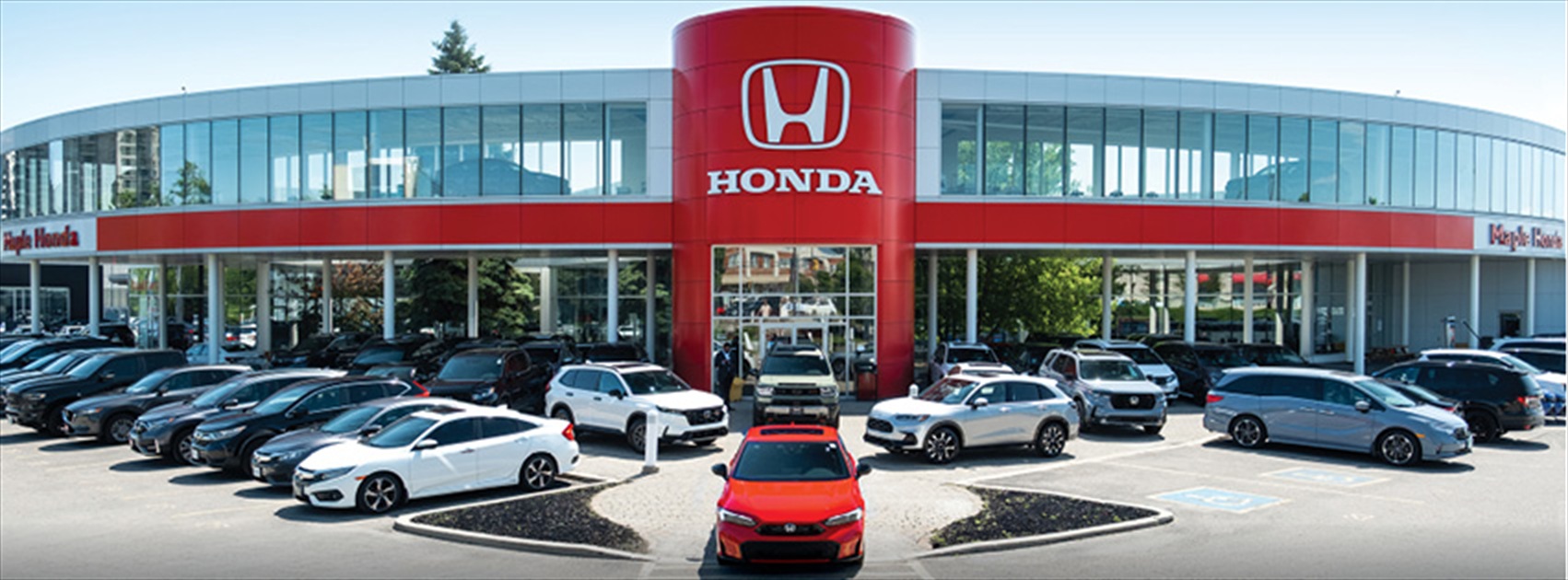
Photo: Maple Honda. Vaughan — where a softening national price index and a frozen overnight rate turn into an actual conversation about a payment.
AutoTrader's Price Index put the average new vehicle price at $63,016 in June, down 2.2 per cent year over year, and the average used price at $36,690, down 2.6 per cent. Used days' supply loosened to 44 days from 41 a year earlier. New inventory is up sharply year over year — SUVs 24.2 per cent, cars 21.9 per cent, trucks 14.1 per cent — while new vehicle sales fell 2.6 per cent through the first half and used sales were down an estimated 1.0 per cent. Canadian Auto Dealer
Separately, the Bank of Canada held its target for the overnight rate at 2.25 per cent on July 15 — the sixth consecutive decision without a change. The next scheduled announcement is September 2. Bank of Canada
What it means: Put the inventory number beside the sales number and the picture resolves. Dealers are carrying more than twenty per cent more cars and SUVs than a year ago, and selling slightly fewer of them. That's not a demand collapse — it's a market where the metal is arriving faster than the buyers are. And the report is blunt about why buyers are hesitating: affordability. Not the price of the car in the abstract. What it costs per month against a mortgage renewal.
Here's the part most shoppers miss. When the overnight rate stops moving, manufacturers have exactly one lever left that changes what a car costs per month without changing what it costs. Cash on the hood makes a good advertisement, but it's expensive to give and it moves the payment less than people assume. A rate buy-down moves the payment more and costs the manufacturer less to deliver. With inventory climbing and the Bank of Canada parked until at least September 2, that's the lever I'd expect to see reached for.
Which is also why "I'll wait for a better deal" is, right now, usually correct advice. There's no penalty for taking another month to decide on a CR-V or a Pilot. Supply is loosening, prices are drifting down, and nothing about the rate environment changes before September. The asterisk on that advice is scarcity — and this month there's a live example of it sitting in the Civic Si story.
My prediction: By December 31, 2026, Honda Canada's headline advertised offer on at least one core volume model — CR-V, Civic or HR-V — will lead with a subvented finance or lease rate below 3 per cent rather than a cash amount, because with the overnight rate frozen and inventory climbing, the payment is the only thing left to move.
If you're buying right now: Stop comparing offers on the size of the discount and start comparing them on the total of payments across the full term. With rates flat, two deals advertising identical cash back can land thousands apart over 60 months, and that entire gap lives in the rate — the number nobody puts in the headline. Next step: if you're weighing new against used while prices ease, see what a comparable used Honda actually costs in Vaughan today.
Quick answers
Are car prices going down in Canada in 2026?
Yes, modestly. AutoTrader's Price Index put the average new vehicle price at $63,016 in June 2026, down 2.2 per cent year over year, and the average used vehicle price at $36,690, down 2.6 per cent. Prices are still high by historical standards, so this is normalization rather than a correction.
What is the Bank of Canada interest rate right now?
The Bank of Canada held its target for the overnight rate at 2.25 per cent on July 15, 2026, the sixth consecutive decision without a change. The next scheduled announcement is September 2, 2026.
Should I wait to buy a car in Canada right now?
For most volume models, waiting a month costs very little. Prices are easing, dealer inventory has grown substantially year over year, and the overnight rate is not scheduled to change before September 2, 2026. The exception is any vehicle whose supply is genuinely limited, where scarcity moves faster than price does.
Want the rate compared properly, not just the discount?
Bring me two offers and I'll show you the total of payments side by side. That's the number that decides which deal is actually cheaper.
Henry Chen
Sales and Leasing Executive, Maple Honda
89 Auto Vaughan Dr, Maple, ON L6A 4A1
Predictions are Henry's personal market read, not Honda Canada policy. Market figures are as reported at publication. Confirm current inventory, pricing, finance terms and rates before making a purchase decision.