At Honda’s annual shareholders meeting in Tokyo last week, global CEO Toshihiro Mibe told investors the Honda-Nissan-Mitsubishi tie-up is “quite far along, with some aspects close to an announcement.” The first concrete deliverable: a shared ECU — the electronic control unit that functions as a car’s central brain — rolling out across the three brands from 2029 or 2030. Here is what a Vaughan buyer should actually take away from it.
Speaking at Honda’s annual general shareholders meeting in Japan late last week, global CEO Toshihiro Mibe said work with Nissan is “quite far along, with some aspects close to an announcement.” The specific quote, reported in real time by Nikkei Asia and relayed in Carscoops’ June 30 summary, signals two things: an official agreement is likely inside weeks, not months, and the first shared product of that agreement is already defined. Mibe also framed the work as a “win-win relationship,” which matters because it tells you the partnership is not framed as a Honda rescue of Nissan — both sides are showing up with something to gain.
The earlier reporting that this rest of the article builds on:
The shared ECU is the right place to start a partnership. It is the kind of foundation everything else bolts onto — once three brands’ vehicles run on the same brain, the rest of the collaboration gets easier, and a deal that starts at the brain tends to expand into shared platforms, shared batteries, and shared hybrid hardware.
Mibe’s AGM comments were almost certainly timed to calm shareholders who had just digested Honda’s first-ever annual net loss. The headline number is striking: ¥423.9 billion (about US$2.62 billion) for the fiscal year that ended in March 2026. That is not a bad quarter. It is a bad year, and the first one in Honda’s history.
Mibe’s own framing, again reported by Carscoops: if Honda cannot “beat emerging forces within three years… our four-wheel business will be in trouble.” The implicit message to investors is that Honda cannot afford to scale its hybrid and EV development alone at the pace China’s automakers are setting, and that partnering with Nissan (plus Mitsubishi through the existing alliance) is the fastest credible path to share R&D cost and reach scale on next-generation control hardware.
The Honda-Nissan announcement is closer than it was a month ago. But the deal still has to clear Renault, which holds a 15 percent voting stake in Nissan. Nissan is a publicly traded company in Japan, and any capital alliance of the size Honda and Nissan are negotiating needs Nissan shareholder consent. The recent example — Renault reportedly influencing Nissan shareholders to reject Motoo Nagai as an outside director — shows that Renault still has a meaningful say in what Nissan does, even with a minority stake.
For a Vaughan buyer, this is the one piece of the story that has a real “could slow down” risk attached to it. The technology side is straightforward and the timing (2029 / 2030 vehicles) gives everyone room to negotiate. The governance side is where an announcement can get delayed by a quarter or two without anyone breaking a promise.
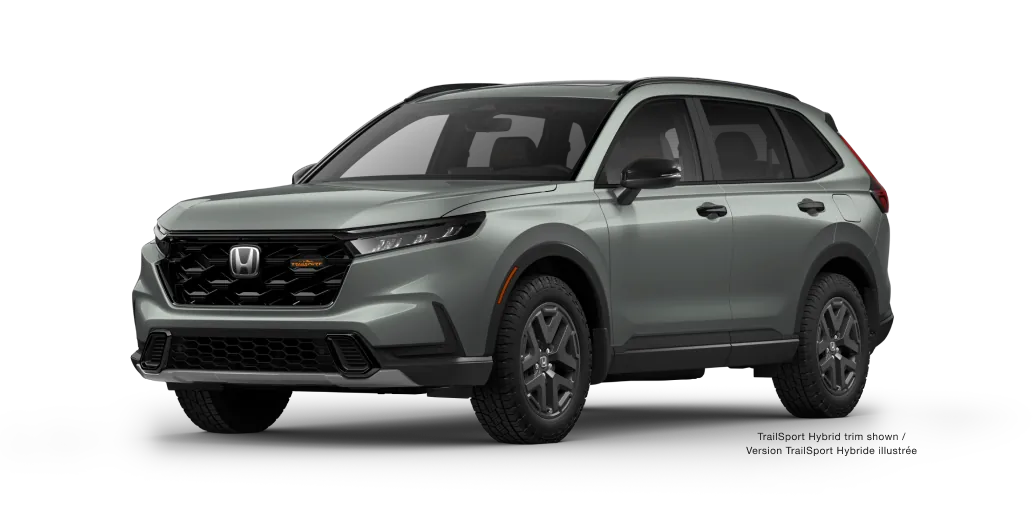
Honda’s confirmed Canadian-market hybrid lineup today is the Civic Hybrid (built at Honda of Canada Manufacturing in Alliston, Ontario — confirmed against window-sticker / delivery-truck data at Maple Honda), the Accord Hybrid (imported from Marysville, Ohio), and the CR-V Hybrid (also Alliston-built, Plant 2 since 2024). Source: Honda of Canada Manufacturing + dealer verification. Of those three, the CR-V Hybrid is the obvious candidate to adopt a shared Honda-Nissan-Mitsubishi control unit first, because it is the Canadian-built volume-seller, and it already sits inside the hybrid platform that is most likely to expand across the alliance.
But the timeline matters more than the specific model. Mibe said the shared ECU “could reach the market around 2029 or 2030,” which means:
The partnership itself is closer than it was. What is still open is timing, structure, and which models adopt the shared hardware first.
Most likely (Tier 1, ~3 months): A formal Honda-Nissan-Mitsubishi partnership announcement lands before the end of September 2026. Mibe’s “weeks rather than months” framing puts the announcement window inside the next two reporting cycles. The first deliverable announced will be the shared ECU platform, with 2029 / 2030 production timing confirmed in broad strokes. Source chain for this prediction: Mibe’s AGM comments as reported by Carscoops + Nikkei Asia.
Possible (Tier 2, ~6 months): Honda Canada publicly confirms which Canadian-market nameplates will adopt the shared control unit first. My read: the Alliston-built CR-V Hybrid is the lead vehicle, with the Alliston-built Civic Hybrid (a future model year) coming second. The more meaningful Canadian-build story is whether a future CR-V Hybrid moves to the shared ECU while staying built at HCM Plant 2 — Civic Hybrid already runs through HCM Plant 1 today.
Bold (Tier 3, ~12 months): A Canada-built Honda nameplate — most likely a 2029 or 2030 model-year CR-V Hybrid assembled at HCM Alliston — ships with a shared Honda-Nissan-Mitsubishi-derived control unit. The risk on this call is Renault: if Renault blocks or delays the capital-alliance shareholder vote at Nissan, the announcement slips a quarter or two, and 2029 becomes 2030 across the board. My base case still puts the first Canadian-built shared-ECU Honda on the lot inside the 2029 calendar year.
Because the headlines around this story are getting the tone wrong in a few predictable ways:
If you came in thinking “Honda might be heading toward some kind of merger or sale,” the answer from the AGM is no. The deal Mibe is describing is a component-sharing partnership with a 2029 / 2030 timeline. The Civic Hybrid, CR-V Hybrid, and Accord Hybrid on the lot today are not affected.
If you came in thinking “a Honda I buy this year might be on outdated technology by 2030,” the answer is also no. The 2029 / 2030 shared Honda-Nissan-Mitsubishi ECU is the next-generation Honda ECU platform. It is what replaces the current generation, not what runs alongside it. The vehicles you can drive home from Maple Honda this month are running on the platform Honda just told its investors is the foundation through 2030.
Civic Hybrid, Accord Hybrid, CR-V Hybrid, and the gas-only Civic / CR-V / Pilot / Passport lineup are all in stock. Walk-ins welcome; if you want a specific trim in a specific colour, text me first so I can pull it to the front of the showroom before you arrive.
About Henry Chen — Henry is a frontline sales consultant at Maple Honda in Vaughan. He writes the briefs on this site as a working dealer, not a marketing department. Pricing quoted in lease / finance figures includes HST unless otherwise noted. Industry sources cited on this page: Carscoops (synthesising Nikkei Asia), the Honda Canada Newsroom (hondanews.ca/en-CA), Honda of Canada Manufacturing (hondacanadamfg.ca), and honda.ca. Numbers cross-checked against the Honda Canada facts reference.