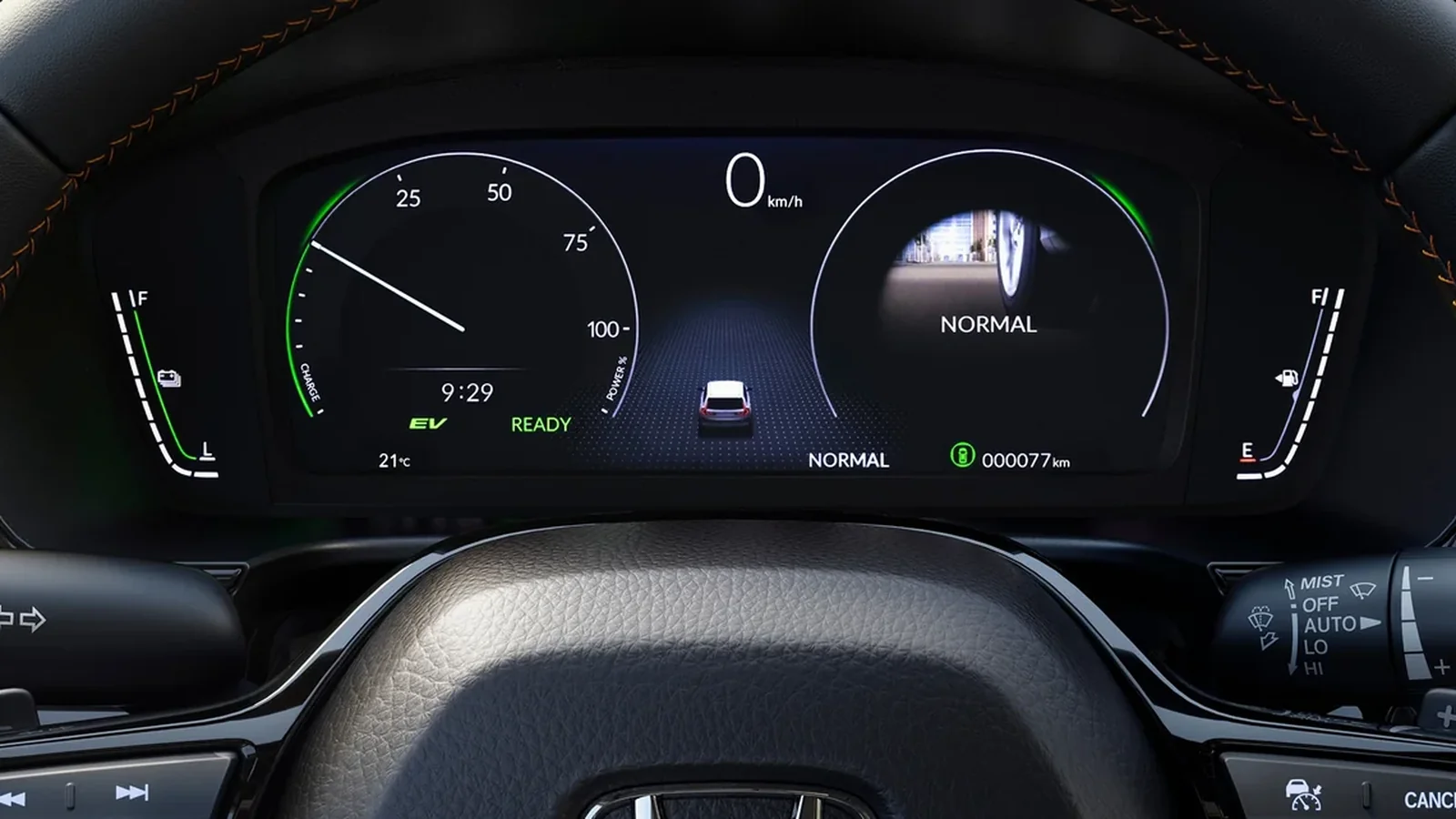
Photo: Honda Canada. 2026 Honda CR-V interior cabin and cockpit.
TL;DR
- Honda committed to 15 next-gen hybrid models globally by fiscal 2030: new system costs 30% less to build, first models arrive 2027
- Strait of Hormuz closure has cut Group III synthetic base oil supply; Toyota and Nissan are already rationing; Canada is next for higher prices
- Used trucks and SUVs are still sliding (0.40% in the week ending May 16); compact cars bucked the trend with a 0.26% gain: the floor is splitting by segment
Honda just showed what 15 new hybrids look like: first one lands in 2 years
The Hybrid Sedan Prototype and Acura Hybrid SUV Prototype at the May 14 briefing: what the 30% cost reduction means for Canadian buyers.
Read the story → Story 2 · Supply ChainSynthetic motor oil is getting harder to find: and Canada Isn’t immune
Group III base oil blocked at the Strait of Hormuz. Toyota and Nissan rationing. What this means for Honda owners and the hybrid vs. ICE math.
Read the story → Story 3 · Used MarketUsed trucks are still sliding while compact cars just found a floor
Week-ending-May-16 wholesale data: trucks/SUVs –0.40%, compact cars +0.26%. Auction sale rate hit 36%. Timing matters differently by segment.
Read the story →The Through-Line
Three apparently separate stories are actually the same story told from three angles. Honda is making the most consequential strategic bet it’s made in a generation: hybrids over EVs, cost reduction over feature expansion, North America over everything else. Meanwhile, the used market is sorting itself into two buckets, segments where supply is constrained (compacts) and segments where it isn’t (SUVs and trucks), and the oil supply shock is quietly adding cost pressure to the conventional powertrain ownership equation. What I see on the floor: customers who would have walked in three years ago debating gas vs. hybrid now walk in having already decided on hybrid, and the conversation is about timing and trim. Honda's next two years, if they execute the briefing as promised, should only accelerate that shift. The buyers who are in the current hybrid lineup now get the residual benefit of being in the proven generation; the buyers who wait for 2027 get the cost-reduced version. Both are reasonable choices. Neither is wrong.
Ask Henry a question
Not ready to book anything? Just ask. Henry Chen answers every message himself — usually within a couple of hours during business hours. No call list, no pressure, and no obligation to buy anything.