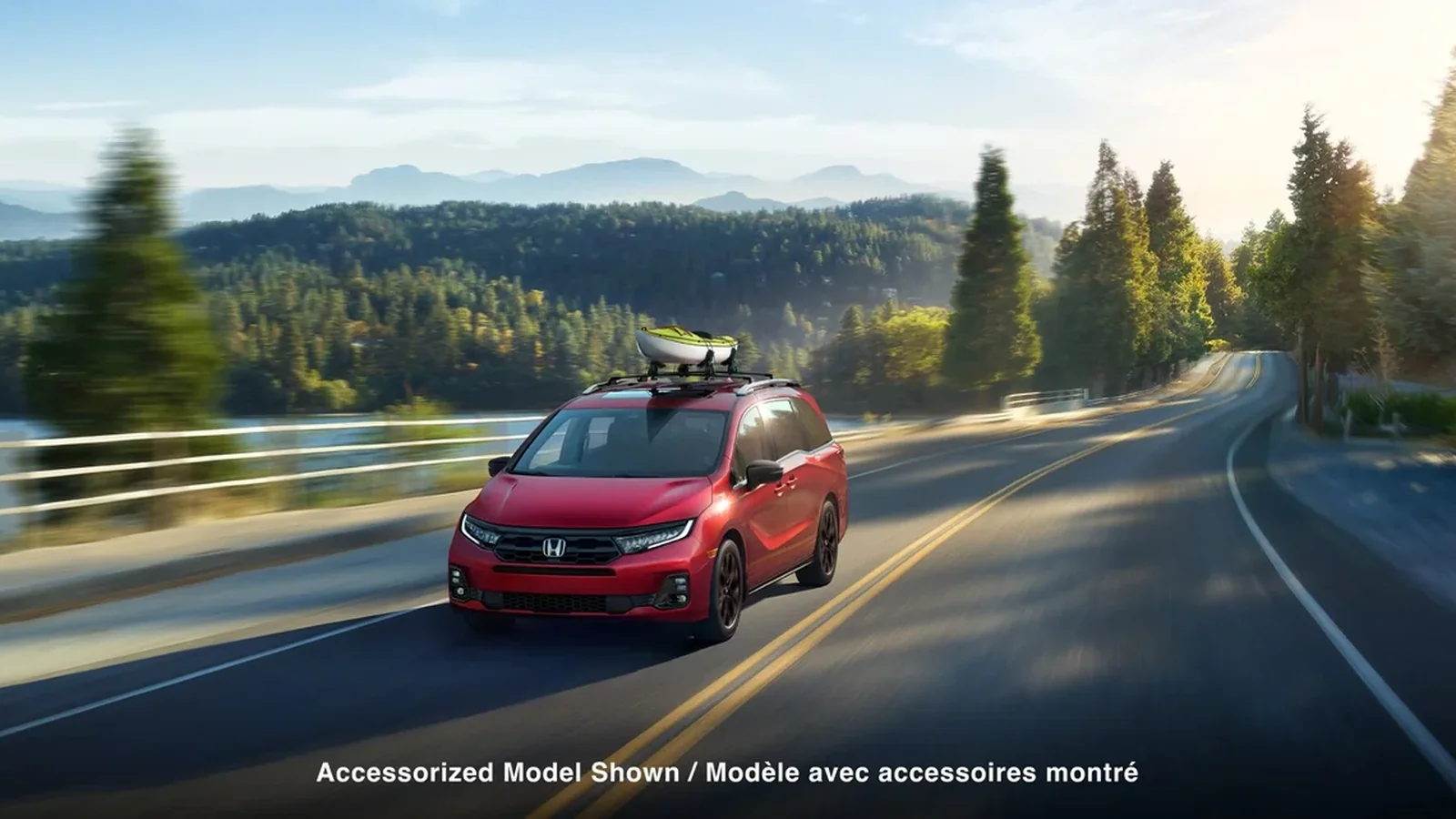
Photo: Honda Canada. 2026 Honda Odyssey exterior styling.
TL;DR
- Honda Canada’s director confirmed the new Insight EV, just launched in Japan, China-built, has no Canadian plans; the North American strategy is hybrids only
- Honda confirmed a Hybrid Sedan Prototype on a platform 90 kg lighter with 10% better efficiency: Canadian model name and timeline unknown; the May 2026 Accord Hybrid APR window ended June 1
- Bank of Canada held at 2.25% in April, and at publication its next decision was June 10; Honda’s May manufacturer-rate examples for Civic Hybrid and Accord Hybrid were scheduled to expire nine days before that meeting
Honda’s new Insight EV launches in Japan: Honda Canada confirms it’s not coming here
The fourth-gen Insight is a China-built EV in Japan only. Honda Canada: “not part of our plans.” What this deliberate decision tells you about the Canadian lineup through 2027.
Read the story → Story 3 · Rates & IncentivesBank of Canada held at 2.25%: May Honda rate window ended June 1
BoC held April 29. At publication, the next decision was June 10 and Honda’s May Civic/Accord hybrid-rate window was scheduled to close June 1.
Read the story →The Through-Line
These three stories were the same story from three angles: the timing window for a Honda hybrid purchase in Canada was unusually well-defined in late May. Honda Canada had eliminated uncertainty about the EV path in that article context. There was no Canadian Insight EV plan. The next major product chapter was hybrids, starting with future launches still to be confirmed for Canada. The May rate examples were manufacturer programs separate from whatever the Bank of Canada decided to do. For buyers reading after June 1, that rate window is historical; the right next step is to confirm today’s live Honda Canada program on the exact trim, VIN, term, credit approval, and delivery timing.
Ask Henry a question
Not ready to book anything? Just ask. Henry Chen answers every message himself — usually within a couple of hours during business hours. No call list, no pressure, and no obligation to buy anything.