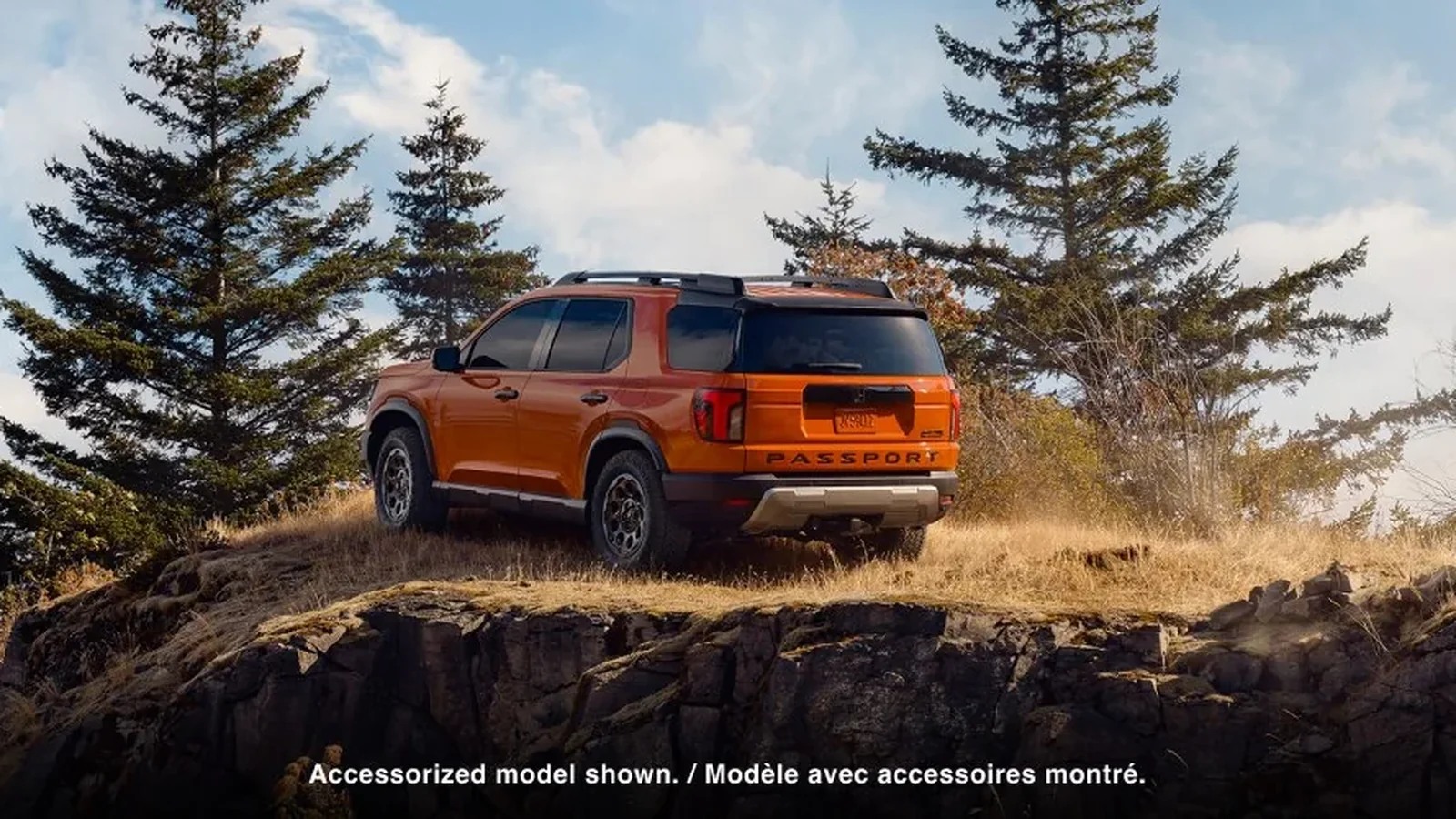
Photo: Honda Canada. 2026 Honda Passport. Part of the Car Buyer Protection Series by Henry Chen, Maple Honda, Vaughan.
OMVIC's start-your-search advice is built around one principle: the right car at the wrong price is still the wrong car, and the wrong car at the right price is still the wrong car. The 'right' has to come first.
Here's the pre-shop checklist that gets GTA buyers to the right answer with less friction.
Step 1 — Define the job the car has to do
Before you compare models, write down the actual jobs the car has to do. Daily commute distance. Family size. Cargo requirements. Winter driving. Parking situation. Weekend trips. The clearer the job description, the easier the model choice.
Most buyers skip this step and end up overbuying (buying a Pilot when a CR-V would do) or underbuying (buying a Civic when a CR-V would have been smarter). The job description prevents both.
Step 2 — Set the real budget, not the headline budget
- All-in price of the vehicle
- HST (13% in Ontario)
- Licensing ($200-$400)
- Insurance ($1,200-$4,000+ depending on driver and vehicle)
- Winter tires if applicable ($800-$1,500)
- First-year maintenance ($150-$300)
- Down payment on the finance or lease
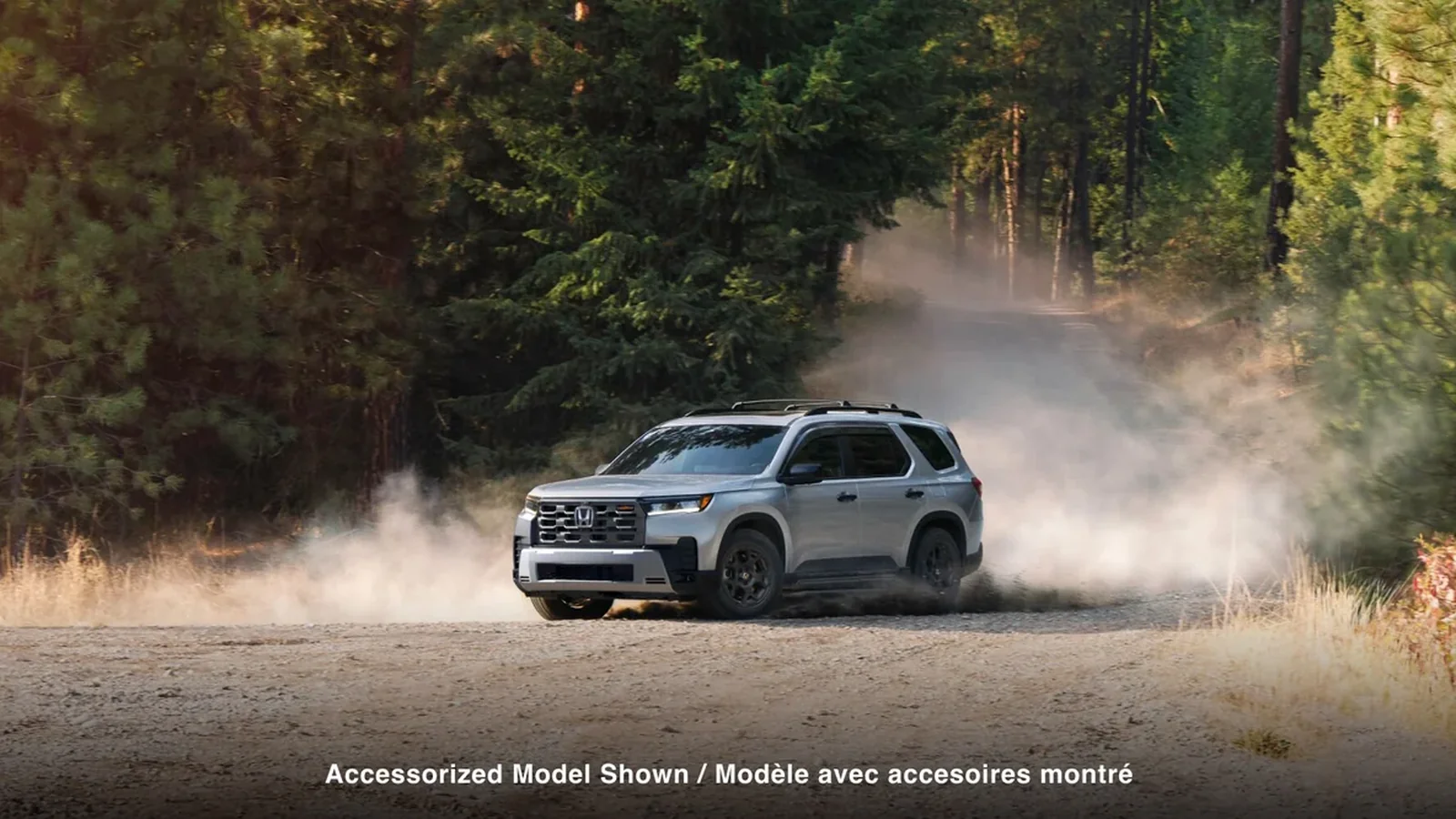
Photo: Honda Canada. 2026 Honda Pilot.
Step 3 — Pick the model candidates
- One model that's the 'safe' choice — the Civic, the CR-V, the HR-V
- One model that's the 'step up' — the Accord, the Pilot, the Passport
- One model that's the 'alternative' — the equivalent Toyota, Mazda, or Hyundai, for comparison
- Decide whether new or used fits the budget better
Step 4 — Run the OMVIC pre-shop checks
- Verify the dealer on OMVIC's dealer-search tool
- Confirm the salesperson is individually registered
- Check the dealer's enforcement history (since 2010)
- Pull a CARFAX report on any used vehicle you're seriously considering
- Cross-check the dealer's all-in advertised price against Honda Canada's MSRP
Step 5 — Prepare the financing conversation
- Contact your own bank or credit union for a pre-approval
- Pull your credit score from Equifax or TransUnion
- Decide whether you're financing or leasing (and why)
- Identify the term length that fits your ownership plan
- Calculate the down payment you can actually afford
Step 6 — Plan the test drive before you visit
- Schedule the test drive for a time you can do a 30-45 minute loop (residential, arterial, highway)
- Bring a partner if possible — second eyes catch things you'll miss
- Test all features, not just the drive (climate, infotainment, sensors, lights)
- Verify the test-drive vehicle is the exact trim and options you intend to buy
Step 7 — Plan the contract conditions in advance
- Subject to your mechanic's inspection (for used vehicles)
- Subject to financing (so you can walk if the rate is too high)
- Subject to insurance (especially for first-time buyers and newcomers)
- Subject to spousal or partner approval if applicable
- Any specific repair or accessory that's important to the deal
Frequently asked, Vaughan edition
How long should this pre-shop process actually take?
For a buyer who's narrowed the model choice: a weekend. For a buyer starting from scratch: a week or two of evenings. The cost of skipping is measured in years of regret; the cost of taking time is a few evenings.
What if my budget changes during the search?
Normal. Refine the model candidates and the trim choices based on the real budget. Don't stretch the budget for a vehicle that's marginal — wait, save, and buy the right one.
Is the OMVIC dealer-search check really necessary?
Yes. It takes 30 seconds, it's free, and it confirms the dealer is registered and shows any enforcement history. It's the highest-ROI check in the whole buying process.
What should I research about a specific Honda model before contacting a dealer?
Five focus areas: (1) Honda Canada's official MSRP and trim walk (honda.ca), (2) real-world fuel consumption from (nrcan.gc.ca) for the specific engine and trim, (3) known issues by model year from owner forums and Carfax complaints, (4) resale value data from Canadian Black Book or similar, (5) current Honda Canada incentives (cash rebates, finance rates, lease rates) which change monthly. With these in hand, you negotiate from knowledge, not from a brochure.
How do I figure out my true vehicle budget?
Total cost of ownership includes more than the monthly payment. Build a budget covering: vehicle price plus HST plus licensing, expected insurance (get a quote for the specific model), maintenance budget (about $1,000 per year for a Honda), fuel costs (estimated km times consumption times price), financing interest (if applicable), and depreciation. A common rule: total monthly vehicle cost should stay under 15% of gross monthly income.
Should I take a Honda test drive before or after narrowing to a specific model?
After — once you have identified 1 to 2 models that fit your needs. The test drive is to confirm a specific vehicle, not to discover what you want. Walking into a dealer 'just looking' without a target leads to up-selling, add-on pressure, and longer visits. Show up with: the model and trim you want, the colour preference, and your budget number.
What should I bring to the dealer for the test drive and signing appointment?
Five essentials: (1) driver's licence plus proof of insurance, (2) trade-in ownership plus current registration (if applicable), (3) financing pre-approval letter (from Honda Financial Services or your bank), (4) a printed list of your must-haves and walk-away numbers, (5) a flashlight and your phone for photos. Optional: a trusted friend or family member as a second opinion.
How does the OMVIC dealer-search check actually protect me?
OMVIC's dealer search (omvic.ca) confirms the dealer is currently registered and shows their discipline history. Registered dealers are bound by the MVDA — required disclosures, prohibited practices, discipline options. Unregistered dealers (curbsiders) have none of these obligations and no Compensation Fund backstop. A 60-second search can save you from a year of headaches.
Want me to walk through the OMVIC piece of your next deal?
If you have a quote from another store, a private sale you're considering, or just a question about how OMVIC's rules apply to your situation, send me the details. I will help you pressure-test the structure.
Ask Henry a question
Not ready to book anything? Just ask. Henry Chen answers every message himself — usually within a couple of hours during business hours. No call list, no pressure, and no obligation to buy anything.