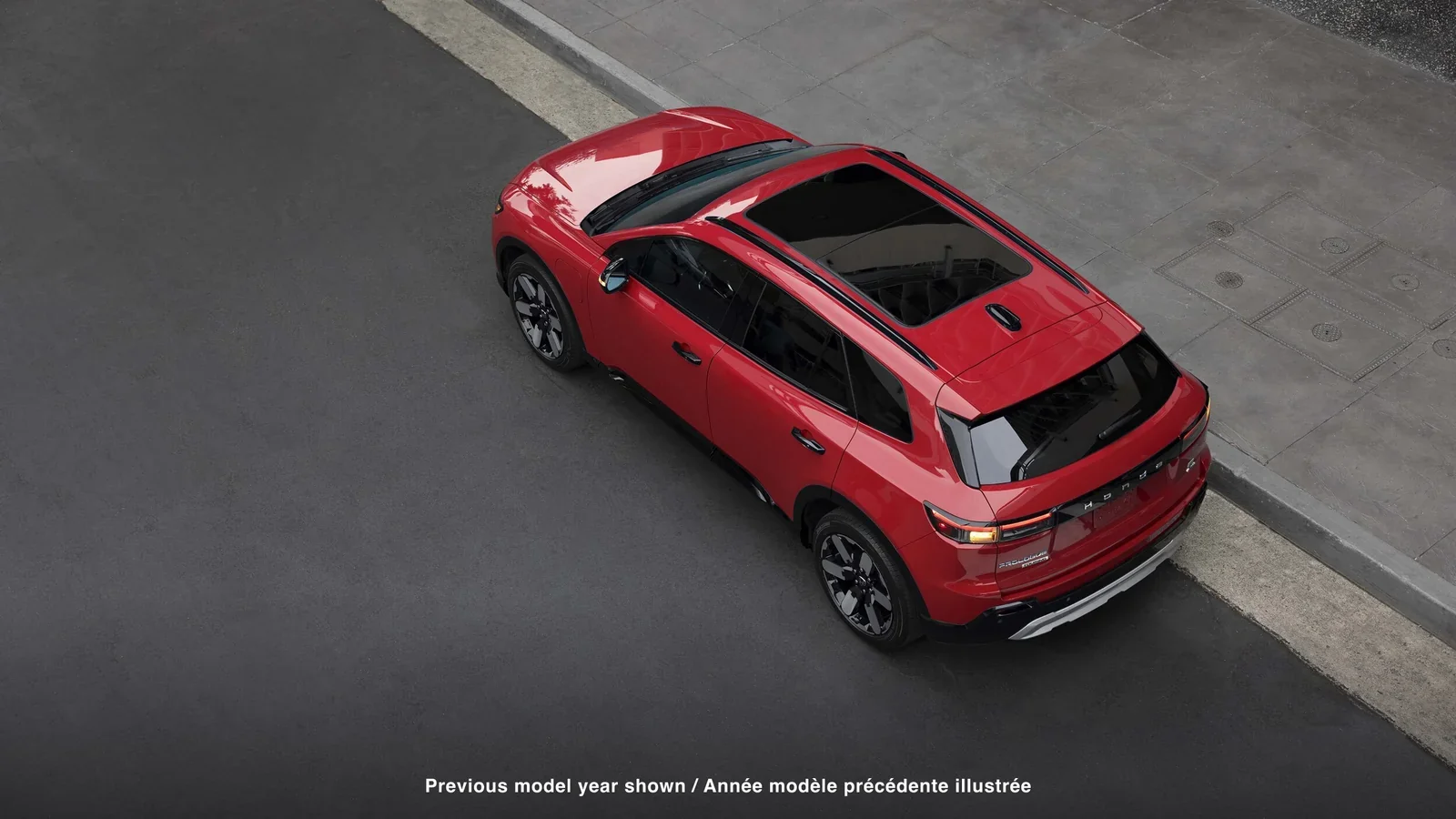
Photo: Honda Canada. 2026 Honda Prologue. Part of the Car Buyer Protection Series by Henry Chen, Maple Honda, Vaughan.
A first car is rarely just a financial decision. It's a parent watching their teenager drive away, a student figuring out how to afford insurance on top of the payment, or a new immigrant building credit and a clean driving record at the same time.
OMVIC's framework treats first-time buyers like every other buyer — same all-in pricing rules, same mandatory disclosures, same Compensation Fund access. But the practical decisions around model, financing, insurance, and warranty look different when you've never bought a car before. This article is the version of the framework I'd walk a family through if they walked into Maple Honda tomorrow.
Pick the right model first; the deal comes second
For most first-time buyers in the GTA, the right first car is the safest, most reliable, and most boring car you can afford. Models like Civic, CR-V, HR-V, and Corolla have built their reputations on practical ownership. High resale, practical running costs, simple ownership, and available driver-assist safety tech matter more than a flashy trim.
The mistake first-time buyers make is starting with trim and colour instead of job. Decide what success looks like — daily commute distance, parking situation, whether you need AWD for winter, how many passengers you'll ever carry — and let the model follow from that. A Civic sedan is enough car for most GTA commuters. A CR-V is the right answer for a family with a dog and a ski rack.
The financing conversation is different for first-time buyers
- Limited credit history — Honda Financial Services and most lenders will want to see at least 6-12 months of Canadian credit history
- Higher interest rates — first-time buyers without a credit score typically pay 4-8% more than buyers with established credit
- Higher insurance rates — new drivers under 25 face the highest insurance brackets in Ontario
- The 'subject to insurance' clause — OMVIC explicitly recommends first-time buyers add this condition to the contract
- Down payment — 20% down is a stronger starting position than 0% down, particularly if credit is thin
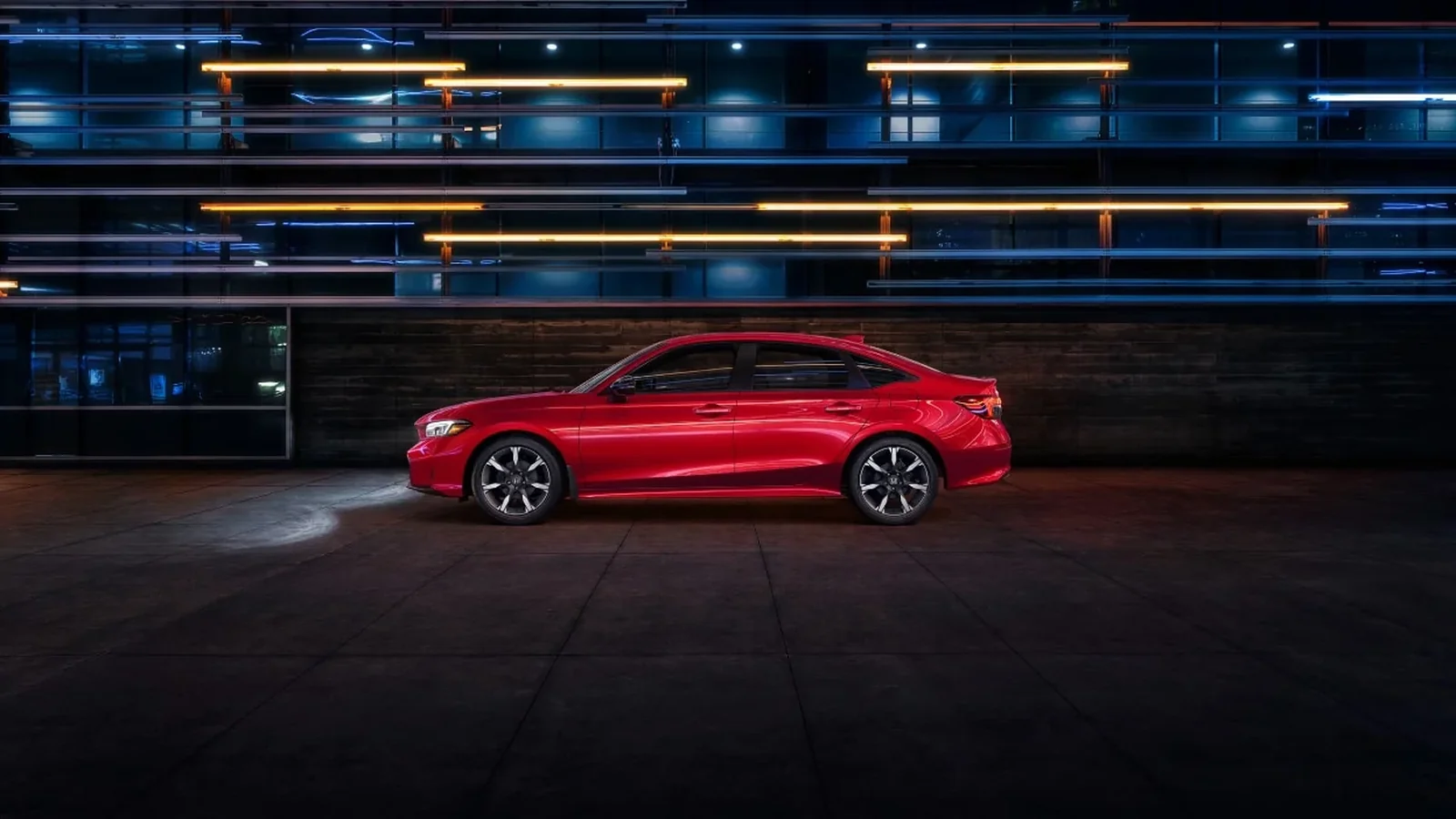
Photo: Honda Canada. 2026 Honda Civic.
The OMVIC 'subject to insurance' clause is built for first-time buyers
OMVIC's car-loans guidance is explicit: first-time buyers may want to include a condition related to finding affordable insurance. Young drivers and drivers with poor records are routinely offered insurance rates that exceed their car payment. If the contract doesn't include a subject-to-insurance condition, the buyer is on the hook for a deal they can't afford to operate.
Ask the dealer to add the condition to the contract in writing. Verbal promises don't count. With the condition in place, you can walk away if insurance comes back at a number that breaks the deal — and the dealer has to return your deposit.
Why a used Honda is often the right first car
A two- or three-year-old Honda Civic or CR-V gives you 70-80% of the new-car experience for 50-60% of the new-car price. The factory warranty is usually still active (Honda's standard new-vehicle warranty runs 3 years / 60,000 km comprehensive and 5 years / 100,000 km powertrain). Depreciation has already taken the biggest hit. Honda's resale strength means you can sell or trade it for close to what you paid if life changes.
The OMVIC mandatory disclosures are particularly valuable on a used vehicle. Every previous use (rental, taxi, fleet), every accident report, every branding status, every odometer reading has to be on the contract. If you buy from us, that work is done before delivery. If you buy private, the UVIP plus CARFAX plus a mechanic inspection is the minimum.
Common first-time-buyer mistakes to avoid
- Signing without a subject-to-insurance condition
- Choosing the smallest monthly payment over the right term and structure
- Skipping the test drive (or test-driving only in the dealer's parking lot)
- Letting a parent or friend pressure you into a deal structure that doesn't fit
- Trading in the old family car without checking the loan payout
- Buying gap insurance as a substitute for choosing a healthy loan term
- Skipping the OMVIC dealer-search check because the salesperson 'seems nice'
The questions I'd ask as a first-time buyer
- What's the all-in price — every fee, every charge, plus HST and licensing?
- What rate and term are you offering, and how does it compare to my bank's pre-approval?
- If I'm a first-time buyer, what Honda Financial Services programs apply?
- Can I add a subject-to-insurance condition to the contract?
- What's the warranty situation — factory, Honda Plus, or both?
- What does the trade-in process look like for my old family car?
- Can you put me in touch with Honda Sensing training so I know what the car does?
Frequently asked, Vaughan edition
Is it smarter to buy new or used for a first car?
It depends on the buyer. New removes uncertainty about prior use and accident history, gives you the full factory warranty, and lets you choose the trim and colour. Used gives you lower depreciation, often still under factory warranty, at a lower price. For most first-time buyers, a 2-3 year old Civic or CR-V with remaining factory warranty is the most balanced choice.
How much should a first-time buyer put down?
20% down is a strong starting position. If you can't get there, the smallest workable down payment on a healthy term (48-60 months) is better than a zero-down deal on an 84-month term. The point is to avoid negative equity for as long as possible.
What credit score do I need as a first-time buyer with no credit history?
No credit history is actually a problem — you have no track record. Most lenders treat a thin file as tier-2 to tier-3 risk, meaning rates are higher than established borrowers. Build credit 6 to 12 months before buying if you can: a starter credit card paid in full each month, a small cell phone or utility bill in your name, or being added as an authorized user on a family member's account. Honda Financial Services has specific first-time buyer programs — Henry can show you the options.
Is it better to buy new or used for a first car?
For many Vaughan first-time buyers, a recent used Honda can be a strong fit: modern enough to offer useful safety and driver-assist features when equipped, low enough mileage to last years, and depreciated enough to cost less than new. Confirm Honda Sensing and other safety features by exact model, year, trim, and VIN before treating them as included. New is fine if you want the warranty peace of mind and can afford the depreciation hit.
What insurance does a first-time buyer actually need in Ontario?
Mandatory: third-party liability (minimum $200,000 in Ontario, but $1,000,000 is standard and recommended). Optional but recommended: collision, comprehensive, accident benefits, uninsured motorist. Avoid plopping only the minimum on a financed car — the lender will require collision and comprehensive anyway. First-time drivers pay higher premiums; ask your insurer about discounts for Honda Sensing safety features and clean driving records.
Should I finance or lease my first car?
For most first-time buyers, financing wins — you build equity, no kilometre restrictions, no wear-and-tear charges at end of term. Leasing can be appealing for lower monthly payments but the kilometre caps and disposition fees are harsh on first-time buyers who may need flexibility. If you have a stable commute and lifestyle, financing makes more sense.
What first-car mistakes do Vaughan buyers make most often?
The top five: (1) underestimating insurance costs — get a quote BEFORE you buy, (2) skipping the pre-purchase inspection — always have an independent mechanic check a used car, (3) choosing a vehicle that is too small for their actual needs (kids, dog, sports gear), (4) focusing on monthly payment instead of total cost, (5) not budgeting for maintenance (oil changes, tires, brakes) — roughly $1,000/year is realistic. Henry walks through all five with new buyers.
Want me to walk through the OMVIC piece of your next deal?
If you have a quote from another store, a private sale you're considering, or just a question about how OMVIC's rules apply to your situation, send me the details. I will help you pressure-test the structure.
Ask Henry a question
Not ready to book anything? Just ask. Henry Chen answers every message himself — usually within a couple of hours during business hours. No call list, no pressure, and no obligation to buy anything.