
Photo: Honda Canada. 2026 Honda Civic. Part of the Car Buyer Protection Series by Henry Chen, Maple Honda, Vaughan.
An OMVIC-registered dealer in Ontario cannot sell you a vehicle without making a long list of disclosures in writing, right on the contract. The MVDA lists 22 disclosures that must be made known, and most of them only apply in certain situations — but they all exist to make sure a buyer doesn't sign for something they don't actually understand.
Some of the disclosures are obvious (model year, odometer reading). Some are specific situations you'd never think to ask about (was this a daily rental before? Has it had flood damage?). The whole point is that you don't have to remember to ask — the dealer has to tell you, on paper, before you sign.
The everyday disclosures (almost every Honda contract includes these)
- Make, model, model year, and trim level
- Odometer reading — for new vehicles, the maximum distance that will appear on the odometer at delivery
- For used vehicles, the actual kilometres driven if the dealer can determine it
- If the odometer has been replaced, rolled back, is broken, or displays miles instead of kilometres
- Whether two or more adjacent body panels (not bumper panels) have been replaced
- Whether the vehicle has been classified as salvage, irreparable, or rebuilt under the Highway Traffic Act
- Whether the vehicle was declared a total loss by an insurer
- Whether the manufacturer's warranty has been cancelled
- Whether the vehicle is significantly different from its original or advertised production specifications
- Whether the vehicle has badges, emblems, or markings indicating a different model than the vehicle actually is
Some of the 22 disclosures in the MVDA are close variants of the same topic — for example, there are several different wordings for the odometer/distance-driven disclosure depending on what the dealer can and can't determine — grouped here under a single "odometer reading" line for readability rather than listed as separate legal clauses.
The situational disclosures (only when they apply to that specific vehicle)
- Previous use as a taxi, limousine, police, or emergency-services vehicle
- Previous use as a daily rental (unless the vehicle was later owned by a non-dealer)
- Damage caused by fire
- Flood or immersion damage that reached at least the interior floorboards
- Structural damage, or any repairs/replacements/changes to the vehicle's structure
- An anti-lock braking system that isn't working
- Airbags that are missing or non-functional
- Required repairs to engine, transmission, powertrain, subframe, suspension, computer systems, electrical system, fuel system, or air conditioning
- Repair costs from any incident exceeding $3,000 (and the total cost if known)
- Previous registration outside Ontario, and which jurisdiction, unless it has been registered in Ontario for at least seven consecutive years
- Whether the vehicle was recovered after being reported stolen
- Anything else that could reasonably affect a buyer's decision to purchase on the disclosed terms
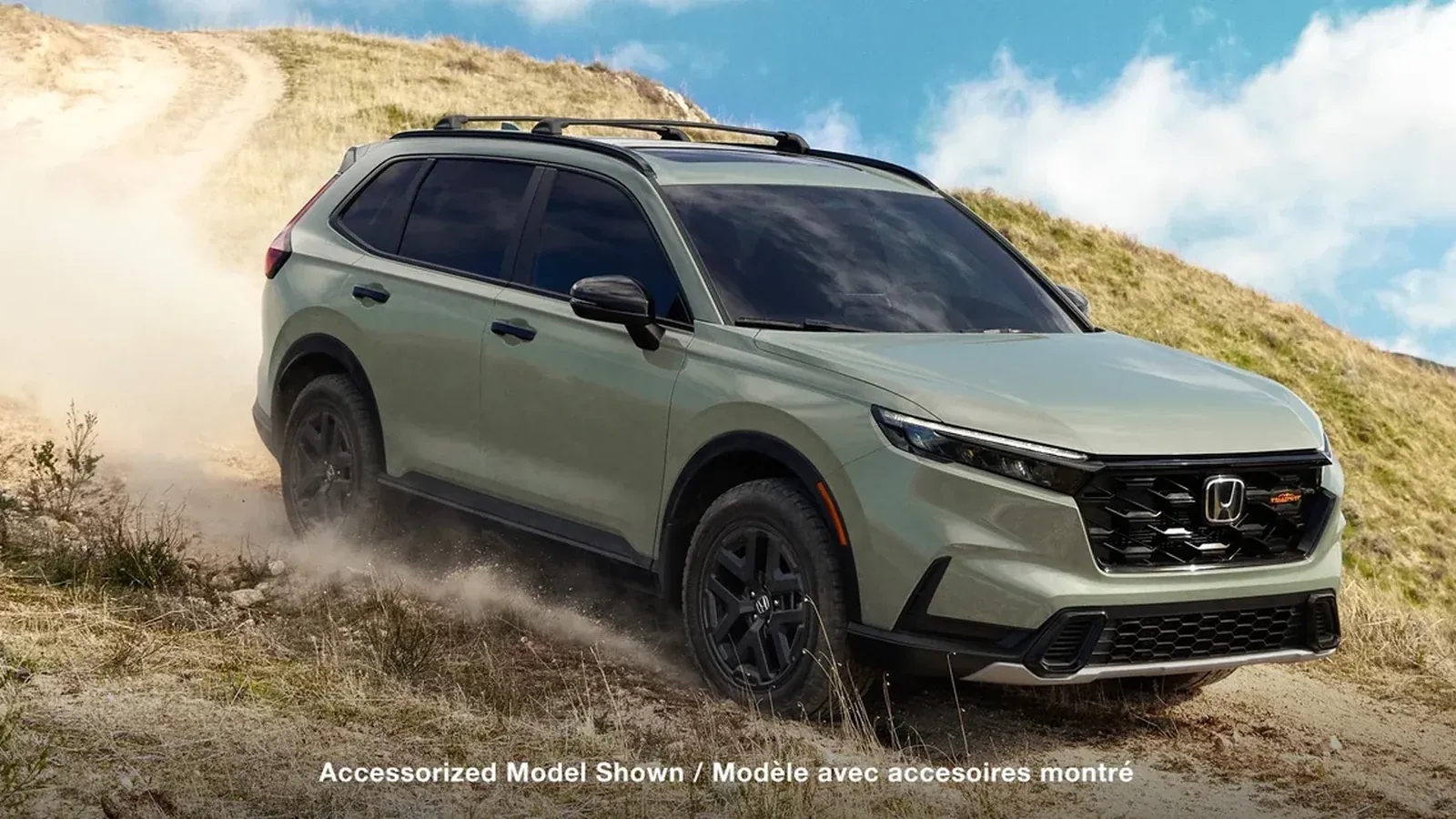
Photo: Honda Canada. 2026 Honda CR-V.
Why this matters at a Honda store
For a brand-new Honda, almost all of these disclosures don't apply — there is no previous use, no accident history, no salvage branding, no replaced panels. The odometer line just states the maximum delivery distance (usually under 75 km for transport plus PDI).
For a Certified Pre-Owned or used Honda, more of the list kicks in. As an OMVIC-registered dealer, we have to put those disclosures in writing. If we miss one and it would have changed your mind, the MVDA gives you a 90-day right to cancel the contract. That's not a marketing promise — it's the law.
How to read the disclosure section on your contract
When you sit down to sign a deal, the disclosures are usually grouped in a block near the top of the contract, often titled "Previous Use / Condition Disclosures." Read it line by line. If something is marked "N/A" or "Not applicable," that's the dealer's way of telling you the situation doesn't apply to this vehicle. If something is marked "Yes" or has a description, that's the thing you want to ask about.
If you want a second source for the vehicle's history, OMVIC points to CARFAX, Canadian Black Book, Transport Canada (for recalls and defects), and the Used Vehicle Information Package (UVIP) for private sales. None of those replace the contractual disclosure — but they help you cross-check that the dealer hasn't missed anything.
Frequently asked, Vaughan edition
What if the dealer missed a disclosure that would have changed my mind?
If the dealer failed to disclose (or failed to disclose in time) something the MVDA requires, you have up to 90 days from delivery to cancel the contract. The dealer has to take the vehicle back and return your money.
Does a dealer have to give me a Carfax report?
No. A dealer is not required by OMVIC to give you a vehicle history report. What they're required to do is put the applicable disclosures in writing on the contract. A Carfax is a useful check on top of that — not a substitute.
If the contract says "N/A" next to a disclosure, am I safe?
Usually yes. "N/A" means the situation doesn't apply to that vehicle (for example, "previous use as a taxi: N/A" on a brand-new Civic). If you have a reason to doubt that — say, you know the vehicle was a former rental — bring it up before signing.
What does the dealer have to tell me before I sign?
Under the MVDA and OMVIC's code of ethics, the dealer must disclose in writing: (a) the all-in price including all fees except HST and licensing, (b) any known mechanical issues affecting the vehicle, (c) prior use status (rental, fleet, taxi, daily rental, etc.), (d) any damage over the OMVIC threshold per incident, and (e) the odometer reading and whether it is actual or estimated.
What if a dealer doesn't disclose prior damage — what is my recourse?
Failure to disclose known damage above the OMVIC threshold is a violation of the MVDA. You can file a complaint with OMVIC, request rescission of the contract within a reasonable time, and pursue the dealer for the cost to repair the undisclosed damage. Keep all paperwork and get an independent mechanical inspection as evidence.
What is the OMVIC damage disclosure threshold in Ontario?
OMVIC's current threshold is $3,000 per incident — any single repair or damage event over $3,000 must be disclosed. Some dealers voluntarily disclose lower thresholds. If a dealer told you 'nothing over $3,000' but you find out later there was a $4,000 repair on the Carfax, that is a disclosure violation worth filing on.
Does a dealer have to disclose if the car was a previous rental or fleet vehicle?
Yes. OMVIC requires disclosure of prior use, including daily rental, fleet, taxi, limousine, police, and emergency vehicles. These vehicles typically have higher wear than personal-use vehicles even at the same mileage. The disclosure must appear on the bill of sale or the disclosure form you sign.
Can I get a copy of the disclosure form after I sign?
Yes. The dealer is required to give you a copy of everything you signed at delivery, including the disclosure form. If they don't, ask in writing. Your right to these documents does not expire — even years later, you can request a copy. Keep your own copies in a safe place (digital or paper) for at least the warranty period.
Want me to walk through the OMVIC piece of your next deal?
If you have a quote from another store, a private sale you're considering, or just a question about how OMVIC's rules apply to your situation, send me the details. I will help you pressure-test the structure.
Ask Henry a question
Not ready to book anything? Just ask. Henry Chen answers every message himself — usually within a couple of hours during business hours. No call list, no pressure, and no obligation to buy anything.