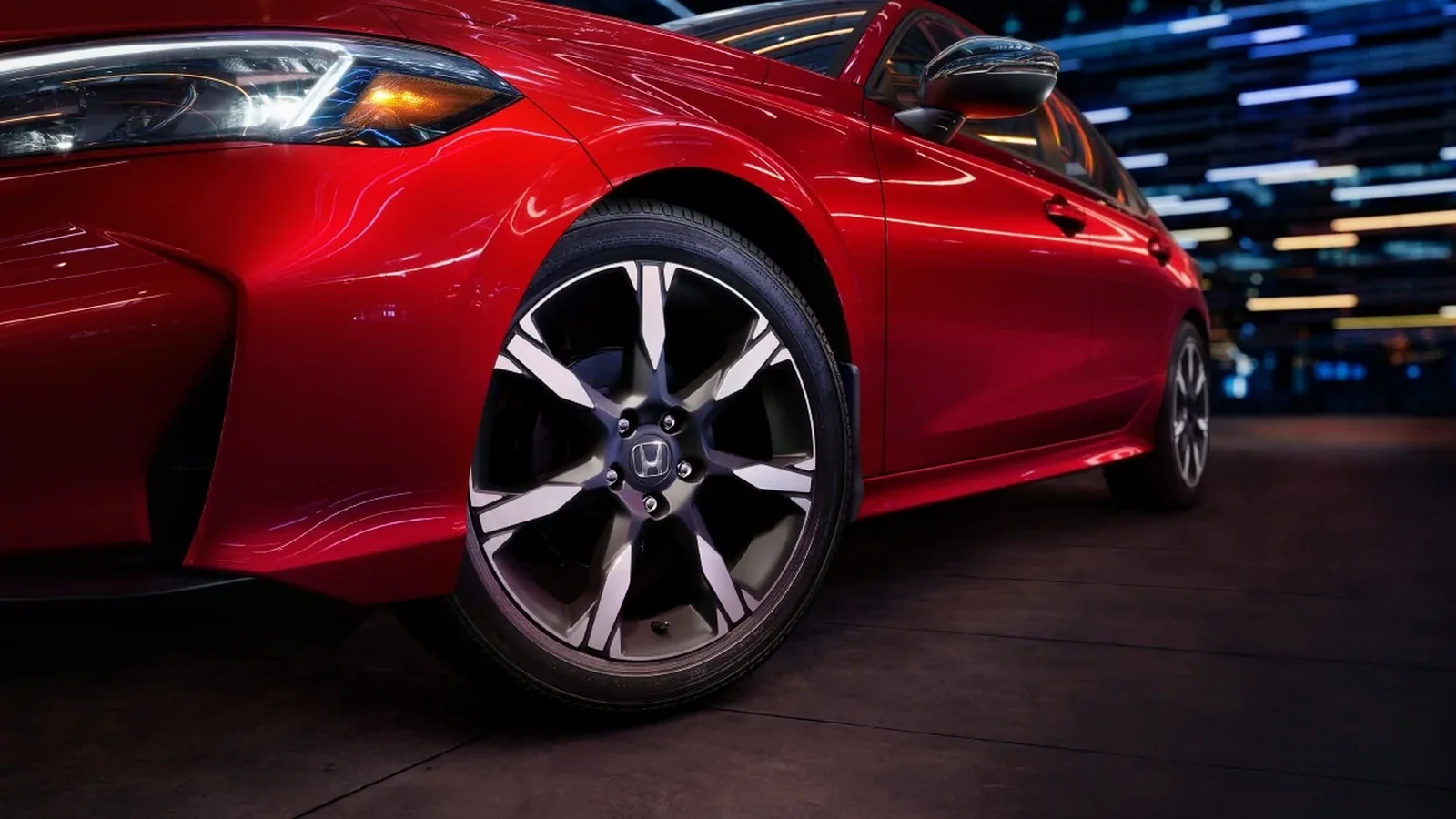
Photo: Honda Canada. 2026 Honda Civic. Part of the Car Buyer Protection Series by Henry Chen, Maple Honda, Vaughan.
The Motor Vehicle Dealers Act, 2002 (MVDA) is the Ontario law that OMVIC administers. It's the legal foundation for all-in pricing, mandatory disclosures, the 90-day cancellation right for missed disclosures, the Compensation Fund, and the Code of Ethics. Every protection we've covered in this article series traces back to the MVDA. (Note: Ontario has no general cooling-off period for vehicle purchases — the 90-day right applies specifically when a required disclosure was missed, not as an any-reason cancellation window.)
Most buyers never read the MVDA itself — it's 100+ pages of legal language. But understanding the structure of the law makes the protections easier to use. Here's the plain-language breakdown.
What the MVDA covers
- Registration of dealers and salespeople — every dealer and salesperson must be OMVIC-registered
- Contracts — required disclosures, cancellation rights, written condition rules
- Advertising — all-in pricing rules, false or misleading advertising prohibitions
- Sales operations — record-keeping, trust accounts, transaction fees
- Disciplinary framework — Code of Ethics, discipline hearings, Licence Appeal Tribunal appeals
- Compensation Fund — the financial backstop for eligible buyers
What the MVDA doesn't cover
- Private sales between individuals — OMVIC doesn't regulate them
- Vehicle quality disputes that aren't tied to an MVDA breach
- Insurance disputes — those are FSCO and your broker
- Manufacturer-level ads — those aren't regulated by OMVIC
- Commercial vehicle transactions that fall outside the MVDA's scope

Photo: Honda Canada. 2026 Honda Civic.
The MVDA's most important buyer-facing sections
- Section on all-in pricing — defines what dealers must include in ads
- Section on mandatory disclosures — lists the 25 facts dealers must put on contracts
- Section on cancellation rights — the 90-day MVDA window for undisclosed disclosures
- Section on Compensation Fund — eligibility, claims, board of trustees
- Section on conduct — the Code of Ethics and discipline framework
- Section on records and inspections — what dealers must keep and how OMVIC can audit
How the MVDA is enforced
OMVIC's Compliance Department conducts inspections of registered dealers, often unannounced. The inspectors check contracts, ads, disclosure blocks, fee structures, and record-keeping. They publish enforcement advisories when action is taken against a specific dealer.
OMVIC's Investigations Department handles complaints. If the investigation finds an MVDA breach, the file can be escalated to formal discipline. Discipline can result in administrative penalties, suspension, or revocation of registration.
OMVIC's Complaints & Inquiries Department is the front door for buyers. They mediate, they investigate, they recommend voluntary resolution. They can't order a dealer to cancel a contract or return money — that's the limit of their authority.
The MVDA + the Consumer Protection Act
The MVDA is the primary law for motor vehicle transactions in Ontario, but it doesn't replace the Consumer Protection Act (CPA). The two laws overlap in places — and where they overlap, OMVIC administers the MVDA while the Ministry of Public and Business Service Delivery administers the CPA.
For most car-buying issues, the MVDA is the more specific law and OMVIC is the more specific regulator. The CPA path is the backup for unfair practices, misrepresentation, or issues that fall outside the MVDA's scope. You can pursue either, both, or neither — but they're separate processes with separate timelines.
What to do with this information
- Use the MVDA framework as your mental model when comparing dealers
- Verify OMVIC registration before any dealer visit
- Read the disclosure block on every contract before signing
- Use the 90-day cancellation right if a required disclosure is missed
- Use the Compensation Fund if the formal complaint process doesn't resolve the issue
- Always defer to OMVIC's published rules over any verbal dealer explanation
Frequently asked, Vaughan edition
Where can I read the MVDA myself?
The MVDA is on Ontario's e-Laws site (ontario.ca/laws/statute/02m31) and on OMVIC's Laws & Regulations page. It's long and dense, but the plain-language overview on omvic.ca/laws-regulations is the right starting point.
Has the MVDA been updated recently?
Yes. The MVDA has been amended multiple times since 2002. OMVIC publishes updates on its News section and the Selling / Continuing Education pages. As of 2026, the most recent significant changes relate to compensation fund claims process and the as-is sales framework.
Does the MVDA apply to private sales?
No. The MVDA applies to motor vehicle dealers and salespeople registered with OMVIC. Private sellers between individuals are not covered. That's the structural reason OMVIC's buyer protections don't apply to private transactions.
What is the Motor Vehicle Dealers Act (MVDA) in Ontario?
The MVDA is the Ontario law that governs all registered motor vehicle dealers in the province. It sets rules for dealer licensing, advertising, sales conduct, disclosure, complaints handling, and consumer compensation. OMVIC is the regulator that enforces the MVDA. Every registered dealer in Ontario must follow the MVDA — and consumers can file complaints when a dealer breaks it.
What is OMVIC's role versus the MVDA?
The MVDA is the law. OMVIC (Ontario Motor Vehicle Industry Council) is the regulator that administers and enforces the law. OMVIC registers dealers, investigates complaints, runs discipline hearings, manages the Compensation Fund, and educates consumers and dealers. Think of the MVDA as the rulebook and OMVIC as the referee.
Does the MVDA cover used cars only or also new cars?
All dealer sales of motor vehicles in Ontario — new, used, leased, financed. The MVDA applies to anyone selling more than a handful of cars per year who is not a private individual. New car franchise dealers, independent used car dealers, and lease-return resellers all fall under it.
Can a dealer be criminally prosecuted under the MVDA?
The MVDA itself is provincial law — penalties are administrative (fines, licence suspension, revocation) plus potential civil liability for damages. But many MVDA violations also violate federal criminal law (Criminal Code fraud, false pretenses, etc.) and can result in criminal prosecution. OMVIC works with police and Crown attorneys on the most serious cases.
Where can I file an MVDA complaint?
File with OMVIC directly — by phone (1-800-943-6002), online form on the OMVIC website, or by mail. OMVIC's complaints process is free. You can also pursue civil remedies in small claims court (up to $50,000, per Ontario's October 2025 limit increase) or Superior Court. For criminal matters (odometer fraud, deliberate misrepresentation), contact police and the Canadian Anti-Fraud Centre.
Want me to walk through the OMVIC piece of your next deal?
If you have a quote from another store, a private sale you're considering, or just a question about how OMVIC's rules apply to your situation, send me the details. I will help you pressure-test the structure.
Ask Henry a question
Not ready to book anything? Just ask. Henry Chen answers every message himself — usually within a couple of hours during business hours. No call list, no pressure, and no obligation to buy anything.