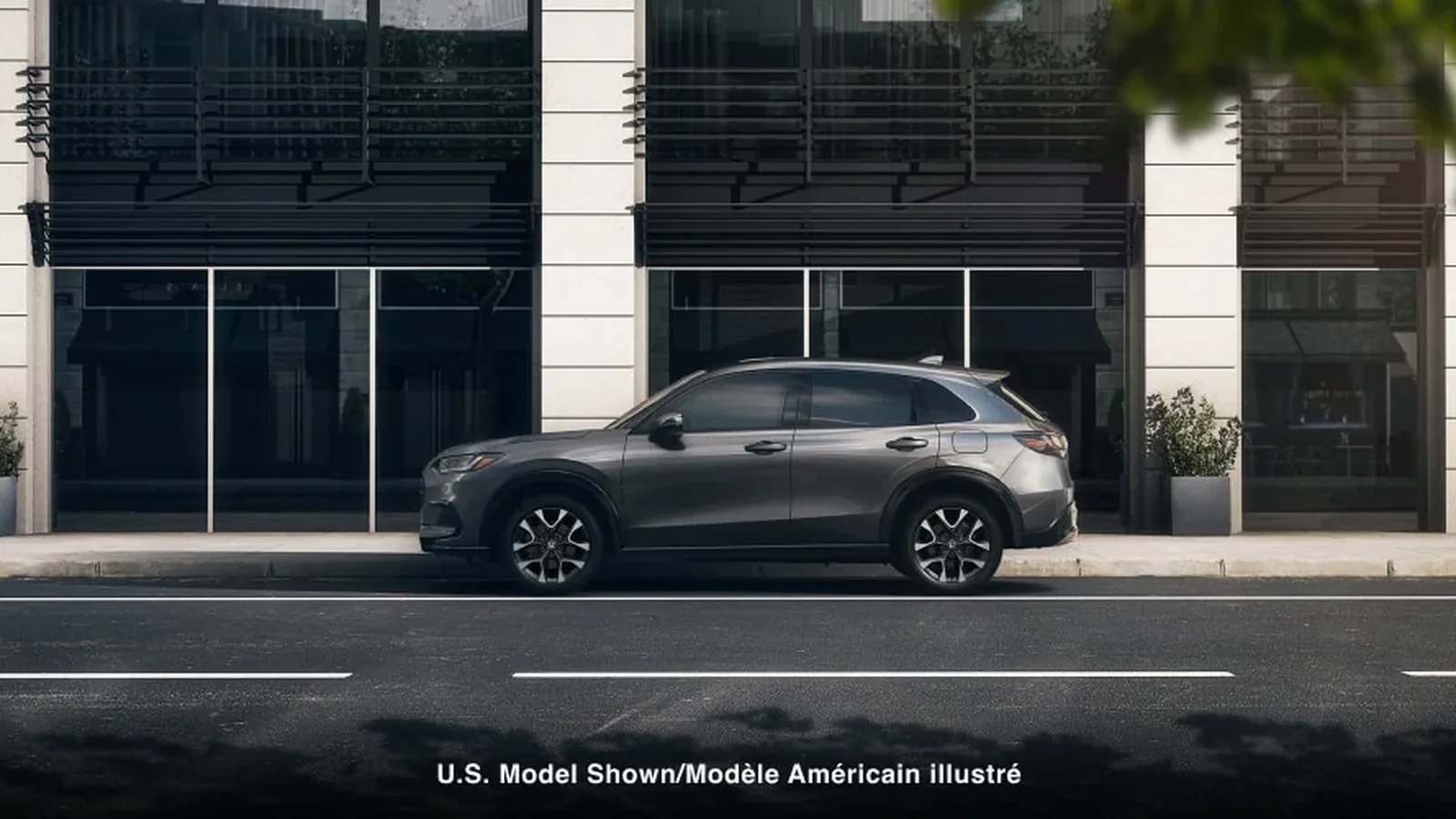
Photo: Honda Canada. 2026 Honda HR-V. Part of the Car Buyer Protection Series by Henry Chen, Maple Honda, Vaughan.
A private listing at a price below market for the year and trim, with mileage that looks almost too low for the car's age, is the kind of find that makes any car shopper stop scrolling. OMVIC has been publishing warnings about exactly this scenario for years because it's one of the most common patterns tied to odometer fraud.
Odometer fraud means the mileage shown on the dashboard has been rolled back to make the vehicle appear less used than it actually is. It's most often associated with illegal, unregistered sellers (the curbsiders), and it shows up disproportionately in private sales, online marketplaces, and parking-lot deals. From the curb it looks like a great deal. After the purchase, it becomes the buyer's problem.
This article walks through what OMVIC says to look for, what to do before you hand over any money, and what your rights are if you bought from an OMVIC-registered dealer and the odometer turned out to be wrong.
Start with the paperwork before you look at the car
Before you buy a used vehicle privately in Ontario, you are entitled to a Used Vehicle Information Package (UVIP) from ServiceOntario. The UVIP includes the vehicle's last recorded odometer reading at the time the previous owner de-registered it, plus branding information (salvage, rebuilt, etc.), lien status, and a 12-year ownership history.
Treat the UVIP as the floor, not the ceiling. OMVIC recommends also pulling a Carfax Canada or similar vehicle history report to see service records, accident history, and any odometer readings logged by dealerships or service shops across the province. When the dashboard number, the UVIP, and the history report all line up, you're in good shape. When one of them is off, that's where the questions start.
Small differences between reports can happen because of timing (one report was pulled a few weeks after another, or the dealer hasn't yet uploaded the latest service). Larger gaps or unexplained jumps are the real warning sign.
The seller is part of the due diligence
The paperwork tells you about the car. The seller tells you about the risk. OMVIC's enforcement history is full of cases where the seller behaved exactly the way a curbsider behaves: evasive answers, urgency, cash-only demands, multiple listings for the same car with different phone numbers, and a mismatch between the name on the ownership and the name on the seller's ID.
If any of those red flags show up, the right move is to walk away. Don't try to negotiate your way past them. A legitimate seller won't push you to skip a UVIP, won't dodge a vehicle history report, won't insist on cash, and won't get defensive about an independent mechanic inspection.
If the seller's name doesn't match the name on the ownership, the deal is already broken — regardless of how good the mileage looks on the dash.

Photo: Honda Canada. 2026 Honda Civic.
What the vehicle itself can tell you
Even when the seller looks clean, the car has to match the mileage. A 60,000 km vehicle shouldn't have a steering wheel that's worn smooth, gas and brake pedals with rubber worn down to the metal, seats with shredded bolsters, or a windshield so pitted from highway driving it looks like it took a sandblaster. Those are the kind of details OMVIC's bulletins call out repeatedly.
Suspension components can also tell the story. If the struts, control arm bushings, or ball joints look heavily worn on a vehicle showing low kilometres, that's a hint the odometer has been disconnected or rolled back at some point. None of these signs are conclusive on their own. Together, they're a pattern worth paying for a third-party inspection to investigate.
Don't skip the pre-purchase inspection. A mechanic you pay (not the seller's mechanic) can spot rolled-cluster indications, aftermarket cluster swaps, evidence of unplugged odometers, and mechanical wear that doesn't match the dash. The cost of the inspection is always less than the cost of buying a car with a fraudulent odometer.
What your rights are if you bought from an OMVIC-registered dealer
If you buy from an OMVIC-registered dealer and the odometer turns out to be inaccurate, you have specific rights. Under the Motor Vehicle Dealers Act, a misrepresentation about a vehicle's odometer is grounds to cancel the contract within 90 days of delivery. The dealer's failure to disclose that the odometer was inaccurate is treated the same way as an affirmative misrepresentation.
The first step is to put the concern in writing to the dealer, with whatever documentation you have (UVIP, history report, mechanic's note). If the dealer refuses to resolve it, OMVIC's complaints process is the path forward. If the dealer can't or won't pay even after discipline, the Compensation Fund is the backstop.
None of this applies to private sales, including curbsiders. With a private seller, your only real option is civil court, which is why OMVIC's message is consistent: buying from an OMVIC-registered dealer is the safest way to buy a used car in Ontario.
What to do if you already bought a suspect car
If you bought privately and now suspect the odometer was rolled back, pull a fresh vehicle history report and compare it to the dashboard reading. If there's a clear discrepancy, your next step depends on whether the seller was registered with OMVIC at the time of sale.
If the seller was registered, file a complaint with OMVIC — misrepresentation of an odometer is a breach of the MVDA, and you may have a cancellation right even past 90 days if you can show the dealer knew or should have known.
If the seller was a curbsider, report them to OMVIC so they can investigate and shut the operation down. For your own recovery, the practical path is civil court through the Ontario Superior Court of Justice (Small Claims Branch for claims up to $50,000, per Ontario's October 2025 limit increase). It's slower and less certain than the OMVIC route, which is exactly the asymmetry OMVIC's whole buyer-protection framework exists to correct.
Frequently asked, Vaughan edition
Is rolling back an odometer illegal in Ontario?
Yes. Tampering with an odometer is a breach of the Motor Vehicle Dealers Act when done by a registered dealer, and it's also a criminal offence under the Criminal Code of Canada (false pretence / fraud) regardless of who does it.
Can I tell if an odometer has been rolled back just by looking at the car?
Sometimes, but not reliably. Wear on the pedals, steering wheel, and seats that's heavier than the mileage suggests is a clue, and a vehicle history report that doesn't match the dash is a strong signal. The only sure way is a pre-purchase inspection by an independent mechanic and a careful cross-check of every odometer reading ever logged for the car.
What if I already bought a used Honda with a rolled-back odometer from a private seller?
Your legal options are narrower. You can pursue the seller in civil court (Small Claims Branch for under $50,000), and you should report the seller to OMVIC so they can investigate. You won't have access to the Compensation Fund because the Fund only applies to OMVIC-registered dealers.
Does the 90-day cancellation right apply to odometer issues specifically?
Yes. Under the MVDA, a dealer misrepresentation of a vehicle's odometer is one of the explicit grounds for cancellation within 90 days of delivery. If the dealer failed to disclose known odometer inaccuracy, that's treated the same as an active misrepresentation.
Is a UVIP enough to verify the mileage?
The UVIP shows the odometer reading at the last de-registration event. It's a necessary document but not sufficient on its own — OMVIC recommends pulling a vehicle history report on top of it, because service records and prior dealer readings may show different numbers that the UVIP doesn't capture.
Is unusually low mileage always a red flag?
Not always — sometimes a car genuinely sat unused (collector car, second vehicle, snowbird-owned). But unusually low mileage relative to age should prompt extra diligence: a 5-year-old car with 15,000 km is suspicious unless there is a clear story (single owner who worked from home, second car used sparingly). The bigger red flag is mileage inconsistent with the vehicle's condition — worn pedals, steering wheel, and driver's seat with 15,000 km means the odometer has likely been tampered with.
What is the average annual mileage I should expect on a used Honda?
In Ontario, average annual mileage is around 15,000 to 20,000 km. A 2018 Honda Civic with 30,000 to 40,000 km on it is 'low mileage' relative to age. A 2018 Civic with 100,000+ km is 'high mileage' but well within Honda's expected lifespan. Anything dramatically below 10,000 km/year (e.g., 30,000 km on a 5-year-old car) warrants a closer look — get the Carfax, ask for service records, and verify the odometer history in the UVIP.
Does low mileage actually increase a Honda's value?
Modestly, yes — but not proportionally. A Honda with 60,000 km vs one with 100,000 km of the same year is worth more, but the difference is usually $2,000 to $4,000, not $10,000. Be wary of ads that price a 'low mileage' car significantly above market — that premium may not survive a mechanical inspection. Honda's reputation for longevity means even higher-mileage examples are usually excellent values.
Want me to walk through the OMVIC piece of your next deal?
If you have a quote from another store, a private sale you're considering, or just a question about how OMVIC's rules apply to your situation, send me the details. I will help you pressure-test the structure.
Ask Henry a question
Not ready to book anything? Just ask. Henry Chen answers every message himself — usually within a couple of hours during business hours. No call list, no pressure, and no obligation to buy anything.