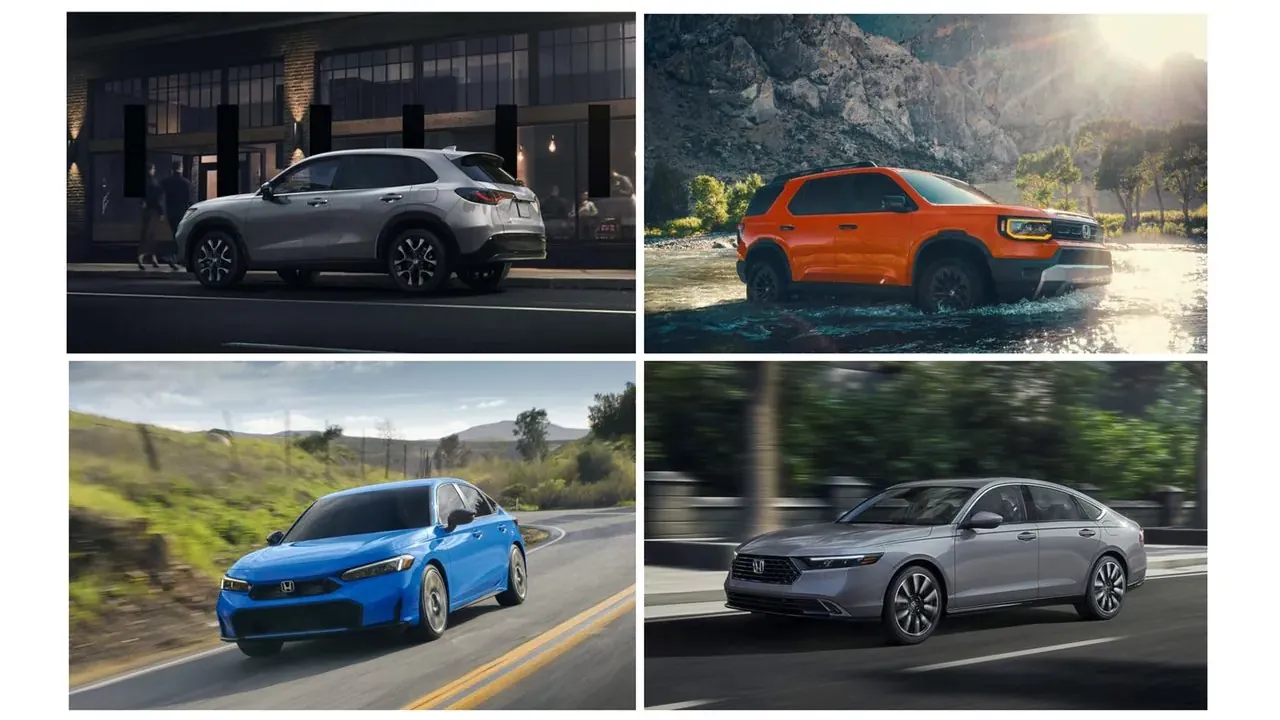
The four cars in the same announcement
According to the Honda Canada News release dated March 24, 2026, the four 2026 Honda models in this round of IIHS testing are:
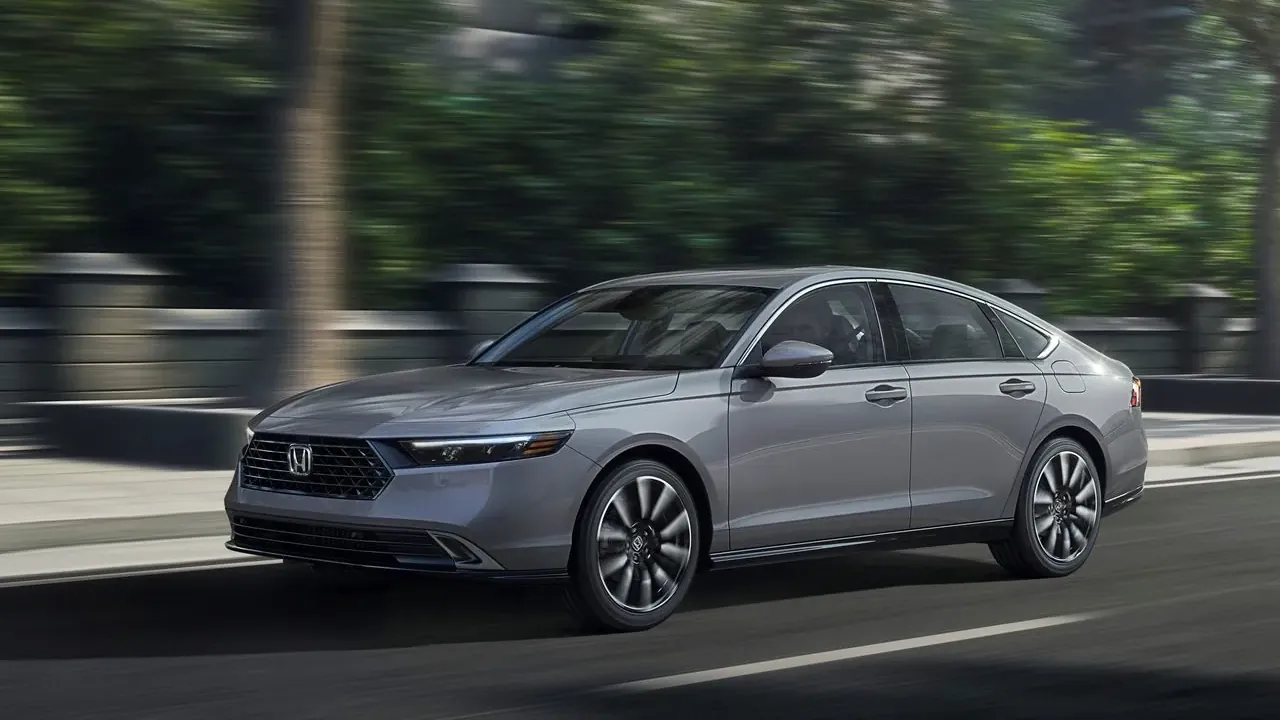
- 2026 Honda Accord Touring Hybrid — the top-trim hybrid family sedan.
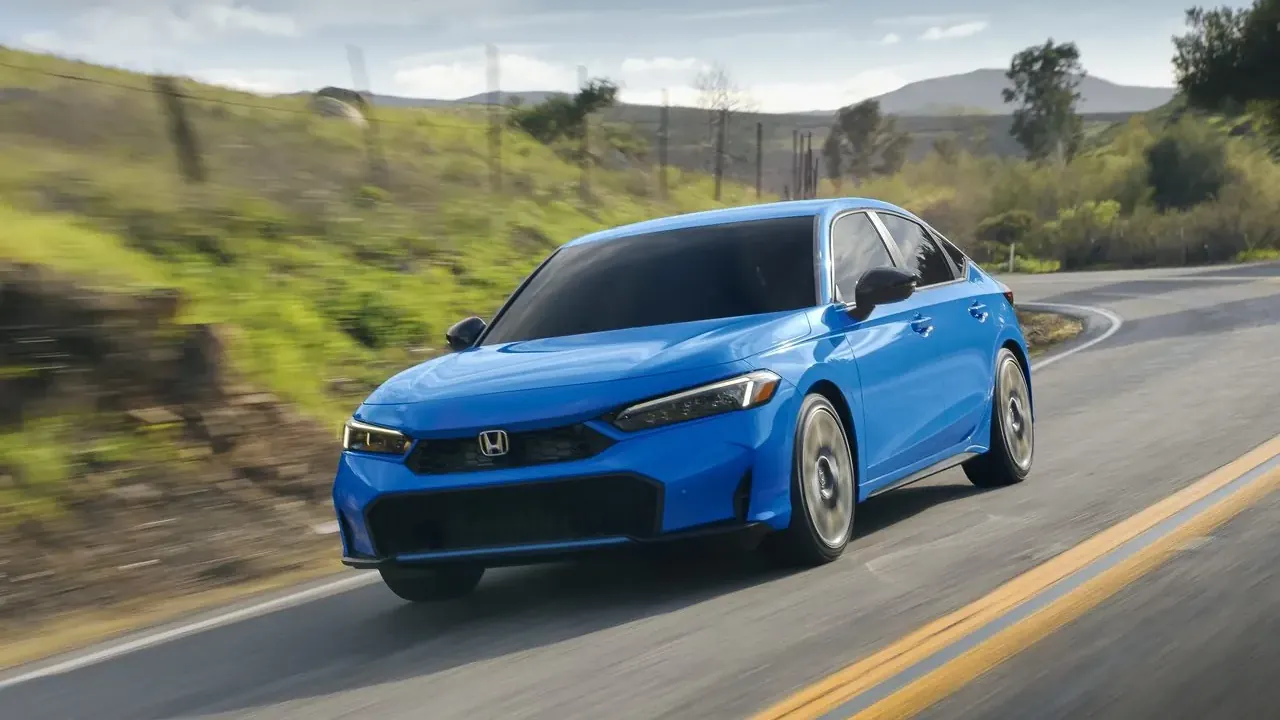
- 2026 Honda Civic Hatchback Sport Touring Hybrid — the most powerful Civic hatch, two-motor hybrid.
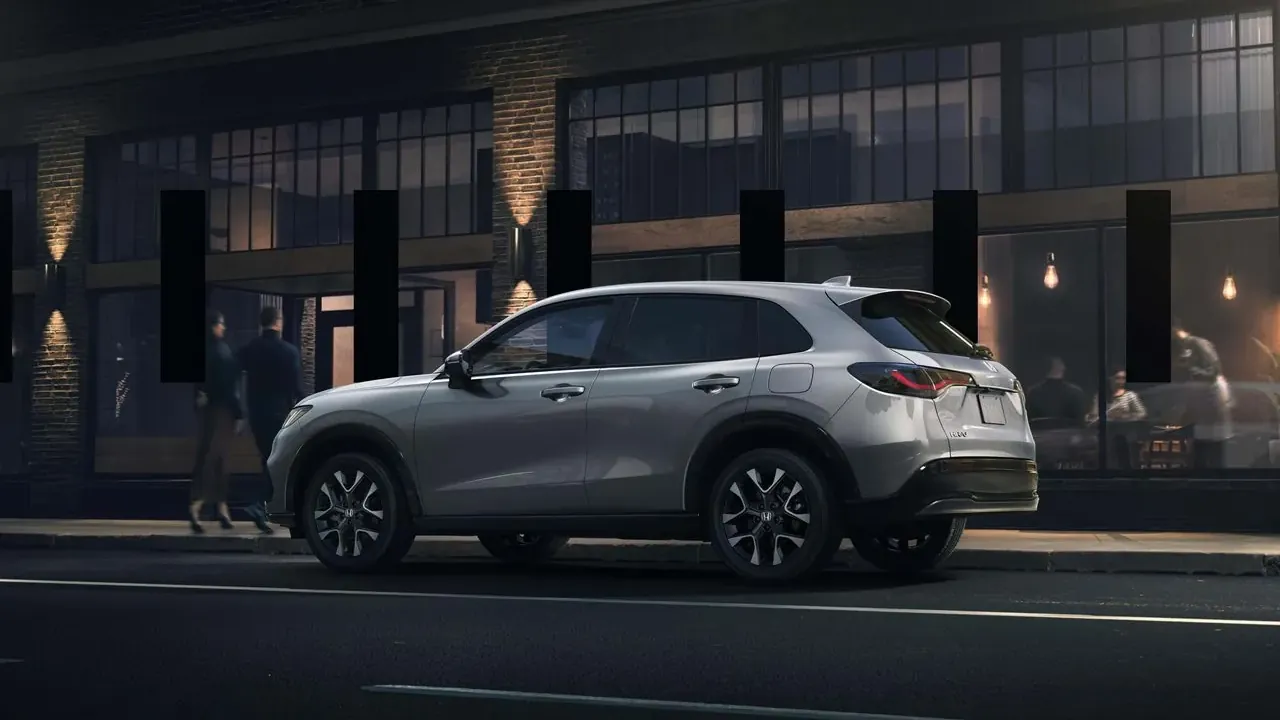
- 2026 Honda HR-V EX-L — higher-trim subcompact SUV.
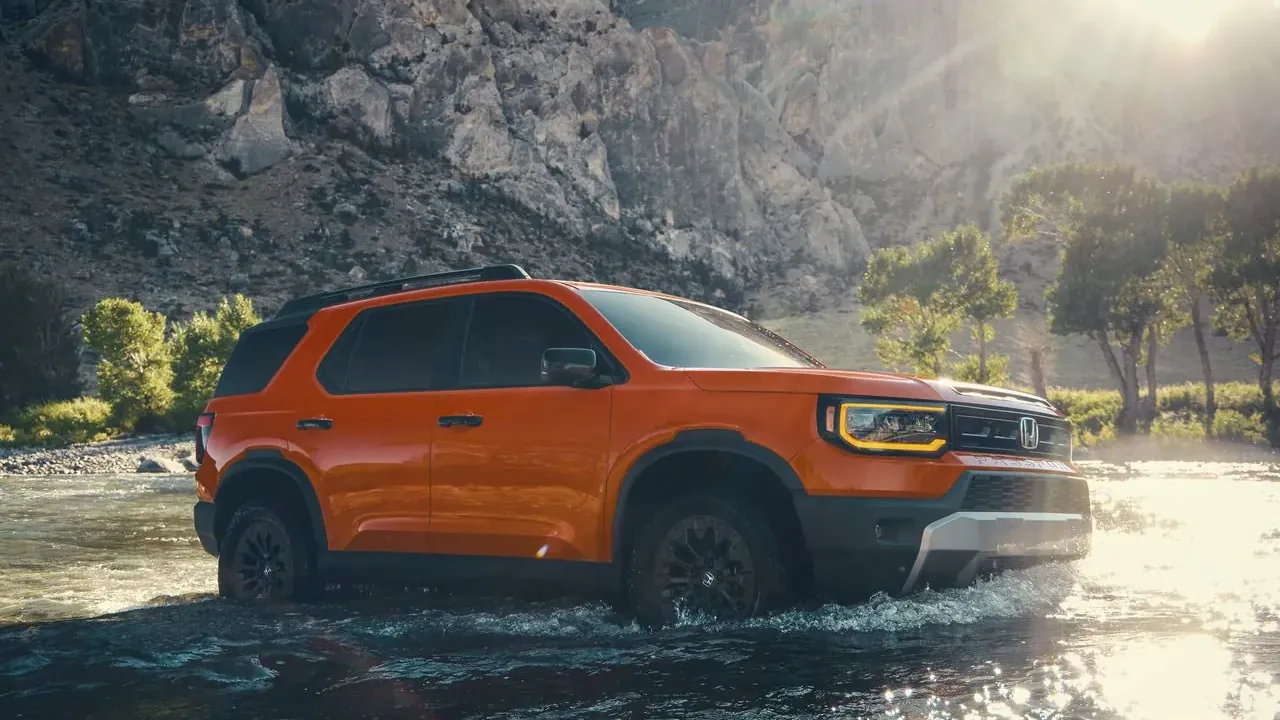
- 2026 Honda Passport TrailSport — the unibody (Pilot-platform) off-road oriented mid-size SUV.
The IIHS point to remember: the Insurance Institute for Highway Safety is a U.S. nonprofit research body funded by auto insurers. Its crashworthiness evaluations are tougher than the federal U.S. New Car Assessment Program (NCAP) baseline and are widely cited in Canada as well. A "Top Safety Pick" or "Top Safety Pick+" rating is one of the more credible third-party safety endorsements a vehicle can earn in North America. IIHS.org
The photo set
Why one announcement with four cars matters more than four separate awards
If you only cared about one category — say, mid-size sedans — you’d look at Accord vs Camry vs Sonata vs Legacy. When you find that Accord wins, you’ve learned about sedans. What you have not learned is whether Honda can build safe vehicles in general. You’ve only learned they can build a safe sedan.
The IIHS sweep across Accord + Civic + HR-V + Passport answers the bigger question: is safety an accident on a per-nameplate basis, or is it engineered in as a platform-wide priority? Four different vehicle categories — sedan, hatch, subcompact SUV, mid-size off-road SUV — all scoring well in the same test cycle is a stronger signal than the same brand winning the same category four years in a row.
"Four unrelated vehicle programs, hitting the same marks in the same test cycle, is not luck. It's a corporate engineering decision."
The corporate decisions that show up in these scores
If you read the IIHS criteria (and I do, partly because buyers ask me about it), the test cycle covers small overlap frontal, moderate overlap frontal, side impact, roof strength, head restraints, and pedestrian crash prevention. To earn the top tier, a vehicle also has to deliver good or acceptable headlights as standard equipment on every trim. IIHS Top Safety Picks criteria
Three Honda engineering calls that show up across all four winners:
- ACE body structure. The Advanced Compatibility Engineering body frame routes crash energy around the passenger cell and away from the other vehicle. It’s been in every modern Honda and Acura for years, so a similar score across four nameplates is the expected outcome.
- Honda Sensing standard on every trim. Forward collision warning, lane departure warning, lane keep assist, road departure mitigation, adaptive cruise control, traffic sign recognition. This is the pedestrian crash prevention line of the test, and it’s not optional. The Civic at the entry LX has it. The HR-V at entry LX has it. That part is more about trim policy than clever engineering.
- Headlights as standard equipment. The two ratings that show up most often as "Acceptable" rather than "Good" across the industry are headlight performance and pedestrian crash prevention on lower trims. Honda has chosen not to lock those behind a top-trim package, which is why a base-trim HR-V EX-L can show up in the same release as a top-trim Accord.
What this means in Vaughan
If safety is your first filter, the four cars in this announcement cover most of what a Vaughan household actually buys:
- Sedan — Accord Touring Hybrid: best fit for commuters driving Highway 400, 401, or the QEW daily, who want a comfortable sedan with good crash structure and a full Sensing suite.
- Hatchback — Civic Hatchback Sport Touring Hybrid: best fit for younger drivers, students, commuters who want to downsize, or anyone whose commute includes downtown Toronto parking. The hybrid version also gets the strongest powertrain in the Civic lineup.
- Subcompact SUV — HR-V EX-L: right answer when the buyer wants the higher seating position and cargo shape of an SUV but does not need third-row space or towing.
- Mid-size off-road SUV — Passport TrailSport: the right fit when the buyer needs towing capacity (5,000 lb), real ground clearance, and an SUV that can take cottage-road gravel without complaint. Per honda.ca/en/passport, all 2026 Passport trims sold in Canada are TrailSport variants — not the U.S.’s RTL/RTL-E trims. The Passport shares its platform with the unibody Pilot, not a body-on-frame truck.
What it doesn’t claim
I want to be careful about what IIHS ratings are and are not:
- They do not predict how a driver will avoid a crash. Driver attention, weather, speed, impairment, and fatigue dominate real-world outcomes by a wide margin. The Ontario Ministry of Transportation publishes quarterly fatality data showing driver behaviour as the largest single contributor by far.
- They do not rate the same vehicle across every trim combination. The testing is done on specific trims (often the top trim, sometimes the base trim), so a rating earned on the Accord Touring Hybrid does not automatically transfer to the Accord SE. Honda has gotten better about putting safety equipment standard across trims in recent years, but the official "rated trim" matters for citation.
- They are a U.S. organization’s test, run on a U.S.-market configuration. Canada does not run an equivalent independent crash test program. The Canadian auto industry generally accepts IIHS ratings as a credible proxy, and Honda Canada News publishes them in Canadian press releases — but Canadian-buyer nuance is fair to flag.
My likely prediction (within 3 months):
By October 1, 2026, Honda Canada will publicly confirm that the 2027 model-year CR-V has addressed the issue that kept the current CR-V off this list. The 2026 CR-V's omission is not a scheduling gap — per IIHS.org, the current CR-V scored Poor on the updated moderate overlap front test (rear-passenger restraints and dummy kinematics), a genuine structural finding, not a timing quirk. The CR-V is Honda's highest-volume nameplate in Canada, so a body-structure fix for the next model year is a reasonable bet, but it would need to show up in the crash test, not just in the marketing.
My bolder prediction (within 12 months):
By July 1, 2027, at least one Canadian dealer’s lot-page will be running IIHS rating badges on trim-by-trim cards — not just on the model page. The reason: the IIHS has been expanding its ratings test plan to include pedestrian crash prevention in lower-speed urban scenarios, and the headline figures on those tests are now subtle enough that buyers want them visible at the trim level, not just at the model level.
The buyer takeaway
If you walk into Maple Honda today and safety is your first filter, the choice among Accord, Civic Hatch, HR-V, and Passport is genuine, not a forced compromise. Pick the body style that fits your actual life — sedan, hatch, subcompact SUV, mid-size SUV — and you’re not trading safety for utility. You’re picking utility within a brand where the safety floor is the same across the lot.
That’s the part of the IIHS sweep worth taking home.
Frequently asked questions
Does the IIHS rate Canadian-market Hondas?
The IIHS tests U.S.-market vehicles, but Canadian-market Hondas are structurally identical for the relevant safety systems (ACE body, Honda Sensing, airbag layout). Honda Canada cites IIHS results in their own press releases. The crash structure and Sensing suite are not trim-or-market-optional in the Honda lineup.
What’s the difference between IIHS Top Safety Pick and Top Safety Pick+?
Both tiers require Good ratings in crashworthiness evaluations. Top Safety Pick+ also requires Good or Acceptable headlights standard across trims and an Advanced or Superior rating in front crash prevention for pedestrian scenarios. Top Safety Pick has slightly looser thresholds for headlights and pedestrian prevention. Read the trim-by-trim badge before quoting.
Is the Accord Touring tested separate from the Accord SE or Sport-L Hybrid?
The IIHS tests one specific trim per model and publishes that trim on the rating page. Honda tends to send top trims that have the standard Sensing suite and the strongest headlight package. When the safety equipment is standard across trims, the testing effectively applies across the line. Always check the specific trim’s IIHS badge for confirmation.
Want to see which Honda fits your household first?
I’ll walk you through the four IIHS-rated models, lay them side-by-side against your real commute, payment target, and cargo needs, and we’ll figure out which one makes sense.
Photos and the four-model announcement cite the Honda Canada Newsroom release dated March 24, 2026. Specific IIHS tier (Top Safety Pick vs Top Safety Pick+) and trim-by-trim ratings should be confirmed against the IIHS ratings page for the exact model year and trim before publishing or buying. See iihs.org for current ratings. Build origins are anchored to hondacanadamfg.ca/our-products and Henry’s June 2026 dealer-side verification; confirm Accord build origin on honda.ca or the window sticker for the specific unit (not in HCM’s Alliston product list). CR-V is Alliston Plant 2; HR-V is built in Mexico (Celaya). All figures should be re-verified against honda.ca before publishing.
Ask Henry a question
Not ready to book anything? Just ask. Henry Chen answers every message himself — usually within a couple of hours during business hours. No call list, no pressure, and no obligation to buy anything.