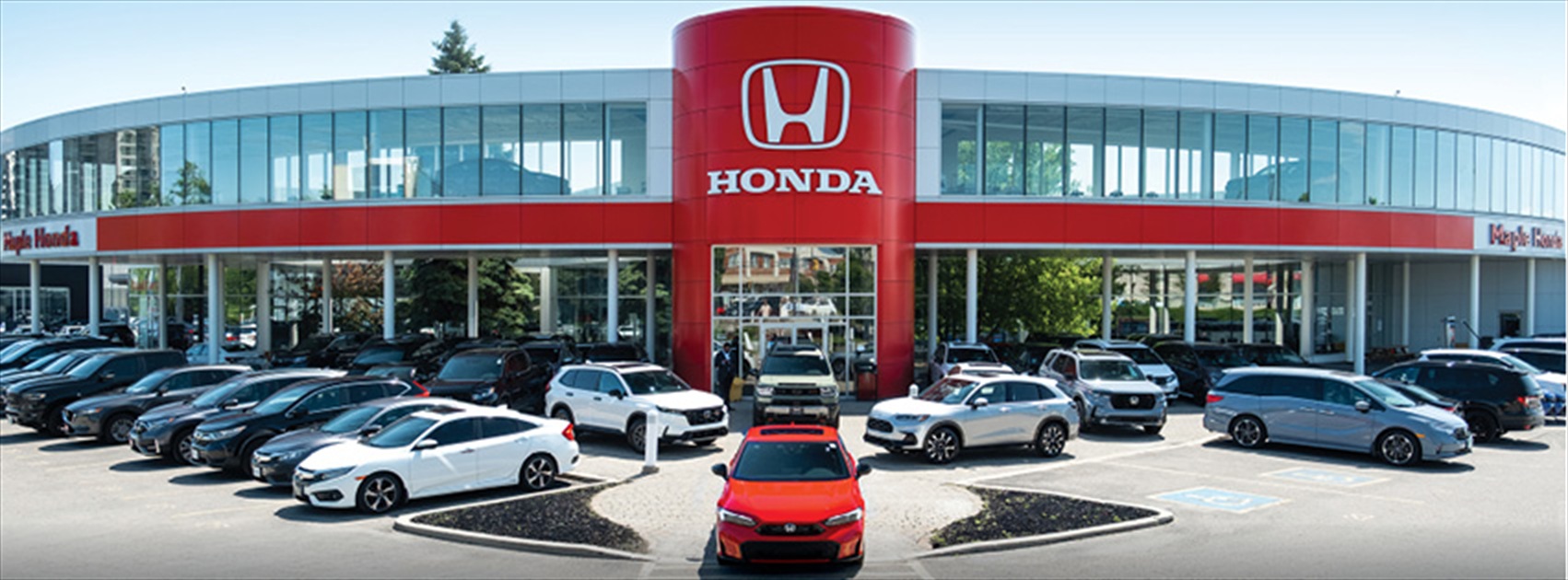
Photo: Maple Honda, Vaughan.
Most bad car deals do not feel bad on day one. They feel bad three months later, when the payment is tighter than expected, the vehicle does not fit real life, or the buyer realizes they never actually compared the structure properly.
This guide came from the exact pain points I hear most often: payment confusion, redesign hype, negative-equity risk, and the feeling that the salesperson has a framework while the buyer only has instincts.
The no-surprise rule: before you commit, pressure-test the fit, the math, the timeline, and the ownership plan. If any one of those is still fuzzy, the deal is not ready yet.
1. Define the outcome before you compare vehicles
Strategic buyers do not start with inventory. They start with the job the vehicle needs to do. If you skip that part, it is easy to fall for the trim, the colour, or the payment before you have even decided whether the car solves the right problem.
Ask first
- Do I need winter confidence or easy downtown parking?
- Am I buying for a commute, a family, or both?
- How long do I realistically keep vehicles?
- What feature is actually non-negotiable?
Translate features into outcomes
- AWD = easier winter confidence
- Honda Sensing = family protection
- Hybrid powertrain = lower fuel stress
- Resale strength = more flexibility later
The point is simple: once the outcome is clear, the wrong cars eliminate themselves. That makes the next steps faster and cleaner.
2. Get the financial structure right before you chase the payment
A monthly or bi-weekly payment by itself tells you almost nothing. A deal can look comfortable on paper while still putting you in a weak equity position or hiding too much due at delivery.
My practical baseline is straightforward. On a finance deal, a meaningful down payment keeps you safer against depreciation and lowers the odds that you owe more than the vehicle is worth. On a lease, the value is often in flexibility, warranty coverage, and depreciation protection rather than forced equity.
- Finance: 20 to 30 percent down is a healthy target when you want to stay more comfortably right-side up.
- Lease: 0 to 10 percent down often makes more sense if you value flexibility and want to keep cash liquid.
- Always compare: payment frequency, term length, interest rate, and what is due at delivery.
If you need help slowing down the quote itself, watch two things in particular: how a bi-weekly figure compares to the real monthly cost once you do the math, and whether "zero down" actually means zero due at delivery once fees and the first payment are added in.
3. Compare hybrid value using the real gap, not the headline gap
This is where buyers get tripped up by surface-level math. A hybrid may look meaningfully more expensive than the gas version at first glance, but the real question is the net cost gap after fuel savings.
If the hybrid payment is higher but you drive enough kilometres for the fuel savings to close most of that gap, the more expensive-looking option may actually be the calmer long-term choice. That is especially true for GTA buyers who want lower fuel stress without committing to home charging or EV range planning.
The cleaner comparison is: payment difference minus realistic monthly fuel savings. That is the number you should feel, not the raw sticker or advertised payment jump.
4. Decide whether you are paying for hype or paying for certainty
Every redesign creates the same tension. The new model gets attention, sharper styling, and almost no negotiation room. The outgoing or current model usually brings more mature product quality, clearer inventory, and more flexible incentives.
There is nothing wrong with wanting the newest body style. Just be honest about what you are paying for. If status and freshness matter most, waiting may be worth it. If the smarter move is mature technology and cleaner pricing, the current model usually wins.
The surprise to avoid here is pretending those two paths cost the same. They do not.
5. Negotiate by gathering information, not by performing aggression
The strongest buyers are usually not the loudest buyers. They are the ones who keep asking clean questions until the structure becomes obvious.
- Use calibrated questions: "How am I supposed to get comfortable with that payment if the due-at-delivery total is still unclear?"
- Use silence: after a vague answer, pause and let the other side fill the space.
- Use labels: "It sounds like this quote depends heavily on the trade-in number."
- Avoid fake finality: "best price" means very little if the whole structure has not been exposed.
The goal is not to "win." The goal is to leave with a structure you fully understand.
6. Build a no-surprise ownership plan before you take delivery
The deal is only half the story. The other half is whether the car stays predictable after you drive it home.
- If you are buying used, capture the maintenance baseline clearly so you know what was just reset and what is actually due next.
- If you rotate seasonal tires on a Honda that uses indirect tire-pressure monitoring, set tire pressure first and then calibrate so the vehicle learns the correct baseline.
- Use model-appropriate fluids and service procedures instead of generic shortcuts that create bigger problems later.
That part sounds boring. Good. Boring ownership is the point.
Final thought
A good deal should leave you with three things: the vehicle fits your real life, the numbers stay comfortable after the first month, and the relationship with the dealership still feels clean after the ink dries.
That is what "no surprise" actually means. Not magic. Just clarity before commitment.
Frequently asked, Vaughan edition
What should I decide before I compare vehicles?
Decide what success actually looks like first: space, winter confidence, fuel cost, parking ease, and how long you realistically keep vehicles. Once the real job of the car is clear, bad-fit options disappear quickly.
How much should I put down on a car in Ontario?
A strong practical rule is 20 to 30 percent down on a finance deal if you want to stay safer against depreciation, and 0 to 10 percent down on a lease if flexibility matters more. The point is staying comfortable with the full structure, not chasing the smallest headline payment.
When does a hybrid make more sense than a gas model?
When you drive enough for fuel savings to shrink the real payment gap, and when you want lower fuel stress without depending on home charging. Compare the net monthly gap after fuel, not just the sticker or payment difference.
Should I wait for a redesign or buy the current model?
Wait if owning the newest body style matters enough to pay more and accept less flexibility. Buy the current model if you value mature product quality, cleaner incentives, and less risk than the first wave of a redesign.
Want me to pressure-test a quote before you sign it?
If you already have numbers from another store or you are deciding between two Hondas, send me the payment, term, down payment, and due-at-delivery details. I will help you compare the structure cleanly.
Ask Henry a question
Not ready to book anything? Just ask. Henry Chen answers every message himself — usually within a couple of hours during business hours. No call list, no pressure, and no obligation to buy anything.