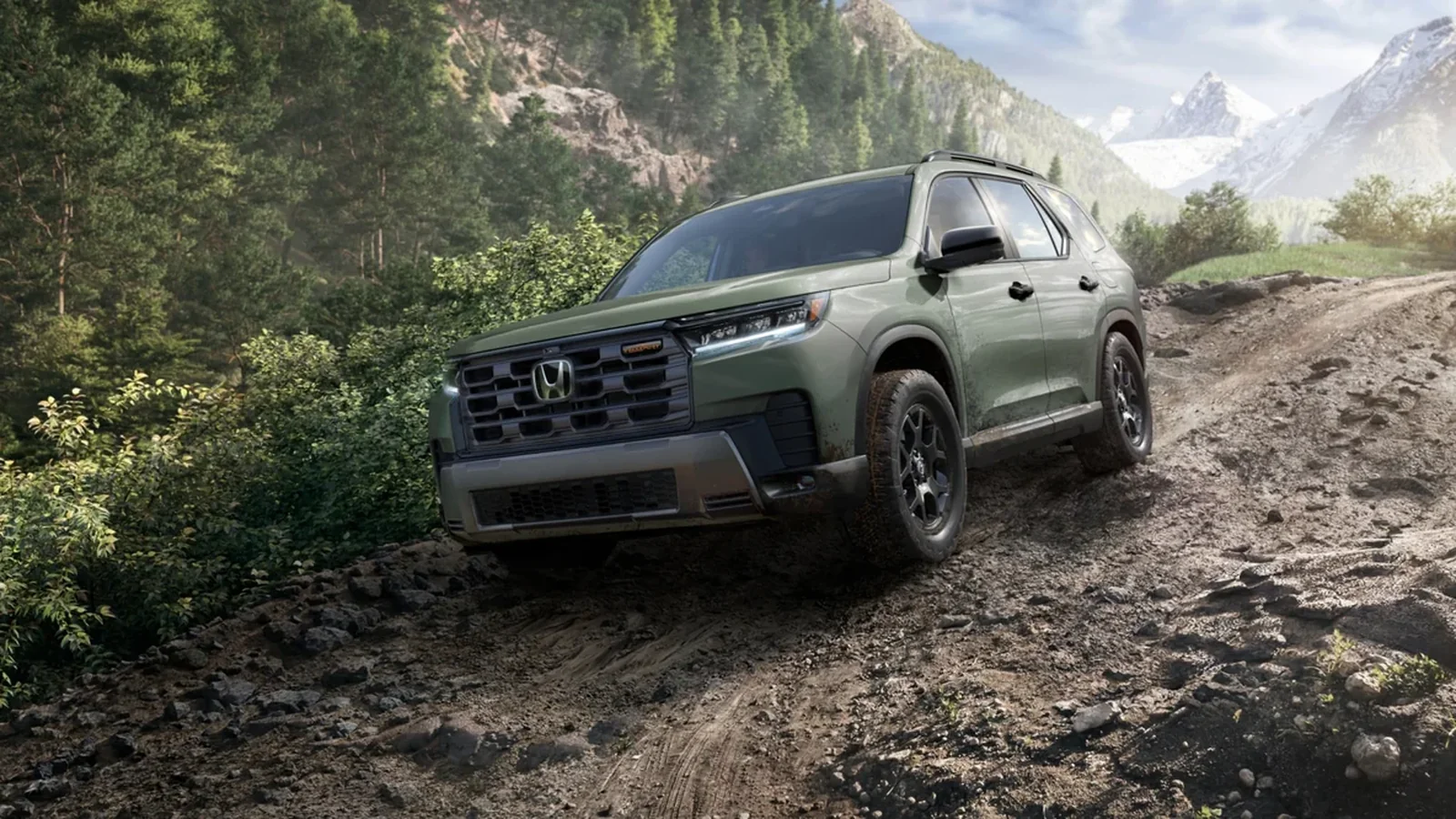
Photo: Honda Canada. 2026 Honda Pilot. Part of the Car Buyer Protection Series by Henry Chen, Maple Honda, Vaughan.
Two fees that show up on Ontario vehicle bills of sale cause the most confusion: the OMVIC transaction fee and the dealer's admin fee. They're different things. The OMVIC fee is set and remitted by the dealer to the regulator. The admin fee is set by the dealer and (mostly) kept by the dealer.
The OMVIC transaction fee as of September 1, 2025 is $22.00 per vehicle. It's part of the all-in advertised price. The admin fee is whatever the dealer charges — within reason — and it also has to be part of the all-in advertised price. Both line items have to appear separately on the bill of sale.
The OMVIC transaction fee (the regulator's slice)
Every time an OMVIC-registered dealer sells, leases, or registers a fleet or as-is transaction in Ontario, they remit $22 to OMVIC. This is what funds OMVIC's regulatory work — inspections, investigations, the Compensation Fund contribution, the dealer-search tool, and the consumer education pages this article is built on.
Dealers may pass the $22 on to the consumer through the bill of sale, but they don't have to. Most do, because the cost of running a dealership is real and the fee is small. If a dealer does pass it on, it has to appear as a separate line item with a clear label ("OMVIC transaction fee — $22.00").
The admin fee (the dealer's slice)
Admin fees cover what dealers call "the cost of doing the paperwork" — the registration, the licensing paperwork, the bill-of-sale preparation, the financing paperwork, the compliance filings, and the various government and lender systems a dealership has to plug into. Some dealers charge $399, some charge $799, some are higher.
Admin fees are legal. OMVIC's rule is that they have to be included in the all-in advertised price — no surprise admin fees at the desk. The fee has to be itemized separately on the bill of sale. Beyond that, the amount is set by the dealer, and it varies.
Photo: Honda Canada. 2026 Honda Pilot.
How to compare dealer fees across stores
- Pull the all-in advertised price from three competing Honda dealers in your area
- Subtract the OMVIC transaction fee ($22) from each — that's standardized across the industry
- The difference is admin fee, freight, and any dealer-installed accessories
- If one dealer is meaningfully lower on the all-in number, that's real money in your pocket
- If one dealer is "lower" on the headline but adds fees at signing, that's a violation of all-in pricing — report to OMVIC
What OMVIC requires when admin and OMVIC fees are bundled
OMVIC's rule is specific: if a dealer rolls the OMVIC transaction fee into an admin fee on the bill of sale, the bill has to show the OMVIC portion separately. You should be able to see the $22 line item clearly. If you can't, that's a flag.
OMVIC also reminds dealers that they must collect HST on top of any fee passed through to the consumer, including the OMVIC transaction fee if it's listed on the bill of sale. The HST goes to the CRA, not to OMVIC.
Frequently asked, Vaughan edition
Is the $22 OMVIC fee the same at every dealer?
Yes — it's set by OMVIC and is the same across the province. Where dealers differ is on the admin fee, the accessories included in the price, and how transparent they are about both.
Can a dealer waive the admin fee?
Yes. Admin fees are set by the dealer; they can waive them, discount them, or build them into a higher price. The negotiation is on the all-in number, not on individual line items.
Are dealer fees negotiable?
Generally no — most dealers have a posted admin fee that's part of their cost structure. The negotiation is on the vehicle price, the trade-in value, the rate, or the accessories. If you want a lower admin fee, ask for a lower all-in price.
What is the difference between the OMVIC transaction fee and the dealer's admin fee?
The OMVIC transaction fee ($22 per vehicle, current as of Sept 1 2025) is set by OMVIC and collected by the dealer on OMVIC's behalf. It funds OMVIC's regulatory operations. The dealer's admin fee is whatever the dealer charges for their own paperwork handling — typically $100 to $500 but can be higher or lower. Both must be disclosed in the all-in advertised price under OMVIC's all-in pricing rule.
Can the dealer charge a separate 'documentation fee'?
Yes, but it must be disclosed in the all-in advertised price. A 'documentation fee' is essentially the same as an admin fee — paperwork preparation, licensing, registration handling. Some dealers bundle it as admin, some separate it as doc. Either way, it is part of the all-in price and must be in the advertised number. Ask for the breakdown in writing.
Are fuel charges or pre-delivery fill-ups separately billed?
Usually no — the vehicle arrives at the dealer with some fuel, and pre-delivery inspection includes a fuel system check. The dealer should top up the tank before delivery at no extra charge (or include the fuel charge in their admin fee). If a dealer tries to bill separately for fuel at delivery, that is worth questioning — and it is typically rolled into the all-in price anyway.
Do I pay HST on every fee?
Yes — HST (13% in Ontario) applies to the vehicle price and to most taxable add-ons and fees. The OMVIC transaction fee is taxable. The admin fee is taxable. Add-ons like paint protection and extended warranty are taxable. Some items are HST-exempt (like the licensing fee for plates, which is a government tax). Get a breakdown in writing.
What about tax on a trade-in?
You only pay HST on the net difference between the new vehicle price and your trade-in value, not on the full new vehicle price. Example: $35,000 new car plus $10,000 trade-in credit equals $25,000 taxable base. This is why trade-ins almost always beat private sales once you account for HST savings — the tax math favours trading in.
Want me to walk through the OMVIC piece of your next deal?
If you have a quote from another store, a private sale you're considering, or just a question about how OMVIC's rules apply to your situation, send me the details. I will help you pressure-test the structure.
Ask Henry a question
Not ready to book anything? Just ask. Henry Chen answers every message himself — usually within a couple of hours during business hours. No call list, no pressure, and no obligation to buy anything.