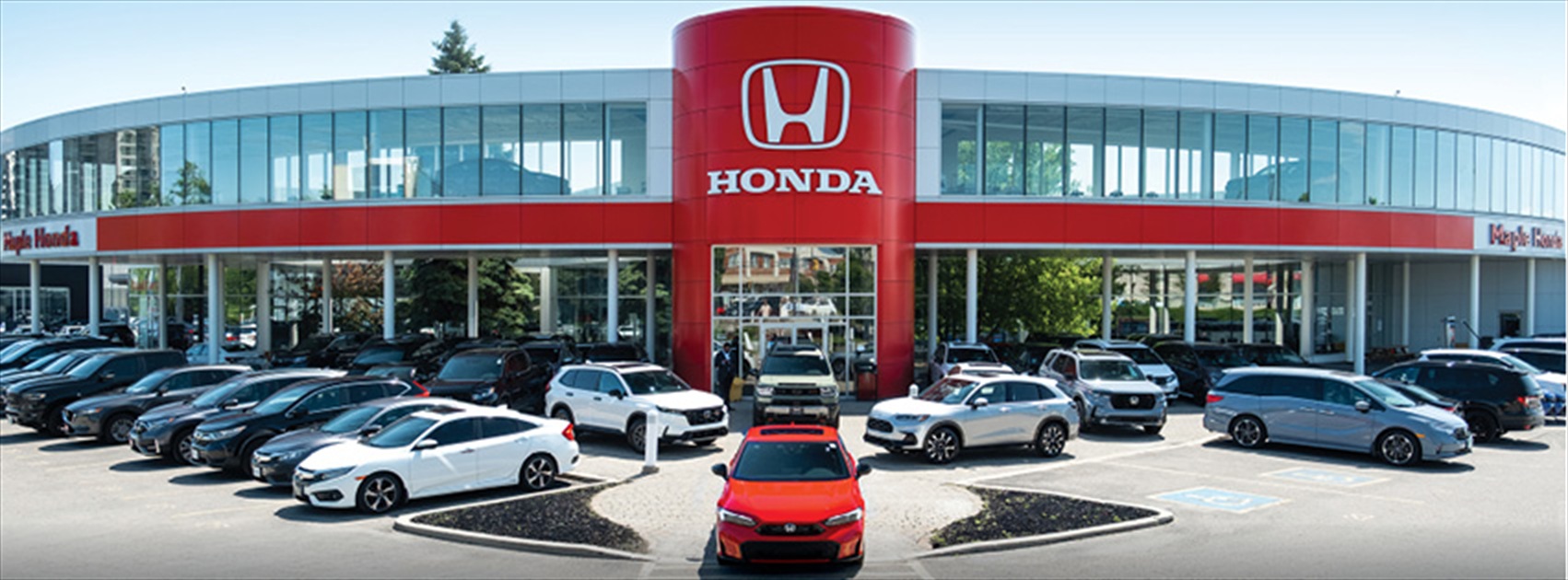
Maple Honda in Vaughan — one of the GTA dealers selling the Civic sedan and CR-V built at Honda of Canada Mfg. in Alliston, Ontario. PMAC now formally advocates for that production at the federal level. Photo: Maple Honda.
Honda Canada Inc., Honda of Canada Mfg., Toyota Canada Inc., and Toyota Motor Manufacturing Canada launched the Pacific Manufacturing Association of Canada (PMAC) on April 15, 2026 — the first industry association formed to represent Canada’s two largest automotive manufacturers. In 2025, PMAC’s founding members assembled more than 75% of all vehicles manufactured in Canada and employed more than 60% of the country’s vehicle assembly plant workers. Honda alone built approximately 198,000 Civics and 202,000 CR-Vs in Alliston in 2025. Brendan Sweeney (former McMaster and Western University automotive researcher) was named PMAC’s inaugural president, with Honda Canada CEO Dave Jamieson as chair. Honda Canada Newsroom
What it means: Before PMAC, Honda and Toyota engaged with Ottawa individually — competing priorities, competing timelines, separate submissions. PMAC consolidates that voice. The association’s stated focus areas are trade, EV policy, greenhouse gas regulations, and manufacturing competitiveness — the exact policy levers that determine whether the Alliston line builds 400,000 vehicles a year or adjusts downward. For Canadian Honda buyers, this matters in a specific way: every Civic sedan and CR-V sold in Canada is built in Alliston. When that production volume is stable, supply is predictable, dealer inventory is manageable, and pricing stays rational. When it’s under pressure — from tariffs, policy shifts, or EV mandates without accompanying infrastructure — the downstream effect hits GTA lots first. A formal lobbying structure for Canadian automotive manufacturing is an institutional backstop that didn’t exist four months ago. It won’t prevent every policy headwind, but it changes the probability that Alliston-specific concerns reach the right desks in Ottawa before decisions are made rather than after.
My prediction: Within six months of its April 2026 launch, PMAC will submit formal recommendations to the federal government on at least one of: automotive tariff classification, the federal Zero Emission Vehicle mandate timeline, or domestic content rules for incentive eligibility. That submission will directly reference the Alliston production numbers — specifically the Civic and CR-V volumes — as the economic justification. Whether the recommendations are adopted or not, the submission itself will mark the first time Honda and Toyota have co-signed a Canadian policy document, which changes how Ottawa frames automotive consultations going forward.
If you’re buying right now: The Civic sedans and CR-Vs on the lot at Maple Honda were built in Alliston. That’s not a marketing line — it’s a supply chain fact that has direct implications for resale value, parts availability, and long-term dealer support. PMAC doesn’t change what’s on the lot today, but it signals that both Honda and Toyota are committed to defending Canadian production volume — which is the long-game reason domestic models tend to hold their value in this market.
Considering a Canadian-built Honda?
I can walk you through what “built in Alliston” means in practice — resale trajectory, parts support, and why the domestic supply chain has historically been a GTA buyer advantage.