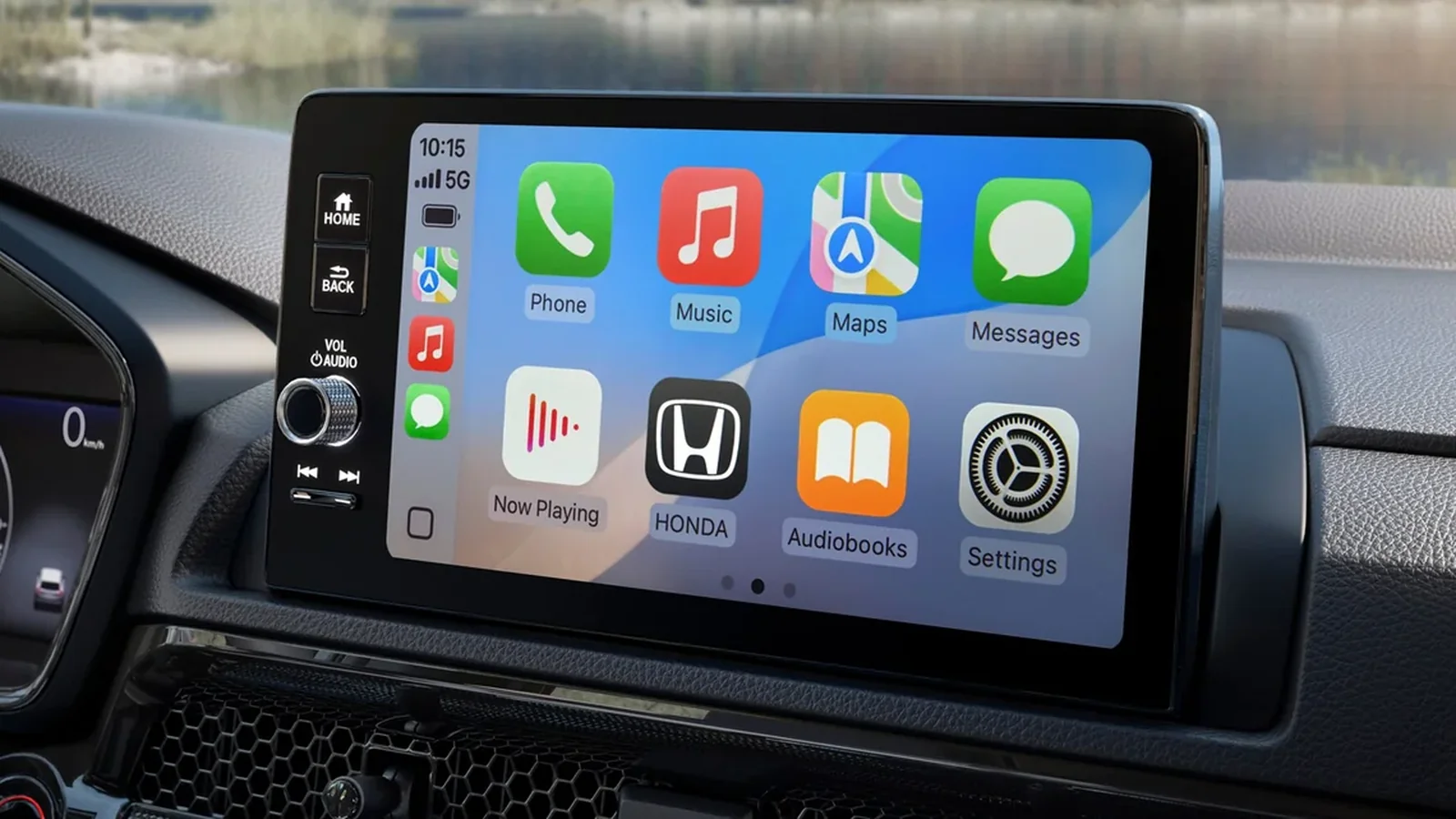
Photo: Honda Canada. 2026 Honda CR-V interior cabin and cockpit.
Honda reported its first-ever annual loss as a publicly traded company in fiscal year 2026, driven by a $10 billion write-down on its electric vehicle program. Following its May 14 business briefing, Honda confirmed it's canceling several planned EV models, walking back its 2040 combustion-free target, and committing to 15 new next-generation hybrid models globally by March 2030, the majority aimed at North America. In Canada, no launch date for a next Honda battery-electric vehicle has been confirmed. Honda Canada Newsroom, Summary of 2026 Honda Business Briefing (May 14, 2026)
What it means: A $10 billion write-down is a public accountability moment. When Honda tells investors it made a $10B mistake on EVs and is now doubling down on hybrids, it's making a promise it has to keep, and the way you keep a promise about hybrid volume is by moving hybrid units. In Canada, that flows directly into incentive structure. Honda Canada has to demonstrate to the parent company that the hybrid pivot is working in one of its highest-margin markets. The tool they use to demonstrate that's dealer incentives: floor cash, lease rate improvements, loyalty bonuses on hybrid-specific trims. We’re at the very beginning of that cycle. The next-generation hybrid platform (which promises 30% lower build cost and 10% better fuel economy) doesn’t arrive in Canada until 2027 at the earliest, so the mandate is to build hybrid volume on current models, CR-V Hybrid, Accord Hybrid, Civic Hybrid, while the new hardware develops. The math works out the same way it always does when a manufacturer needs to hit a mix target: the segment they want to grow gets the better deal.
My prediction: By Q1 2027, Honda Canada will offer sub-4% APR financing on at least one hybrid model, likely the CR-V Hybrid or Accord Hybrid, marking the first time Honda has extended performance-rate incentives (historically reserved for slow-moving gas trims) to a hybrid. The $10B loss creates the mandate to move hybrid volume; the next-gen platform’s 30% lower build cost creates the margin room to fund it. This is the moment the price gap between CR-V gas and CR-V Hybrid starts to close at the payment level, not just the sticker level.
If you’re buying right now: If you’re genuinely on the fence between the CR-V gas and the CR-V Hybrid, the direction of incentives over the next 6–12 months is clearly toward the hybrid. The current premium to step up may not look the same on your next payment sheet. Ask your dealer what the hybrid rate is today versus last quarter, if the gap is already narrowing, that’s the signal.
Curious what the current hybrid gap looks like at Maple Honda?
I can walk you through CR-V gas vs. hybrid payment math side by side — including where incentives sit right now and where they were last quarter.
Ask Henry a question
Not ready to book anything? Just ask. Henry Chen answers every message himself — usually within a couple of hours during business hours. No call list, no pressure, and no obligation to buy anything.