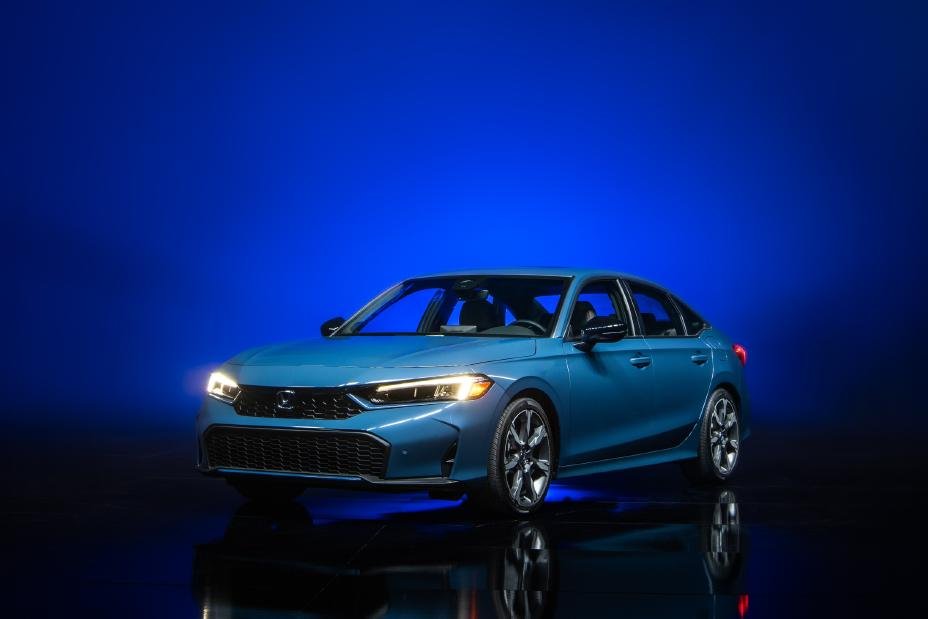
Short answer: the Honda Civic and Honda Accord share the same reliability reputation and most of the same technology, but the Accord is a genuinely bigger car — 4,971 mm long against the Civic's 4,655 mm. For most Vaughan commuters doing the daily Highway 400 run solo or with one passenger, the Civic does the job for less money. For anyone who regularly carries rear-seat adults or wants the calmer highway ride that comes with a longer wheelbase, the Accord is the one I steer them toward.
I get asked this comparison more than almost any other, usually from people who assume the Accord is "the nicer trim of the Civic." It isn't — they're two separate cars with different market positions. Here's how I'd actually walk you through the decision.
Henry's floor call: if you're cross-shopping on price alone, the Civic wins every time. The question that actually decides it is whether you need the Accord's extra rear-seat room often enough to justify the gap. Bring me your actual commute and passenger habits and I'll tell you straight which one fits.
Where The Extra 316 Millimetres Actually Goes
The Accord isn't just a longer Civic — the difference shows up almost entirely in the cabin and trunk, not extra styling flourish. Against its closest cross-shop, the Toyota Camry, the Accord's trunk measures 16.7 cubic feet to the Camry's 15.1, with almost three inches more rear-seat legroom — the same size advantage it holds over the Civic, whose smaller footprint makes it easier to thread through the tighter lots around Vaughan Mills or downtown Maple.
If your back seat is mostly empty, or occupied by kids in boosters, you're paying for space you won't use. If you regularly drive a parent, co-worker, or full-grown adult in the back seat, the Civic's rear seat will feel tight on anything longer than a short hop.
The Fuel Math For A Vaughan Commute
Both cars come as gas or hybrid, and the gap between the two body sizes is smaller than you'd expect at the pump:
The Accord's bigger 56 L tank (49 L on the hybrid) actually gives it a longer real-world range than the Civic despite burning slightly more per 100 km, which matters if you hate stopping for gas mid-commute. Both hybrids close most of the efficiency gap with their gas siblings — if fuel spend is the deciding factor rather than size, the hybrid version of either car will save you more than switching between Civic and Accord will.
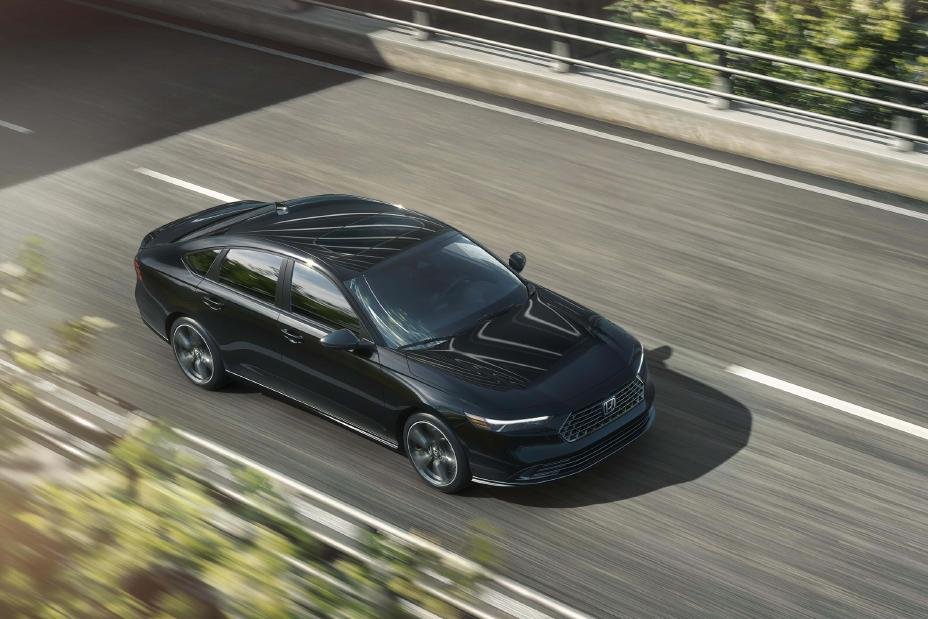
Built In Alliston — But Not Both Of Them
This trips people up: the Civic Sedan, gas and hybrid, is built at Honda of Canada Manufacturing in Alliston, Ontario, an operation that's been running since 1986 and employs over 4,200 people. The Accord sold here is imported. If "built in Ontario" matters to your decision, it only applies to the Civic — I'd rather tell you that plainly than let you assume otherwise because they're both Hondas.
Who Actually Fits The Civic
- First-time buyers and new-to-Canada drivers who want the lowest realistic entry point into a Honda that will still be worth something at trade-in time.
- Solo or two-person commuters where the back seat is rarely used for anything but bags.
- Anyone parking in a tight Vaughan condo garage or downtown lot, where the smaller footprint is a daily convenience, not a spec-sheet number.
If you're weighing a Civic against stepping up to a small SUV instead, that's a different comparison worth having on its own — I've written up how to pick a first Honda SUV for a Vaughan lifestyle separately.
Who Actually Fits The Accord
- Anyone who regularly drives adult passengers in the back seat — parents, co-workers, in-laws.
- Longer commuters who spend real time on the highway and notice the calmer ride that comes with a longer wheelbase.
- Empty nesters downsizing from a larger vehicle who still want sedan-level rear-seat room without going back to SUV-sized fuel bills. If that's you, I've written more on the downsizing decision specifically.
One thing I won't do is tell you the Accord is "worth it" in the abstract. It's worth it if you use the extra room. If you don't, you're financing 316 mm of space you'll never sit in.
Same Warranty, Different Price
Whichever one fits, the ownership terms are identical: Honda Canada's default new-vehicle coverage is 3 years / 60,000 km comprehensive and 5 years / 100,000 km powertrain on both cars, with hybrid components covered 8 years / 160,000 km on the hybrid versions. On the Civic specifically, brake pads carry a lifetime warranty after the first replacement — free parts, labour only, a small ownership cost people don't ask about until year three.
Whatever store you're dealing with, ask for the same four things in writing so any quote becomes comparable: the all-in price before HST and licensing, the stock number or VIN, the rate/term/structure, and the warranty terms that apply. Have a written quote from anywhere in the GTA? Send it to me and I'll tell you where it's strong and where it's soft.
Frequently asked, Vaughan edition
Is the Honda Civic bigger or smaller than the Accord?
Smaller. The 2026 Civic Sedan is 4,655 mm long; the Accord is 4,971 mm — a difference of about 316 mm, most of which shows up as extra rear-seat and trunk room in the Accord.
Which gets better fuel economy, the Civic or the Accord?
The gas Civic is rated at 6.9 L/100 km combined versus 7.3 L/100 km for the gas Accord. Both are also available as hybrids: the Civic Hybrid drops to 4.9 L/100 km and the Accord Hybrid to 5.3 L/100 km.
Is the Honda Civic built in Canada?
Yes. The Civic Sedan — gas and hybrid — is built at Honda of Canada Manufacturing in Alliston, Ontario, which has produced Civics since 1986. The Accord sold in Canada is imported.
Is the Accord worth the extra cost over a Civic?
It depends what you need the extra 316 mm of length for. If you regularly carry rear-seat adult passengers, or your commute is long enough that the bigger fuel tank and softer highway ride matter, the Accord earns its price gap. If it's mostly you and the odd passenger, the Civic does the same commute for less.
Do the Civic and Accord have the same warranty in Canada?
Yes. Honda Canada's default new-vehicle coverage is 3 years / 60,000 km comprehensive and 5 years / 100,000 km powertrain on both, with hybrid components covered 8 years / 160,000 km on the hybrid versions. Confirm the exact terms for your VIN on owners.honda.ca.
Where these numbers come from: Honda of Canada Manufacturing (hondacanadamfg.ca) for the Alliston build story; Honda Canada (honda.ca, owners.honda.ca) for trims, dimensions, fuel ratings and warranty terms. Fuel-consumption and range figures are Canadian-market combined ratings; real-world numbers vary with driving style, load and season.
Trim availability, equipment and pricing change through the model year. Confirm current details on honda.ca or with your dealer before you commit.
Want a straight read on Civic vs Accord for your commute?
Henry Chen at Maple Honda will walk you through the numbers in plain English — no pressure, no scripted pitch. Book a test drive online, or text a photo of any written quote to (647) 523-6878 for a free 15-minute review.