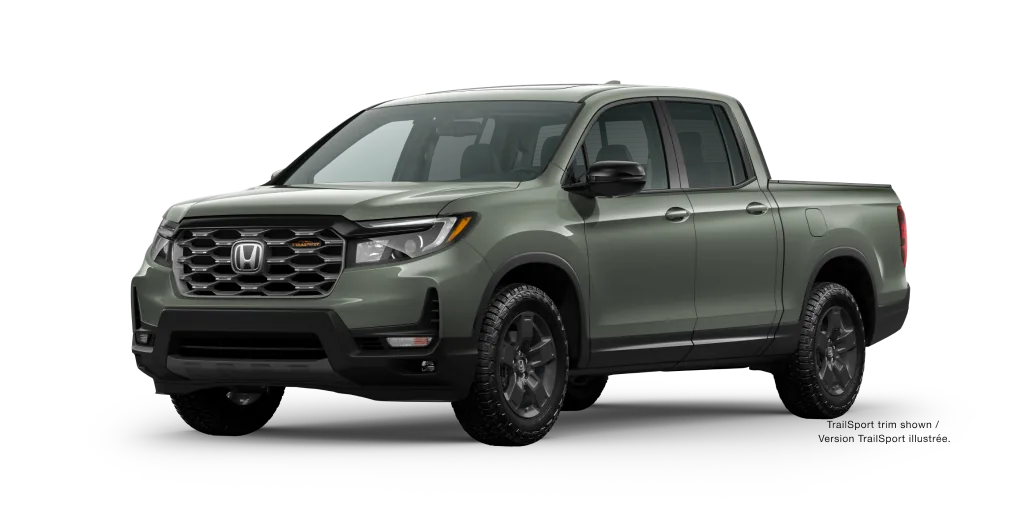
Honda Ridgeline and Passport are the two Hondas that fit a GTA tradesperson’s life. Confirm build origin on honda.ca or the window sticker for the specific unit.
The CRA rules for claiming a vehicle as a business expense are well-defined. The mistake most self-employed and contractor buyers make is either over-claiming (audit risk) or under-claiming (leaving money on the table). This page is the version Henry gives to his trades and self-pro clients at Maple Honda.
Incorporation vs personal buying — the structural decision
If you’re incorporated (or about to be): the corporation can own the vehicle. The corporate vehicle expense deduction is calculated as a percentage of business use, and the percentage applies to lease payments, financing interest, fuel, insurance, maintenance, and depreciation. The corporation pays for these expenses directly. You, as the employee, use the vehicle for business and are taxed on the personal-use portion as a taxable benefit.
If you’re self-employed (sole proprietor or partnership): you personally own the vehicle. You claim the business-use percentage of the expenses on your personal T1 return via Form T2125 (Statement of Business or Professional Activities). The HST rebate on the business-use portion flows through your HST return if you’re GST/HST registered.
Which is better for you?
- Incorporation usually wins if your business profit is consistently $80,000+/year — the combined Ontario small-business corporate tax rate is about 12.2% on active business income within the small-business limit, generally made up of the federal small-business rate plus Ontario’s small-business rate. This is meaningfully lower than the personal marginal rate (43.4% on income above $235,675 in Ontario for 2026).
- Personal buying usually wins if your profit is under $80k/year or your business is part-time — the incorporation costs (corporate tax filing, separate accounting, payroll for yourself, year-end working capital) outweigh the tax savings.
- Most contractors in the $60–$120k profit range end up buying personally and claiming the business-use percentage — it’s the cleanest setup and the audit risk is lower.
My honest take: if you’re making the incorporation decision based on the vehicle deduction alone, you’re using the wrong filter. Talk to your accountant about the full picture (income tax deferral, liability protection, estate planning) before deciding. The vehicle is one of several moving parts.
The two CRA methods — simplified vs detailed
Per the Canada Revenue Agency, self-employed individuals and contractors claim vehicle expenses based on actual costs and business-use percentage. CRA’s framework is built around tracking real expenses, not a per-km allowance for personal claims.
Self-employed vehicle claims are normally based on actual expenses multiplied by business-use percentage. Keep a mileage log showing total kilometres and business kilometres, then apply the business-use percentage to eligible costs such as fuel, insurance, maintenance, licence fees, lease costs, loan interest, electricity for EVs, and CCA where applicable.
Detailed method (actual costs):
- Track every vehicle expense: fuel, insurance, maintenance, repairs, licensing, lease payments or financing interest, CCA depreciation (Class 10 and Class 10.1 vehicles: 30% maximum CCA rate).
- Multiply total actual expenses by the business-use percentage.
- Log every business km in a mileage logbook (date, destination, purpose) — CRA accepts electronic logs.
- HST rebate: only the business-use percentage of HST paid is recoverable as ITC.
Which method pays better?
- Simplified method wins when: you drive a fuel-efficient car (Civic, HR-V, CR-V Hybrid), your business km is under 20,000/year, and your actual expenses are average. The per-km rate is generous for efficient cars.
- Detailed method wins when: you drive a gas-hungry truck (Ridgeline, Pilot), your business km is over 20,000/year, your actual expenses are high (premium insurance, frequent maintenance), or you carry expensive specialty equipment.
- Rule of thumb: simplified for Civic/HR-V/CR-V Hybrid. Detailed for Ridgeline, Pilot, and any work-truck setup.
Mileage log — the audit essential
CRA requires a contemporaneous mileage log for the detailed method. “Contemporaneous” means logged at the time of the trip or shortly after, not reconstructed at year-end from memory.
A compliant log includes:
- Date of each business trip.
- Destination (full address, not just “client”).
- Purpose (job site visit, supplier pickup, client meeting, etc.).
- Starting odometer and ending odometer (or current km).
- Business vs personal distinction — every km must be classified.
Apps that work in Ontario: MileIQ, Driversnote, and Expensify. All sync with CRA-format reports. Phone GPS is accurate enough for business-use audit defence.
The audit risk: if you claim 70% business use but your log only shows consistent 40% patterns, CRA will reassess to 40% and assess penalties plus interest. The log is the single most important document for the detailed method.
Why Honda Ridgeline for GTA contractors
Ridgeline is the most underrated Honda for a GTA contractor.
- Confirm build origin on honda.ca or the window sticker for the specific unit. Ridgeline is not Canadian-built — Alliston Plant 2 currently builds CR-V and CR-V Hybrid only.
- 5,000 lb tow capacity with accessory tow package (2,267 kg per honda.ca) — handles small equipment trailers, landscaping trailers, jet ski haulers.
- Independent rear suspension. Unlike the leaf-spring trucks, Ridgeline rides like a car. For a contractor who puts 30,000+ km/year on the truck, the ride quality matters daily.
- The in-bed trunk. Lockable, weatherproof, 7.3 cubic feet of secure storage in the bed floor. Tools, small parts, expensive gear — out of sight and out of the rain.
- 3.5L V6 + 9-speed automatic + i-VTM4 AWD standard (per honda.ca). 280 hp, 262 lb-ft, real-time AWD with torque vectoring. Handles GTA winters and Ontario cottage-country job sites.
- Fuel economy: up to 11.5–11.6 L/100 km combined per honda.ca. For a V6 truck, that’s competitive — better than Tacoma (12–13 L/100 km combined) or Ranger (10–11 L/100 km combined). For the detailed method, the fuel cost is real but not category-leading.
Why Honda Passport for GTA contractors with lighter cargo
Passport TrailSport is the right Honda for a GTA contractor who doesn’t need a bed.
- 3.5L V6, 285 hp, 262 lb-ft, 10-speed automatic, 2nd-Gen i-VTM4 AWD standard (per honda.ca). Same V6 family as Ridgeline, different transmission and tune — proven reliability.
- 5,000 lb tow capacity with accessory tow package. Same as Ridgeline.
- 1,246 L cargo behind rear seats / 2,356 L seats folded (per honda.ca). The largest cargo hold in the Honda SUV lineup — fits a stack of drywall, lumber, tools, supplies.
- Available Honda TrailWatch camera system (TrailSport trim). Off-road visibility when you’re on a job site with obstacles.
- Confirm build origin on honda.ca or the window sticker for the specific unit. Not Alliston-built (per hondacanadamfg.ca). If Canadian-built matters, Passport doesn’t qualify — only Ridgeline does in the Honda truck-or-large-SUV class.
What about the rest of the Honda lineup
For a self-employed consultant / salesperson / accountant / lawyer:
- Civic Sedan (gas or Hybrid) — the work car. 6.6 L/100 km combined gas or 4.9 L/100 km Hybrid. Cheap to run, low insurance. Simplifies the business-use math because the per-km operating cost is predictable.
- Accord Hybrid — the client-facing car. 5.3 L/100 km combined, more premium interior, Honda Sensing standard. The right pick for a consultant who has clients in the car.
For a contractor with serious cargo (lumber, drywall, equipment):
- Ridgeline — the only Honda with a real truck bed. 960 L bed cargo volume (vs Passport’s 1,246 L behind seats), the in-bed trunk adds 7.3 cu ft of secure storage, 5,000 lb tow capacity, independent rear suspension.
- Passport — if you don’t need the open bed. Better fuel economy, lower insurance than Ridgeline, same tow capacity, more car-like ride.
My honest take: for a GTA contractor doing serious work-related driving, Ridgeline is the most underrated Honda in the lineup. The independent rear suspension saves your body on long days, and the in-bed trunk is the most useful feature any truck offers.
HST on the purchase — the rules
In Ontario, HST is 13% (5% federal + 8% provincial). On a Honda purchase:
If you’re buying personally and claiming business-use:
- Pay full 13% HST on the purchase price.
- On your HST return (if GST/HST registered), claim the business-use percentage as an Input Tax Credit. For a 70% business-use vehicle, you recover 70% × 13% of the purchase price as an ITC.
- Example: ≃C$50,000 Civic at 70% business use. HST paid: ≃C$6,500. ITC recoverable: ≃C$4,550. Net HST cost: ≃C$1,950.
If the corporation is buying:
- Corporation pays full 13% HST on the purchase.
- Corporation claims 100% ITC on the business-use portion of the HST (assuming the corporation is GST/HST registered and the vehicle is used in commercial activity).
- You, as the employee using the vehicle for personal use, are taxed on the personal-use percentage as a taxable benefit on your T4.
If you’re not GST/HST registered: you pay the full 13% HST and cannot recover it. Most self-employed individuals register for GST/HST once they exceed $30,000 in taxable supplies in a single quarter or over four consecutive quarters under CRA’s small-supplier rules.
Lease vs finance for the self-employed
Leasing has a specific CRA advantage for incorporated buyers:
- Lease payments are 100% deductible as a business expense (against corporate income) up to the business-use percentage.
- No depreciation claim needed on the leased vehicle — the lessor claims it.
- Monthly cash flow is more predictable — the lease payment is fixed, vs financing where the principal portion isn’t deductible (only the interest is).
- HST on the full lease payment is recoverable as ITC for the business-use percentage.
Financing has a specific CRA advantage for self-employed buyers:
- You own the asset. The depreciation (15% declining balance per CRA Class 10) creates a tax shield for several years.
- CCA can be claimed against other income sources — useful if you have a mix of business types.
- When you sell the vehicle, the residual value is yours.
Which is right for you depends on:
- Whether you’re incorporated (lease usually wins) or self-employed (finance usually wins for the CCA).
- How long you plan to keep the vehicle (lease = 3–4 years, finance = 5+ years).
- Your annual mileage pattern (high mileage = finance, low mileage = lease).
- Your accountant’s advice (this is the tiebreaker).
The contractor’s first 90 days
If you’re a contractor or self-employed and you’re about to buy a Honda for the first time, here’s the order:
- Talk to your accountant before you shop. Confirm whether you’re claiming simplified or detailed, what your expected business-use percentage is, and whether incorporation is right for you.
- Start the mileage log the day you pick up the car. Even if you don’t plan to claim detailed in year 1, the data is gold for year 2.
- Buy the right-size vehicle. Ridgeline if you tow equipment. Passport if you don’t. Civic or HR-V if your business is service-based and the car is mostly client meetings.
- Register for GST/HST if you’re at the threshold. The ITC on the vehicle purchase alone often covers the registration cost in year 1.
- Set up a separate business credit card for vehicle expenses. Makes the year-end reconciliation cleaner and the audit defence stronger.
Frequently asked questions
Can I write off a Honda Ridgeline as a business expense?
Yes — if you’re using it for business, the business-use percentage of all vehicle expenses is deductible. For incorporated contractors, the corporation can own the Ridgeline and claim the business-use percentage of lease payments or financing interest + depreciation. For sole proprietors, the business-use percentage of actual expenses is claimed on T2121/T2125. CRA accepts either the simplified per-km method (about $0.70/km for the first 20,000 business km per vehicle per year in 2026) or the detailed actual-cost method.
What’s the best Honda for a GTA contractor?
Honda Ridgeline for contractors who tow equipment, carry open-bed cargo, or need a real truck. Honda Passport for contractors who don’t need the open bed but need SUV cargo. Honda Civic or HR-V for service-based businesses where the car is mostly client meetings. Confirm build origin on honda.ca or the window sticker for the specific unit
Should I lease or finance a Honda as a self-employed buyer?
Incorporated buyers usually benefit more from leasing (lease payments are 100% deductible against corporate income up to the business-use percentage, no depreciation claim needed). Self-employed buyers usually benefit more from financing (CCA depreciation creates a multi-year tax shield). Talk to your accountant — the corporate-vs-personal decision is the bigger lever.
What’s the HST treatment for a Honda bought by an incorporated business?
The corporation pays full 13% HST on the purchase. The corporation claims 100% of the business-use percentage as an Input Tax Credit on its HST return (assuming the corporation is GST/HST registered and the vehicle is used in commercial activity). You, as the employee using the vehicle for personal use, are taxed on the personal-use percentage as a taxable benefit on your T4.
Do I need to register for GST/HST to claim the vehicle ITC?
Yes — you must be GST/HST registered to claim any Input Tax Credit. The small-supplier threshold is $30,000 in taxable supplies over any rolling 12-month period. If you are not GST/HST registered, you cannot claim ITCs. For most businesses, mandatory GST/HST registration starts after you exceed $30,000 in taxable supplies under CRA's small-supplier rules. Some businesses register voluntarily earlier, but that decision should be confirmed with an accountant.
What’s the mileage log requirement for the detailed method?
CRA requires a contemporaneous log: date, destination, purpose, and starting/ending odometer for each business trip. Apps like MileIQ, Driversnote, and Expensify sync with CRA-format reports. The log must be kept from the day the vehicle enters service — reconstructing at year-end is not accepted.
Should a contractor incorporate just for the vehicle deduction?
No — incorporation is a larger decision (income tax deferral, liability protection, estate planning) and shouldn’t be made just to optimize the vehicle deduction. If you’re on the fence about incorporation, talk to your accountant about the full picture. If you’re already incorporated, the vehicle deduction is one of several benefits.
Is the Honda Ridgeline built in Canada?
Confirm Ridgeline build origin on honda.ca or the window sticker for the specific unit. Alliston Plant 2 builds CR-V + CR-V Hybrid; Plant 1 builds Civic Sedan/Coupe/Si. Tacoma is built at TMMMX Mexico, Ranger at Michigan Assembly.
Self-employed or contractor in the GTA?
Send Henry what you do, your annual mileage, and whether you tow. I’ll match the right Honda to the work and walk through the HST + write-off math with your accountant in the loop. Text (647) 523-6878.
Ask Henry a question
Not ready to book anything? Just ask. Henry Chen answers every message himself — usually within a couple of hours during business hours. No call list, no pressure, and no obligation to buy anything.