Why the Highway 400 commute is harder than it looks
Vaughan drivers know the rhythm. A clean run on the 400 between roughly 9:30 a.m. and 2:30 p.m., wall-to-wall brake lights on either side of that, and a Friday afternoon in summer that turns the stretch between Major Mackenzie and Highway 9 into one of the slowest pieces of pavement in the GTA. Pick the wrong vehicle for that pattern and you feel it every day — in the right calf, in the fuel bill, and in your back by Thursday afternoon.
For most Vaughan commuters, the real question isn't "what's the sportiest Honda" or "what's the cheapest." It's "what makes 12,000 to 18,000 kilometres a year of stop-and-go feel like nothing." Three things move the needle: hybrid technology that turns idling into a feature instead of a cost, safety tech that quietly handles the boring work, and a vehicle the right size for both highway lanes and Maple-area garages.
The hybrid math: CR-V Hybrid and Civic Hybrid in stop-and-go
A non-hybrid sits at idle on the 400 with the engine running. A modern Honda hybrid runs that crawl on electric power while the engine quietly tops up the battery when it makes sense. The two-motor hybrid system in the current CR-V Hybrid is built around an Atkinson-cycle engine that achieves industry-leading 41% thermal efficiency — meaningfully better than the roughly 20% you get from a typical internal-combustion engine. Translated to a Vaughan-to-downtown round trip, that delta turns into real money over a year.
There's a quieter benefit too: hybrids skip several common wear items entirely. No alternator, no starter, no drive belt — which means fewer parts to service over the long term. For a buyer who plans to keep the vehicle six or seven years, that's worth more than it looks on paper.
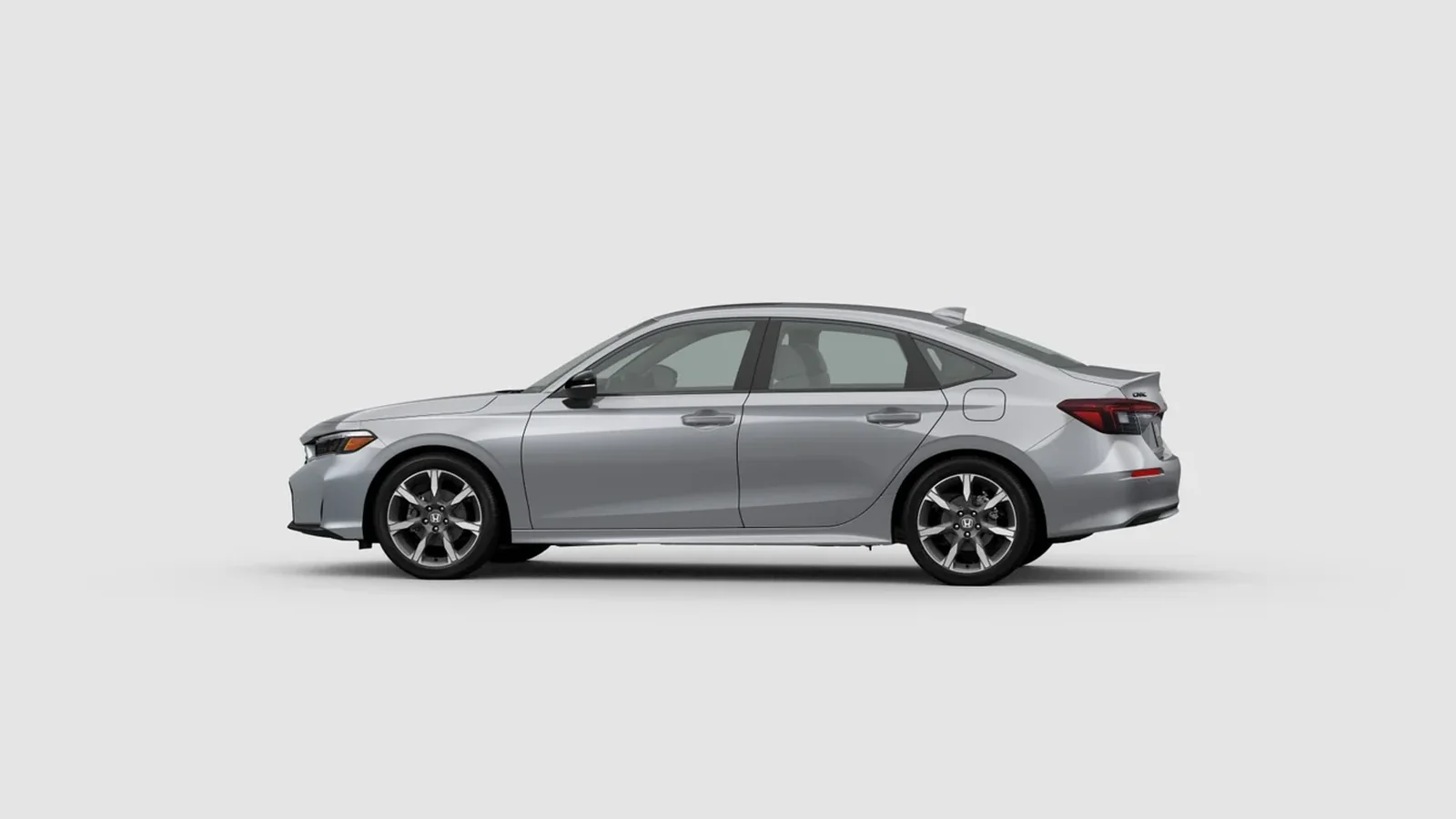
A Civic Hybrid covers the same idea in a smaller package, which matters in Vaughan if you regularly park at Vaughan Mills, downtown Toronto lots, or a tight subdivision driveway. And there's a small piece of pride here: both Civic and CR-V are built in Alliston, Ontario. Honda's Alliston plant has been operating since 1986 and now employs more than 4,200 people. Knowing the car you drive on the 400 was assembled an hour up that same highway is a quietly satisfying ownership feature.
Honda Sensing in 400 stop-and-go: what actually helps
A lot of safety-tech marketing falls apart in real traffic. Honda Sensing is rare in that it was clearly designed by people who commute. Two examples that matter on the 400.
Adaptive Cruise Control lets you set both a target speed and a following gap. On a clean highway run that's standard issue. The useful version is the way ACC behaves when traffic compresses to 30 km/h: it holds your gap, brakes for you on lift-off, and accelerates back when the lane opens. After a few weeks the foot-toggling between gas and brake just stops, and your right knee thanks you.
Blind-Spot Monitoring is the other one. Honda tuned blind-spot alerts to activate above 32 km/h, not at every speed. The reason is simple: in dense surface-street traffic, low-speed alerts trigger on parked cars and shoulder cyclists, and drivers learn to ignore them. By the time you're merging onto the 400 you're well above 32 km/h, so the alert is meaningful instead of noisy. The third underrated piece is Low-Speed Braking Control, active from 2 to 10 km/h — the parking-lot window, exactly the speeds where a Vaughan Mills lane-cut can ruin your week.
Brake confidence on the 400's wet downhill curves
There's a stretch between Major Mackenzie and Rutherford where the 400 dips and curves slightly. In a downpour, that's where most commuters wish they'd thought more carefully about brakes. The CR-V Hybrid runs dual-piston brake calipers, which give you stronger overall braking force, more even pad wear, and better heat dissipation in a hard stop. The handling cost is small; the day-it-matters benefit is large.
And if you drive a Civic, here's a quiet ownership note. Civic brake pads, once replaced (pads plus rotors land around $750 plus tax), carry a lifetime pad warranty afterwards — you pay for labour on the next swap, but the pads themselves are covered. Over the years of a Highway 400 daily commute, that math compounds.
The Vaughan ownership angle
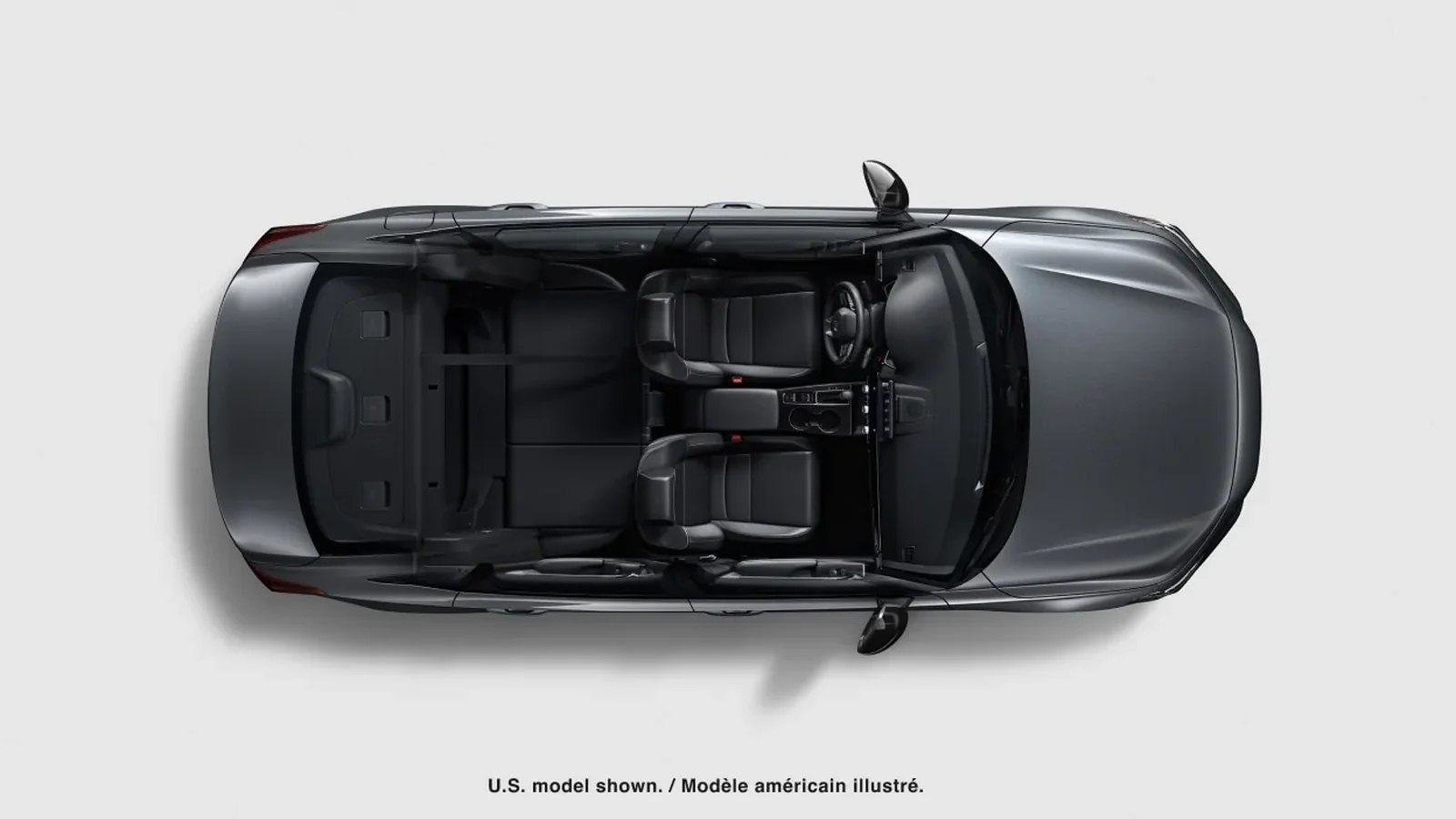
A Highway 400 daily commute Honda still has to live in Vaughan. A CR-V is 4,695 mm long — long enough that you should measure your Maple or Kleinburg garage depth before assuming it fits, but short enough that it still parks reasonably at Vaughan Mills, Promenade, and Wonderland lots. The rear doors open to about 90 degrees, which is genuinely useful in tight stalls — though the inside joke is "don't park next to another CR-V."
For families looking at a longer time horizon, a CR-V Hybrid or a Civic Hybrid quietly compounds: lower fuel, fewer service items, a Honda Canada service network that includes Maple Honda right here in Vaughan. You don't drive 30 minutes for dealer service; it's already on the way home from work.
Frequently asked, Vaughan edition
Is a hybrid really worth it for a Highway 400 daily commute?
For most Vaughan commuters, yes. Stop-and-go traffic is exactly where a Honda hybrid pays back, because the system runs on electric power during the crawl while the engine tops up the battery when it makes sense. Combined with the Atkinson-cycle engine's industry-leading 41% thermal efficiency versus roughly 20% for a typical internal-combustion engine, the annual fuel-cost gap adds up over a six- or seven-year ownership window.
Which Honda is best for tall drivers stuck in 400 traffic?
The current CR-V is usually the right call for taller drivers. The A-pillar has been moved forward on the redesign for better forward visibility, the rear doors swing to about 90 degrees, and overall length is 4,695 mm. A Civic Hybrid is the strong sedan answer if you prefer to sit lower and park tighter.
Does Honda Sensing actually help in stop-and-go on the 400?
Yes. Adaptive Cruise Control sets both your target speed and your following gap, and holds the gap automatically when traffic compresses. Blind-Spot Monitoring is intentionally tuned to activate above 32 km/h so the alert is meaningful at highway speeds instead of noisy in city traffic, and Low-Speed Braking Control covers the 2–10 km/h parking-lot window.
What about an EV like the Honda Prologue for a 400 commute?
The Prologue works well if you have reliable home charging. Plan around real-world winter range loss in Canada — about 30% on average, and 40–50% in extreme cold — so you size the battery to your worst week, not your best. The eAWD design also frees up cabin space versus a traditional driveshaft AWD layout.
Want help picking a Highway 400 daily commute Honda?
Henry Chen at Maple Honda will walk you through the numbers in plain English — no pressure, no scripted pitch.
Ask Henry a question
Not ready to book anything? Just ask. Henry Chen answers every message himself — usually within a couple of hours during business hours. No call list, no pressure, and no obligation to buy anything.