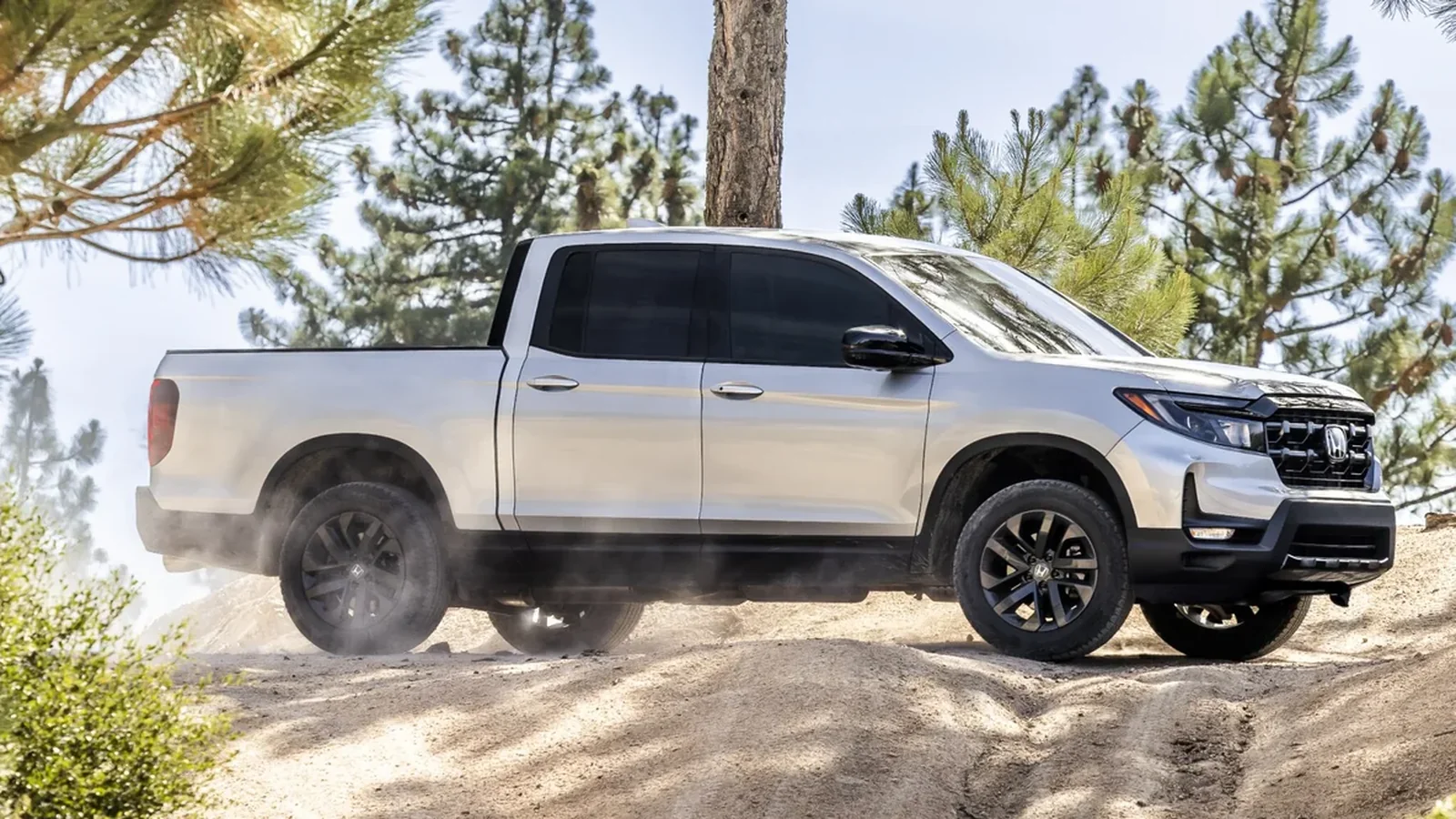
Photo: Honda Canada. 2026 Honda Ridgeline. Part of the Car Buyer Protection Series by Henry Chen, Maple Honda, Vaughan.
OMVIC has been warning about online vehicle scams for years. The pattern is consistent. A listing on Kijiji, AutoTRADER, Facebook Marketplace, or Craigslist shows a clean Honda at a price that's hard to ignore. You message the seller. The seller tells you the car is in storage, or they've relocated, or they're a US dealer that ships nationally.
The car doesn't exist. Or it exists, but the seller doesn't own it. Or the seller is real but the title has a lien, the odometer's been rolled back, or the vehicle was stolen and the VIN has been cloned. The Ontario buyer's protection under OMVIC's MVDA only kicks in when you buy from an OMVIC-registered dealer. Wire transfers to strangers don't get that protection.
The classic scam patterns OMVIC keeps flagging
- Ad looks local but the seller claims the vehicle is in storage or in another city — and inspection isn't possible
- Seller offers to ship the vehicle with a money-back guarantee (the guarantee isn't real)
- Listing photos show a different season or location than the ad claims — palm trees in a Toronto winter ad, summer leaves in a March listing
- Vehicle is priced significantly below market value
- Seller pushes you to wire money or hand over a credit-card number before any face-to-face
- There's no licence plate visible in the photos, or the plate in the photo doesn't match the seller's story
- The seller wants to close fast — same day, before you've thought it through
What you can verify before you ever message a seller
- Search the VIN on CARFAX Canada
- Search the seller name on OMVIC's dealer and salesperson registry — if they appear, they're a registered dealer, not a private seller
- Search OMVIC's list of individuals charged or convicted as illegal dealers
- Reverse-image search the listing photos — if they show up on multiple cities or multiple sellers, it's a cloned ad
- Ask for a photo of the vehicle with that day's newspaper in the frame. A real seller will accommodate; a scammer will not.

Photo: Honda Canada. 2026 Honda Passport.
The OMVIC rule that changes the math
Ontario's consumer protection laws only apply to transactions with OMVIC-registered dealers. That's not a marketing slogan — it's the legal scope of the MVDA. A private seller can be a wonderful person. They can also disappear the day after your e-Transfer clears, and OMVIC can't do anything about it because OMVIC doesn't regulate private sales.
If the deal is interesting enough that you're tempted, the practical rule is simple: don't wire money, don't send a deposit, and don't ship a vehicle you haven't inspected in person. If those three rules are deal-breakers, the seller is probably not who they say they are.
What to do if you've already sent money
Contact your bank or payment provider immediately to attempt a recall. With credit cards and some Interac transactions, there is a chargeback path. Wire transfers and cryptocurrency transfers are essentially unrecoverable.
Report the incident to your local police (Canadian Anti-Fraud Centre at 1-888-495-8501), to OMVIC (so they can flag the listing pattern), and to the platform where you found the ad (so they can remove the listing). The reporting does not bring your money back, but it prevents the next buyer from getting hit by the same ad.
Frequently asked, Vaughan edition
Can OMVIC help me if I've been scammed by an online seller?
Only if the seller was an OMVIC-registered dealer. If the seller was a private party, OMVIC doesn't have jurisdiction, and your path is through your bank, your local police, and the Canadian Anti-Fraud Centre.
What should I do if a seller wants me to use an "escrow service"?
Be skeptical. Real escrow services exist but scammers create convincing fake ones. OMVIC's warning is direct: "Don't trust that the seller will follow through with this promise or that a trust or escrow account is real."
Is it safer to buy from a private seller who only accepts cash in person?
In-person cash is safer than wiring money, but it doesn't eliminate the other risks — undisclosed accidents, odometer rollback, salvage branding, or a seller who isn't the registered owner. The structural protections only exist with an OMVIC-registered dealer.
How do I tell if an online car ad is legitimate?
Five red flags to check: (1) the price is significantly below market — if it looks too good to be true, it usually is, (2) the seller wants payment via wire transfer, gift card, or cryptocurrency, (3) the seller refuses to meet in person or allow a pre-purchase inspection, (4) the photos look stock or appear in other ads (reverse-image search reveals duplicates), (5) the seller claims to be 'out of province' or 'out of country' with a shipping deal. If any of these appear, walk away.
Is it safe to buy a car from Facebook Marketplace or Kijiji?
It can be, with precautions. Private sellers on those platforms are not registered with OMVIC and not covered by the MVDA. Meet in a public place during daylight, bring someone with you, never wire money in advance, get a UVIP (Used Vehicle Information Package) before paying, and always do a pre-purchase inspection by an independent mechanic. If the seller refuses any of these, walk away.
What is a UVIP and why do I need one?
A UVIP (Used Vehicle Information Package) is an official document from the Ontario Ministry of Transportation that shows the vehicle's registration history, odometer readings at each reporting event, branding (salvage, rebuilt, etc.), and lien information. The seller is required to provide it before you pay. Cost is $20 in Ontario. Without a UVIP, you cannot register the vehicle. If a private seller does not have one, that is a major red flag.
What does a VIN check tell me?
A VIN check (using a service like Carfax or CarProof Canada) gives you the vehicle's history: accident records, ownership count, service records, registration history across provinces, and sometimes auction photos. For a used car over $5,000, paying $40 to $60 for a Carfax is one of the best insurance dollars you can spend. Look for: single-owner history (good), no accidents reported (good), regular odometer readings with no gaps (good), and consistent service records (very good).
Can I get my money back if I am scammed online?
Sometimes. If you paid via credit card, contact your card issuer immediately — they may be able to reverse the charge under purchase protection or fraud rules. If you paid via wire transfer or gift card, recovery is much harder (often impossible). Report the scam to the Canadian Anti-Fraud Centre (1-888-495-8501) and to your local police. The earlier you report, the better the chance of recovery — wire-transfer scams in particular can sometimes be reversed if reported within 24 hours.
Want me to walk through the OMVIC piece of your next deal?
If you have a quote from another store, a private sale you're considering, or just a question about how OMVIC's rules apply to your situation, send me the details. I will help you pressure-test the structure.
Ask Henry a question
Not ready to book anything? Just ask. Henry Chen answers every message himself — usually within a couple of hours during business hours. No call list, no pressure, and no obligation to buy anything.