Hybrid fuel economy
Highlander Hybrid is usually the L/100 km winner in this shortlist. If fuel cost is the deciding factor, RAV4 Hybrid posts 5.5 L/100 km combined (Toyota Canada) for your trim.
Two of the GTA's most-shopped three-row family SUVs. Highlander Hybrid often wins the fuel-economy conversation. Pilot usually wins third-row access, standard AWD on every trim, towing, and the calm V6 highway feel. This page is the honest 2-way — no invented payments, verified Canadian competitor specs in the snapshot table.
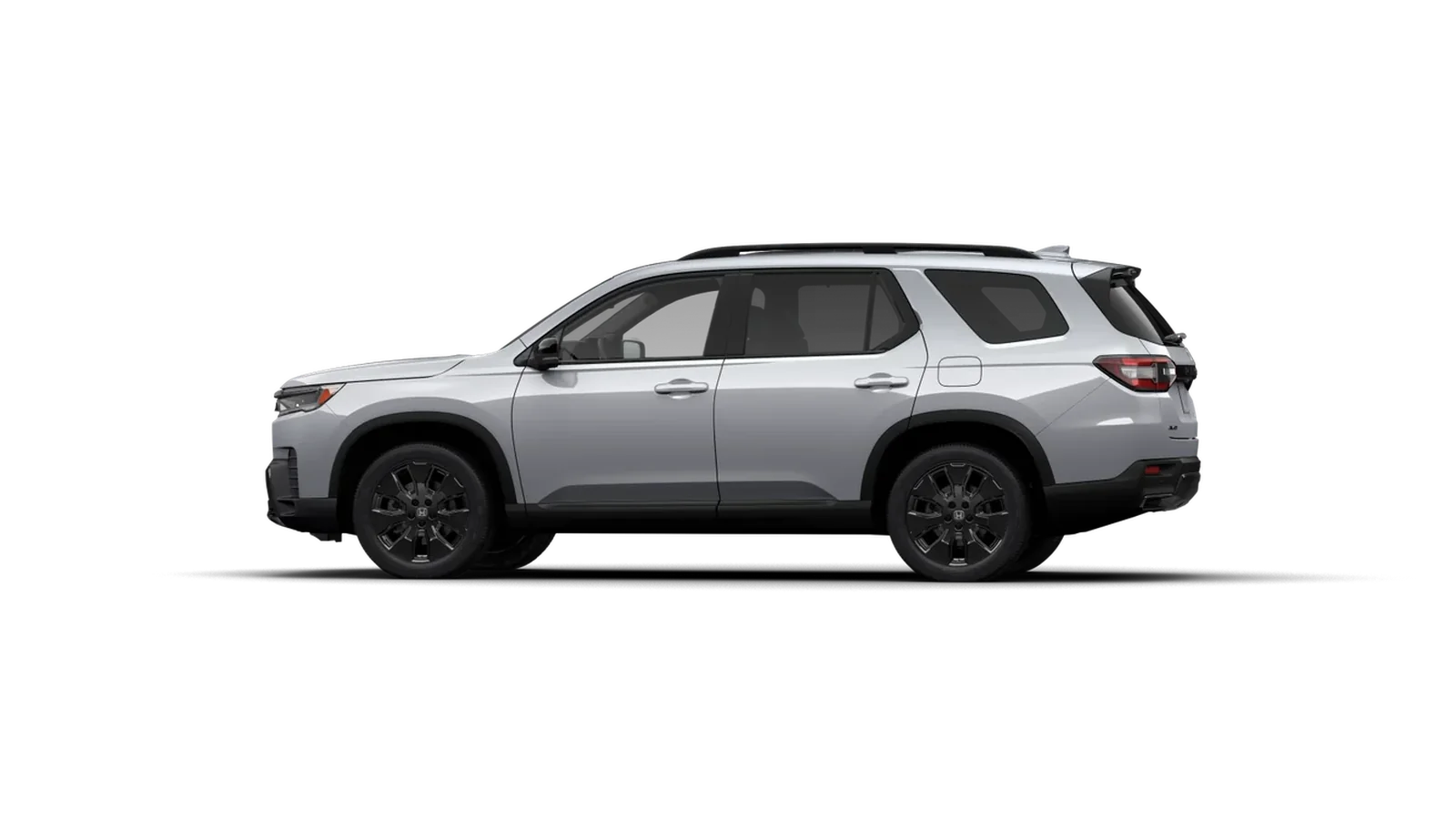
Photo: Honda Canada. 2026 Honda Pilot.
Canadian-market figures from honda.ca and toyota.ca. Confirm gas vs Hybrid numbers for your exact trim before you sign.
| Factor | Honda Pilot | Toyota Highlander |
|---|---|---|
| Powertrain focus | 3.5L V6, 285 hp / 262 lb-ft, 10-speed automatic, i-VTM4 AWD (Honda Canada) | Gas: 2.4L turbo 4-cyl, 265 hp (Toyota Canada); Hybrid: 2.5L hybrid, 243 net hp (Toyota Canada) |
| Fuel economy (combined) | 10.7 L/100 km combined (honda.ca) | Gas: 11.0 city / 8.4 hwy / 9.9 combined; Hybrid: 6.7/6.8/6.7 city/hwy/combined (Toyota Canada) |
| Build origin (Canadian market) | Confirm build origin on honda.ca or the window sticker for the specific unit | Imported — Toyota Motor Manufacturing Indiana (TMMI), Princeton, Indiana (Toyota Canada) |
| AWD | i-VTM4 AWD standard on every 2026 Pilot trim | AWD available on gas and hybrid trims — not standard on every entry trim (Toyota Canada) |
| Towing | 5,000 lb (2,268 kg) max with AWD (Honda Canada) | Up to 5,000 lb (2,268 kg) on certain trims (Toyota Canada) |
| Warranty (paper) | 3 yr / 60,000 km comprehensive; 5 yr / 100,000 km powertrain (Honda Canada) | 3 yr / 60,000 km comprehensive; 5 yr / 100,000 km powertrain; 8 yr / 160,000 km hybrid components (Toyota Canada) |
| Cabin / third row | Generally preferred for second-row walk-through and third-row family access | Familiar Toyota switchgear; 7 or 8 passengers depending on trim (Toyota Canada) |
| Availability (dealer note) | Pilot timing at Maple Honda is often weeks for common trims — confirm live with Henry | Confirm stock and ETA with your Toyota dealer — Hybrid timing shifts week to week in the GTA |
No MSRPs or sample payments on this page — both move with the monthly program. Ask Henry for a live Pilot quote against your Highlander number.
Henry calls these honestly — Highlander's strengths are real for the right buyer.
Highlander Hybrid is usually the L/100 km winner in this shortlist. If fuel cost is the deciding factor, RAV4 Hybrid posts 5.5 L/100 km combined (Toyota Canada) for your trim.
Many Richmond Hill shoppers already trust Toyota's hybrid system from a Camry, RAV4, or Sienna. That preference is valid — decide after a real highway loop in both.
If your family already services Toyota or likes the dealer relationship, continuity matters. Henry won't fight brand loyalty.
If you refuse a gas-only three-row, Highlander Hybrid stays on the list. Pilot for Canada is V6 gas only — no Pilot Hybrid on honda.ca.
Pilot's second-row walk-through usually makes third-row car-seat access easier — confirm with a back-to-back sit test.
Honda Canada lists Pilot max towing at 5,000 lb (2,268 kg) with AWD. Highlander: up to 5,000 lb on certain trims (Toyota Canada).
Confirm build origin on honda.ca or the window sticker for the specific unit.
Every 2026 Pilot trim includes i-VTM4 AWD.
Pilot's 3.5L V6 is a calm companion for Richmond Hill–cottage runs. Decide after a real 400/407 loop.
Common Pilot trims at Maple Honda are often measured in weeks. Confirm live stock with Henry if you need a vehicle this quarter.
Maple Honda holds a large body of public Google feedback. A few recent ones from Henry's customers:
"The purchase of my 2025 Pilot was seamless, thanks entirely to Henry. He was polite, professional, and incredibly knowledgeable."
"Bought my CR-V with Henry's assistance. From the get-go Henry always showed up — really caring about the experience and ensuring I got the right vehicle for my needs."
"Loyal to Honda for over a decade and truly thankful to Henry Chen at Maple Honda for the exceptional service."
Talk to Henry directly: (647) 523-6878 · WhatsApp
Pick Highlander Hybrid if fuel economy or Toyota hybrid familiarity is the priority — then confirm those numbers live on toyota.ca. Pick Pilot if you want easier third-row access, 5,000 lb towing, standard i-VTM4 AWD on every trim, and a delivery window Henry can pin down at Maple Honda. Both are good — this is a priority match, not a knockout.
Both are strong three-row family SUVs. Pilot usually feels easier for third-row access; Highlander Hybrid often wins when fuel economy is the top priority — see verified Canadian figures above.
10.7 L/100 km combined (honda.ca). Highlander Hybrid: 6.7 L/100 km combined; gas: 9.9 L/100 km combined (Toyota Canada).
Confirm build origin on honda.ca or the window sticker for the specific unit.
Yes — i-VTM4 AWD on every 2026 Pilot trim in Canada.
Usually yes on paper. RAV4 Hybrid posts 5.5 L/100 km combined (Toyota Canada). Pilot has no hybrid for the Canadian market — V6 gas only.
Pilot: 285 hp / 262 lb-ft (Honda Canada).
Text Henry your Highlander trim, payment, term, and trade. He builds a comparable Pilot number and confirms Maple Honda timing. Start at book a test drive or text 647-523-6878.
Often yes. See the three-way Richmond Hill guide, then test-drive the two that fit.
Send Henry the Highlander trim and the price you've been quoted. He'll build a Pilot with comparable equipment, confirm delivery timing, and lay both side by side. Context: Honda deals Canada · book a test drive.
Not ready to book anything? Just ask. Henry Chen answers every message himself — usually within a couple of hours during business hours. No call list, no pressure, and no obligation to buy anything.
Public Google reviews that specifically mention Henry Chen at Maple Honda. Ratings and review counts change over time — use the link below to check the current public listing.
"I had a perfect experience with Henry the sales person! Very easy to deal with him... I definitely recommend him if you do not want games and get an honest deal!"
"We had a great experience purchasing a used Pilot here. Henry was great! He was very knowledgeable about the vehicle and really helped us make an informed decision. We'd happily come back next time we need a vehicle!"
"Loyal to Honda for over a decade and truly thankful to Henry Chen at Maple Honda for the exceptional service. Henry is proactive and sends timely reminders... He helped me renew my car lease that fits into my budget perfectly well. Professional, reliable, and highly recommended."
Book a Honda Pilot test drive at Maple Honda in 2 minutes — or text Henry a photo of any written Highlander quote for a free 15-minute review.