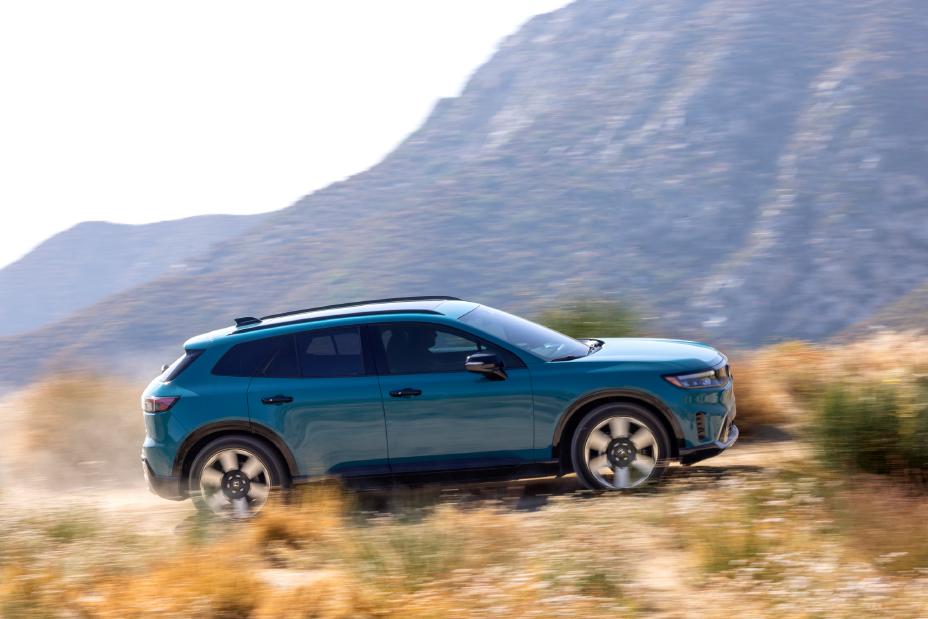
The question I get most often from Vaughan shoppers right now is some version of "should I go EV or hybrid?" The honest answer is that the two powertrains are not really competing for the same buyer — they are built for different routines. The right way to pick is to start with your driving reality, not the powertrain. Monthly payment and paint colour come later.
Here is how I walk a real Vaughan household through the EV vs hybrid decision on the lot — and where each powertrain actually wins.
Why this isn't a winner-take-all decision
The framing of "EV vs hybrid" tends to flatten two very different ownership experiences into a single checkbox. In practice, most Vaughan buyers have one or two hard constraints — home charging, parking situation, weekly distance, winter driving patterns — and those constraints usually narrow the choice to one powertrain long before they walk into the showroom.
The thing to avoid is starting with the technology and working backwards. "I want the EV" or "I want the hybrid" is a fine starting instinct, but the better question is: which powertrain fits the way I actually drive and live? Both are excellent Hondas. Neither is universally better. The wrong one for your routine costs you money and frustration every day for the next five years.
Where the Honda Prologue EV wins
The Prologue is the right Honda if your routine lines up with what an EV does best. The wins are real and they compound over ownership:
- Lower running costs. No oil changes, no spark plugs, no transmission fluid, no exhaust system. Regen braking means brake pads last roughly twice as long as on a gas Honda. Annual maintenance on a Prologue is typically about half of a comparable CR-V Hybrid.
- Quiet, planted, instant torque. The under-floor battery pack gives the Prologue a low centre of gravity that pays off in snow. The car feels heavier and more composed than a CR-V in slush — a real winter win, not a marketing one.
- Heat pump HVAC and remote start from the app. On a Vaughan January morning, you start the car from inside the house and the cabin is warm by the time you get to the driveway. This is the single biggest quality-of-life upgrade an EV brings to a Canadian winter.
- Honest range. Honda rates the Prologue at up to 439 km on a full charge. Real-world Ontario numbers land at about 380 to 410 km in summer mixed driving, and 280 to 340 km in winter mixed driving. The trip computer is unusually honest about remaining range, which means no surprise-empty-battery situations if you watch the gauge.
Best fit: you have a garage or driveway where a Level 2 charger can be installed, your daily round-trip fits comfortably inside the real-world winter range, and most of your driving stays inside the GTA.
Where a Honda hybrid wins
The Civic Hybrid, Accord Hybrid and CR-V Hybrid are the right Honda for a different kind of routine. The wins here are about not changing your life:
- No behaviour change. Gas station routine stays exactly the same. No home charger, no charging cadence, no planning around DC fast chargers on long trips.
- Atkinson-cycle efficiency. Honda's hybrid system runs a 41 percent thermal-efficiency Atkinson-cycle engine — about double a typical gas engine — paired with an electric motor that handles low-speed and stop-and-go driving. The Civic Hybrid is now the benchmark for compact-car fuel economy in Canada.
- Real CR-V Hybrid numbers. Natural Resources Canada rates the 2026 CR-V Hybrid with Real Time AWD at 6.0 L/100 km city, 6.9 L/100 km highway, and 6.4 L/100 km combined. With a roughly 53-litre tank, that's something like 800-plus km of real-world range on a tank — and zero planning required.
- All-season flexibility. No range loss in cold weather that requires any behaviour change. No charging stops. No condo-board conversations.
Best fit: you rent, live in a condo, take regular long trips to areas with thin fast-charger coverage, or simply do not want to think about charging cadence.
Vaughan winters — where the rubber meets the road
Both vehicles handle a Vaughan winter well. They just do it differently, and the difference shows up in your weekly routine rather than in how the car drives.
On the Prologue, cold weather costs about 30 percent of real-world range on average, and 40 to 50 percent in extreme cold snaps below -20°C. In a real Vaughan January with daily commuting plus errands, expect the trip computer to read 250 to 320 km on a full charge. The car still drives beautifully — heavier, planted, the eAWD system calibrated for confidence rather than sport — but the charging cadence tightens. For 400-series commuters doing a Vaughan-to-Mississauga round trip, that means charging every 3 to 5 days in winter rather than every 5 to 7 in summer.
On a Honda hybrid, winter economy dips about 10 to 15 percent — similar to a regular gas car. The fuel cost is a little higher than summer, but the routine is identical: fill up when the tank gets low, drive. For Vaughan buyers who do cottage weekends in Muskoka or winter trips to Collingwood, the hybrid has no charging stops to plan around, which is a real quality-of-life point on a -25°C morning.
The honest bottom line on winter
The Prologue is the better winter driving car. The hybrid is the easier winter ownership car. Most Vaughan buyers I work with eventually pick the ownership experience over the driving feel, unless they already have home charging sorted.
Total cost of ownership over five years — the honest math
This is where the decision often clarifies. The numbers below are typical for a Vaughan buyer keeping the car for five years and driving about 18,000 km per year:
- Upfront price gap. The Prologue typically runs $8,000 to $12,000 more than a comparably equipped CR-V Hybrid. The Civic Hybrid is several thousand less than either.
- Home charging install. A Level 2 charger install in a Vaughan garage typically runs $1,500 to $2,500, including electrical work. Townhomes are usually similar. Condos vary widely.
- Maintenance savings on the Prologue. Over five years, expect about $2,000 to $3,000 saved versus the CR-V Hybrid — no oil changes, no transmission service, longer brake life.
- Fuel cost. At Ontario off-peak electricity rates, the Prologue runs about $1.50 to $2.00 per 100 km. The CR-V Hybrid at 6.4 L/100 km combined runs about $10 to $12 per 100 km at current GTA gas prices. Over 18,000 km per year, that's roughly $1,500 to $1,800 a year in fuel savings on the EV.
- Resale. Both powertrains hold their value well in the GTA. The Prologue resale is still establishing itself, but the Civic Hybrid and CR-V Hybrid have a long track record of strong resale in our market.
The breakeven on total cost of ownership usually lands somewhere around 25,000 km per year. Below that, the hybrid wins on the math. Well above that, the EV starts to pull ahead.
Which Honda powertrain fits your driveway?
A short decision rule that covers most of the Vaughan buyers I work with:
- The Prologue EV is the right Honda if you can install a Level 2 charger at home, your daily driving fits comfortably inside the real-world winter range, and you are ready to plan charging into your routine the way gas-car owners plan fuel stops.
- The Civic Hybrid or Accord Hybrid is the right Honda if your daily driving is mixed city-and-highway, you do not need SUV cargo room, and you want the lowest fuel cost with zero behaviour change.
- The CR-V Hybrid is the right Honda if you want SUV practicality, real winter AWD for the 400 on-ramps, and you would rather not think about charging at all.
Honda's EV and hybrid lineups are not competing for the same buyer. They are two good answers to two different ownership questions. The right pick is the one that matches your driveway, your parking, and your weekly routine — not the one with the newer technology.
Common questions, Vaughan edition
Should I buy a Honda EV or a Honda hybrid in 2026?
It depends on your home charging situation and your typical daily distance. The Prologue EV is the right Honda if you can install a Level 2 charger at home and your daily round-trip fits comfortably inside the real-world winter range (typically 250 to 320 km in a Vaughan January). The Civic Hybrid or CR-V Hybrid is the right Honda if you rent, live in a condo, take regular long trips, or simply do not want to think about charging cadence. Both are excellent vehicles — the answer is which one matches your routine, not which technology is newer.
Is the Honda Prologue good in a Vaughan winter?
Yes, in terms of driving dynamics. The Prologue is heavier than a gas Honda and the under-floor battery pack gives it a low centre of gravity, which means it feels planted and composed in snow. The trade-off is range: cold weather typically costs about 30 percent on average, and 40 to 50 percent in extreme cold snaps below -20°C. Real-world winter range in Vaughan lands at 250 to 320 km on a full charge. Cabin heat comes on instantly from the HondaLink app, which is one of the quiet wins of an EV in a Canadian winter.
How does the CR-V Hybrid compare to the Prologue on total cost?
Over five years of typical ownership, the CR-V Hybrid usually wins on total cost for most Vaughan buyers. It is roughly $8,000 to $12,000 cheaper to buy than the Prologue, needs no home charger install (about $1,500 to $2,500), and uses real-world gas at about 6.4 L/100 km combined. The Prologue claws back some of that gap through lower running costs — no oil changes, no spark plugs, brake pads last roughly twice as long thanks to regenerative braking — and through cheaper 'fuel' if you charge at home on an off-peak rate. The breakeven usually lands around 25,000 km per year; below that, the hybrid wins; well above that, the EV starts to pull ahead.
Can I install a Level 2 charger at my Vaughan home?
Most single-family homes in Vaughan can install a Level 2 charger without issue — typically on a 40-amp circuit in the garage or on an exterior wall. Townhomes are usually fine too. Condos are the case to watch: you will need to talk to your building management or board about shared electrical capacity and any rules on charger installation in parking spots. Honda's exclusive supplier handles the assessment, quote, and install for Prologue buyers — it is the simplest path for most households.
Which Honda hybrid is best for a 400-series commute?
For a daily round-trip commute under 80 km on the 400, the Civic Hybrid is the right pick — it sips fuel in the slower sections, uses the Atkinson-cycle engine at 41 percent thermal efficiency, and the cabin is quiet enough that stop-and-go traffic is easy to live with. For 80 to 120 km round-trip, the CR-V Hybrid starts to make more sense — more upright seating for the highway, real AWD for slush on the 400 on-ramps, and cargo room for weekend runs. Both are strong on resale in the GTA.
Not sure which powertrain fits your driveway?
Bring me your daily driving — commute distance, home situation, typical weekend trip — and I will lay out the numbers honestly for both the Prologue and the hybrid lineup. No pressure, no scripted pitch.
Fuel-economy figures are Canadian-spec NRCan ratings for the 2026 model year. Real-world range, fuel economy, and ownership costs vary with weather, terrain, payload, driving style, electricity rate, and home-charging setup. Confirm current figures with Henry at Maple Honda before making any decision.